

Yes, you absolutely can book a flight for someone else, and it's a common mission. The big rule is simple: get the traveler's details exactly right, because name mismatches account for approximately 34% of denied boarding cases globally, and international trips have a 2.3x higher failure rate.
Maybe you're booking a ticket for your mom because she hates dealing with airline websites. Maybe your kid is heading back to school. Maybe a friend needs help fast and you're the one with the steady hand and the credit card. Good. This is a clean, winnable operation if you gather the right intel first and execute without sloppiness.
If you've been asking, Can I book a flight for someone else? the answer is yes. You can use your own payment method, your own contact details, and handle the booking yourself. But you can't freelance the passenger data. One typo, one missing middle name, one wrong passport digit, and your smooth little mission turns into an airport ambush.
Your Mission Should You Choose to Accept It
Your phone lights up. A parent needs help. A college kid missed the cheap fare window. A friend has to fly out fast and freezes the second an airline website asks for a passport number. You're the one with the calm nerves and the working credit card. Good. This mission is yours.
Booking a flight for someone else is routine. Families do it all the time. So do office managers, partners, and friends handling urgent trips. Airlines generally allow you to buy the ticket with your own card and manage the reservation for another traveler, as explained in Trip.com's guide to booking a flight for someone else.
Here's the part generic guides skip. The airline may accept the purchase, then flag the payment, hold the reservation, or demand extra verification if something looks off. Fraud filters, passenger rules, and age-specific requirements create critical landmines. Miss one, and your easy favor turns into cleanup duty.
The mission is simple. Accuracy wins.
A flight booking creates an official travel record tied to the passenger's ID and, for international trips, their passport. The ticket belongs to that specific traveler. If plans change, you usually cannot swap in somebody else and call it good.
So act like you're entering coordinates, not guessing at a pizza order.
You can pay for the trip. You cannot freestyle the traveler's identity details.
The traveler also usually doesn't need you at the airport. Once the reservation is set up correctly, they can often check in themselves with the confirmation code and their last name through the airline app, website, or kiosk.
Who this mission usually serves
This favor comes up all the time, and the goal changes depending on who's flying:
- Family support: You're booking for a parent, spouse, sibling, or student.
- Gift travel: You're covering the ticket as a present.
- Emergency travel: Someone needs to move fast, and you're handling the logistics.
- Work trips: You're arranging travel for a coworker, contractor, or client.
Your job is simple. Stay sharp, follow the checklist, and avoid lazy data entry. Do that, and this booking goes off without a hitch.
Mission Briefing Gathering Your Passenger Intel
A clean booking starts before you ever hit search. Your mission here is simple. Collect the traveler's exact details first, then build the reservation from verified info instead of half-remembered texts and guesswork.
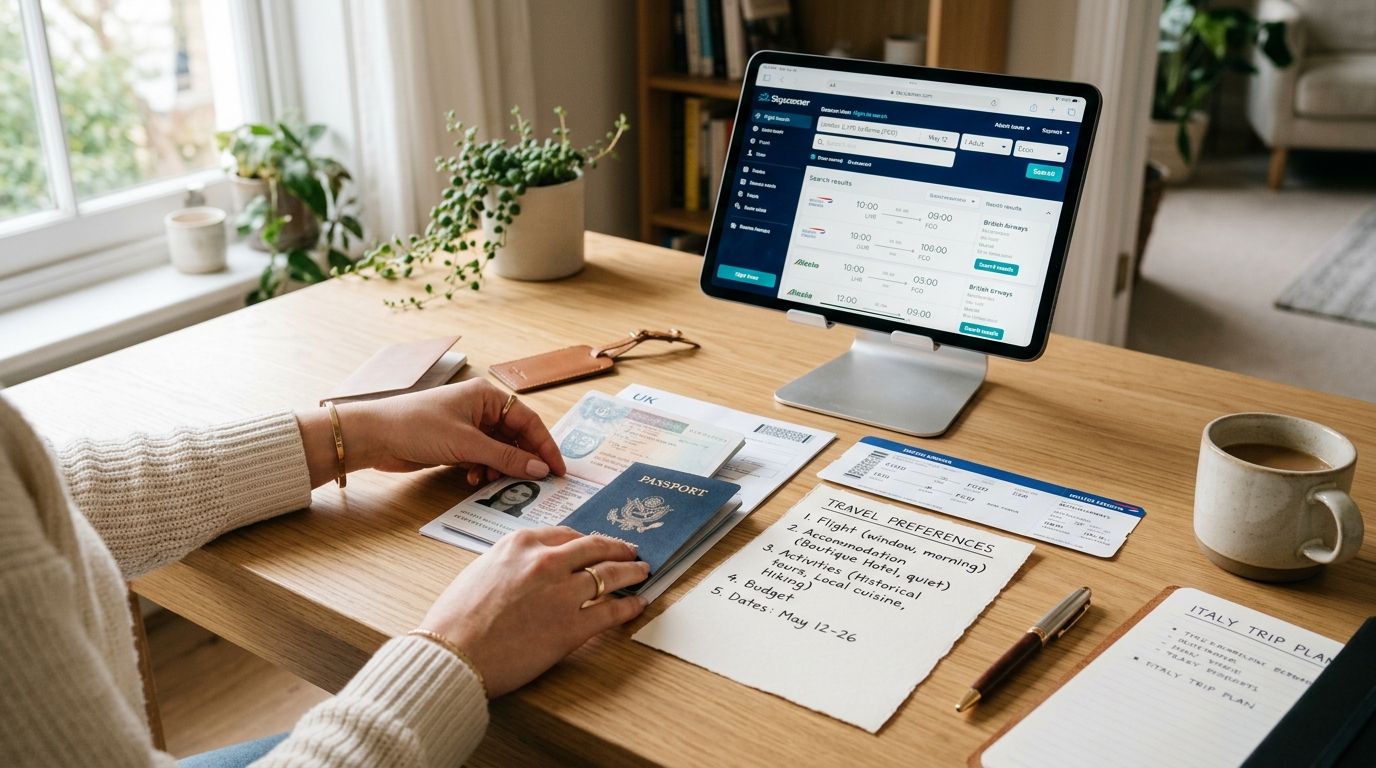
Your Mandatory Intel Checklist
The ticket has to match the traveler's real-world documents. Exact name. Exact birth date. Exact document details. If you get sloppy here, the airline will not salute your good intentions.
For international trips, I want the passport in hand before anybody compares fares. Indian Eagle's guide to booking a flight for someone else points out that passport details, including expiration date, need to be entered accurately. That lines up with how airlines and border authorities handle traveler records.
Here's the intel I'd demand before launch:
- Full legal name: Copy it exactly from the ID or passport. First, middle, last, suffix, all of it if the booking form asks for it.
- Date of birth: Pull it from the document, not memory.
- Gender and nationality: Many airlines request both for passenger records.
- Passport or ID number: Confirm every letter and number.
- Passport expiration date: Required for international travel, and a common place for mistakes.
- Issuing country or residence details: Some booking systems ask for them.
- Traveler contact details: Keep the passenger's phone and email handy, even if you use your own contact info for booking management.
Sgt. Travel rule: Ask for a clear photo of the passport or ID and enter everything from the image. Verbal dictation is how typos sneak behind enemy lines.
Domestic and international require different prep
Domestic bookings are usually lighter work. The traveler may only need a government-issued ID that matches the name on the ticket.
International bookings demand more discipline. Passport data can flow into the reservation, the airline record, and border screening systems. One wrong character can create hours of cleanup, and sometimes the only fix is paying a fee or rebooking the ticket.
If the traveler is unsure about dates, names, or documents, pause the mission. Sort that out first. If plans are still shaky, review this guide on booking refundable flights for uncertain travel plans before you commit money.
The mistake that blows up the operation
Name mismatch is the classic self-inflicted wound.
If the passport says “Maria Elena Rodriguez Lopez,” enter that traveler exactly as the airline form requires. Do not shorten it because it “looks too long.” Do not swap in a nickname. Do not guess whether the middle name matters. Airlines care about matching records, not your formatting instincts.
The same discipline applies to birth dates and passport numbers. One transposed digit can trigger check-in problems, security screening issues, or a long session with customer support that nobody wants.
My pre-booking drill
Run this check before payment:
| Intel item | What to verify |
|---|---|
| Name | Exact spelling from ID or passport |
| Birth date | Match the document, not memory |
| Passport or ID number | Every character confirmed |
| International passport expiry | Valid and entered correctly |
| Contact plan | Decide who gets booking updates |
Final order from Sgt. Travel. Send the typed passenger details back to the traveler for confirmation before you pay. That 60-second verification step is cheap insurance, and it keeps your booking mission clean.
Executing the Booking A Step-by-Step Flight Plan
Speed matters here, but discipline matters more. A flight for the wrong person, wrong date, or wrong airport is not a small mistake. It is a full mission failure.

Your booking order of operations
Use the standard booking flow, but keep your roles straight the whole way. The traveler goes on the ticket. You go in the payment and booking contact fields, if you are the one buying and managing the reservation.
Here's the clean execution plan:
- Search the route and dates. Verify the exact departure city, arrival city, travel dates, and preferred times before you touch the form.
- Choose the flight carefully. Check layovers, airport changes, fare rules, and baggage limits before you commit.
- Enter the traveler's personal details. Use the passenger's full legal name, date of birth, nationality, and passport or ID details exactly as required.
- Enter your contact and billing details. Use your email, phone, and payment information if you are handling the booking.
- Review every field. Slow down and confirm the ticket is for the traveler, not for the person paying.
- Complete payment and save the record. Keep the confirmation code, screenshots, and e-ticket in a place you can both access.
That's the mission. Keep it clean.
Keep passenger details and booking details in separate lanes
This is the step that catches sloppy operators.
The Passenger Details section belongs to the person who will physically travel. Enter their legal name, birth date, gender if requested, and travel document information. If the airline asks for Secure Flight or passport data, that also belongs to the traveler.
The Billing or Booking Contact section belongs to the person paying or managing the reservation. That can be you. If you want to control the itinerary, schedule alerts, and follow-up emails, use your contact details there.
If travel dates might change, pick a fare with flexibility instead of gambling on a cheap ticket. This guide on booking refundable flights for uncertain travel plans is the right move before you pay.
If the field is about who flies, enter the traveler. If the field is about who pays or manages the booking, enter yourself.
Use the contact email on purpose
The contact email decides who gets schedule changes, gate updates, and disruption notices. That is not a throwaway field.
If you are coordinating the trip, use your email as the booking contact and send the confirmation to the traveler right after purchase. If the airline gives you a separate field for passenger contact details, fill that in too. That setup keeps you in command without leaving the traveler blind.
Here's a sample walkthrough if you want a visual before you deploy:
Final inspection before you hit pay
Run this last check like a preflight inspection:
- Name check: Match the booking to the passport or ID, character by character.
- Airport check: Confirm the correct departure airport, connection airport, and arrival airport.
- Timing check: Verify departure times, overnight layovers, and time zone shifts.
- Extras check: Add seats, bags, or frequent flyer numbers only if the traveler asked for them.
- Record check: Save the confirmation number and share it immediately.
Good bookings feel almost boring. Good. Boring means the traveler gets to the airport, checks in, and completes the mission without drama.
Navigating Payments and Avoiding Friendly Fire
You can buy the ticket with your own card. That part is normal. The danger zone is fraud screening, and that is where good bookings get ambushed.

Yes, you can use your own card
Airlines and online booking sites generally allow one person to pay for another person's flight. Go ahead and use your card if you are covering the trip.
Now the Sgt. Travel warning. “Allowed” does not mean “free of checkpoints.”
Some airlines and routes trigger extra review when the traveler and cardholder are different people. In tougher cases, the airline may ask for cardholder verification, a copy of the card, or confirmation that the payment was authorized. A long-running Travel Stack Exchange discussion about third-party card verification on international tickets shows how often this catches travelers by surprise.
Where payment trouble usually starts
Fraud flags pop up when the booking looks unusual, expensive, or rushed. The common tripwires are easy to spot if you know where to look:
- International flights: More security checks and more chances for manual review.
- Different passenger and cardholder names: Legitimate, but more likely to get a second look.
- Last-minute bookings: Urgency can look risky to fraud filters.
- Higher ticket totals: Bigger charges attract more scrutiny.
That does not mean the mission is in trouble. It means you need a tighter flight plan.
Sgt. Travel's payment protocol
For a simple domestic booking, I pay, save the confirmation, and keep an eye on my inbox.
For an international booking, I get stricter. You should too.
- Check the airline's payment rules before purchase: Search for terms like cardholder verification, payment security, or credit card presentation.
- Save your proof right away: Keep the confirmation email, payment receipt, and the last four digits of the card.
- Call the airline if the policy looks strict or vague: A quick confirmation beats an airport argument.
- Brief the traveler: Tell them who paid, what card was used, and whether the airline might contact the cardholder.
If you are the one buying flights for relatives all the time, use a card that gives you something back. This guide to the best credit cards for travel rewards is a smart place to start.
Do not let the traveler reach check-in without a clear answer on whether the airline might verify the payment.
The safest play for international third-party bookings
Here is my direct recommendation. If you book an international flight for someone else, verify the airline's card policy before travel day. Do it even if the purchase went through without a hiccup.
That is one of the hidden landmines generic guides skip. They explain how to enter another passenger's name. Fine. Rookie-level stuff. The pro move is clearing the payment checkpoint before it turns into friendly fire at the airport.
Special Ops Booking for Minors and Unique Travelers
Booking for another adult is one thing. Booking for a child flying alone, an elderly traveler who needs help, or someone with medical requirements is a different caliber of mission. Handle those cases with extra care and direct airline contact.
The unaccompanied minor trap
If a child is traveling alone, the ticket itself is only part of the job. Airlines often require unaccompanied minor procedures, and those procedures can involve the legal guardian, the adult dropping the child off, and the adult receiving the child at the destination.
Data from 2024-2025 shows a 15% increase in Unaccompanied Minor-related boarding denials due to paperwork mismatches between the booker and the legal guardian, according to Booking.com's guide to unaccompanied minor flight requirements.
That's not a paperwork nuisance. That's a child getting stopped at the airport because adults assumed the booking alone solved the problem.
My recommendation for any child flying alone
Don't rely on the website alone. Call the airline.
Do it even if you already booked the ticket. Confirm exactly who must sign the unaccompanied minor form, what ID each adult needs at the airport, and whether the legal guardian must be the one authorizing the trip. If a grandparent, aunt, or family friend paid for the ticket, that doesn't automatically make them the person the airline recognizes for consent.
A child's reservation isn't complete until the airline confirms the paperwork chain from legal guardian to departure gate to arrival pickup.
Elderly travelers and passengers who need assistance
For older travelers, the booking form is only the first layer. Ask whether they need wheelchair assistance, extra time, or help navigating the airport. Those requests often need to be added directly to the airline record.
For travelers with medical or accessibility needs, contact the airline after booking and confirm the support request is attached. Don't assume a note in a generic booking portal made it all the way through.
Active-duty military and travelers on orders
If you're booking for an active-duty service member, ask whether they're traveling on official orders or leisure travel. That can affect baggage handling and airport documentation procedures. Don't guess. The airline will tell you what needs to be in the record.
Discipline beats speed in this scenario. A special-case traveler needs a special-case confirmation plan. Slow down and lock it in.
Mission Debrief Your Post-Booking Checklist
Mission booked. Good. Now finish the job.
A third-party booking fails at handoff, not at checkout. The traveler shows up with the wrong airport, misses the check-in window, or never notices their middle name is missing. That's the kind of own goal Sgt. Travel does not allow.
Send one clean handoff message
Right after you book, send one message with everything the traveler needs. No scattered texts. No half-complete screenshot parade. One clean package.
Include:
- Confirmation number
- Full flight itinerary
- Passenger name exactly as booked
- Seat assignment and baggage details
- Airline app or website check-in instructions
If they need help with the check-in process, send them this self check-in guide for travelers. It keeps the process simple and cuts down on last-minute panic.
Run this checklist before you stand down
Use this every time you book a flight for someone else.
| Task | Done |
|---|---|
| Passenger name matches ID or passport exactly | |
| Traveler received the confirmation number | |
| Traveler reviewed dates, times, and airport codes | |
| Seat and bag choices were confirmed, if purchased | |
| Payment receipt was saved by the person who paid | |
| Airline record was checked for any added service requests |
Here's my rule. I do not call the mission complete until the traveler replies, “Got it. Name is correct. Flights look right.”
That one reply catches a pile of preventable mistakes.
The clean handoff
Keep it tight:
- You book it.
- You send it.
- They verify it.
- They check in.
- The mission stays on track.
So, can you book a flight for someone else? Yes. Do it with discipline, clean communication, and a final inspection after payment. That's how you avoid the hidden landmines and get your traveler from booking to boarding without friendly fire.
If you like straightforward travel intel with a little personality, check out Sgt. Travel Deals Army. It's a veteran-owned travel platform where you can enlist for deal hunting, compare booking options, and use STD Army Deals when you're ready to line up your next mission.