

You've got too many tabs open, one kid wants a pool, another wants “adventure,” somebody in the group keeps saying “let's just wing it,” and your budget is already taking incoming fire. That's where most family vacation planning goes sideways. Not because families can't travel well, but because they start with vibes instead of a mission.
I'm Sgt. Travel for today, and I'm giving it to you straight. Stop treating the trip like a casual idea. Treat it like an operation. Pick the objective. Lock the budget. Secure the base camp. Book with discipline. Pack like you've done this before, even if you haven't.
You're not crazy for wanting a great trip without chaos. You're also not alone. The 2025 Family Travel Survey from NYU SPS says 92% of parents are likely to travel with their children in the next year, and 81% plan to maintain or increase their travel spending. Families are still going. They're still prioritizing memory-making. Your job is to do it better than the average stressed-out planner.
Your Mission Should You Choose to Accept It
Last night looked something like this. You had your laptop open at the kitchen table, a half-cold coffee at your elbow, and a running debate about beach resort versus mountain cabin versus “somewhere with stuff for the kids.” One tab showed flights. Another showed hotels. A third showed a vacation rental that looked perfect until you noticed the cleaning fee and the fact that it was nowhere near the things you want to do.
That's normal. It's also fixable.

Family vacation planning gets messy when every decision happens at once. Parents often try to choose dates, destination, lodging, flights, activities, and budget in one sitting. That's not planning. That's panic with a browser.
What a good mission looks like
A solid family trip does three things:
- Protects the budget: You know what you can spend before anyone falls in love with a fancy room.
- Fits the troop: Toddlers, teens, parents, and grandparents do better when the plan matches real energy levels.
- Leaves breathing room: A packed itinerary can wreck a trip faster than bad weather.
Field order: Don't aim for a perfect vacation. Aim for a vacation your family can actually enjoy.
The good news is that family travel demand is strong, which means families are committed to getting out there. The bad news is simple. If you wait too long, drift without a plan, or let one loud opinion steer the whole trip, you'll burn money and patience.
Sgt. Travel's first command
Start with command structure. One adult is the final decision-maker. Input from the family matters. Endless committee debate does not.
Use this order:
- Set the budget ceiling
- Set the travel window
- Pick the trip type
- Choose the base camp
- Book the major pieces
- Leave some open space
That's your framework. It's not glamorous, but it works.
If your household has been stuck in the “we should plan something” phase for weeks, I want you to hear this clearly. You don't need more inspiration. You need a plan that turns options into decisions.
Mission Prep Your Budget and Timeline
Friday night. One kid wants a beach. One wants a pool with a waterslide. Grandma wants a roomy suite. You open five tabs, stare at prices, and feel the trip getting more expensive by the minute. Halt the chaos. Your first job is to set the budget and timeline before anybody falls in love with a destination.
Money decides the shape of the mission. Timing decides whether you get good options or leftovers.
Build the budget before you build the fantasy
Start with a full-trip number. One cap. One person tracks it. If you skip that step, every later choice gets sloppy.
Use a simple category list:
- Transportation: Flights, fuel, parking, transfers, rental car
- Lodging: Hotel, resort, vacation home, taxes, fees
- Food: Groceries, restaurant meals, snacks for transit days
- Activities: Tickets, tours, park entry, gear rentals
- Trip extras: Souvenirs, laundry, travel-day supplies
Keep it on one phone note or one sheet of paper. If the budget lives in ten text threads, you do not have a budget.
For a practical model, Spero's budget planning example shows how breaking a trip total into monthly savings targets makes the plan easier to execute. That works because it forces real decisions early.
Set payment rules before relatives start booking
Group trips go sideways when nobody defines who pays for what. Fix that first.
Decide these items in plain language:
- Who books the lodging
- Whether each family pays their own airfare
- Whether groceries are split evenly or by household
- Whether grandparents are treating anyone to activities
- What happens if one family backs out
Write it down. Then send it to everyone.
Large family trips also need more lead time for bigger rooms, adjoining spaces, or a house that accommodates the whole crew. If you are traveling with grandparents, cousins, or multiple households, lock the lodging plan early and stop pretending a great fit will still be sitting there at the last minute.
Work backward from departure day
Amateurs plan from today. Smart parents plan from the travel date and count backward.
| Timeframe | Action Item |
|---|---|
| 6 to 9 months out | Reserve larger accommodations if multiple households are going |
| Several months out | Confirm destination, school calendars, and time-off approvals |
| About 8 weeks out | Buy airfare if prices and schedules fit the budget |
| Final weeks | Recheck reservations, assign packing lists, and prep travel-day supplies |
That timeline keeps pressure low and choices clear.
Use a booking rhythm that prevents panic
Follow this order and your odds improve fast:
- Choose the travel window. Pick the month, school break, or long weekend first.
- Set the budget ceiling. This is the hard cap, not a hopeful guess.
- Book lodging early. Space matters more than fancy upgrades on a family trip.
- Track flights, then strike. Don't panic-buy too early just because fares moved one day.
- Shortlist activities. Save room for rest, weather changes, and kid energy swings.
If you need examples that balance price, destination, and family-friendly value, study these affordable family vacation packages for 2026 before you lock the plan. Then run your comparisons through stdarmydeals.com and cut the weak options fast.
Keep the budget firm and the schedule loose
Your spending plan needs discipline. Your day-to-day schedule needs breathing room.
Book the big pieces. Leave gaps for naps, weather, slow mornings, and the surprise ice cream stop that ends up being everyone's favorite memory. That is not weak planning. That is competent family travel.
Choosing Your Destination and Base Camp
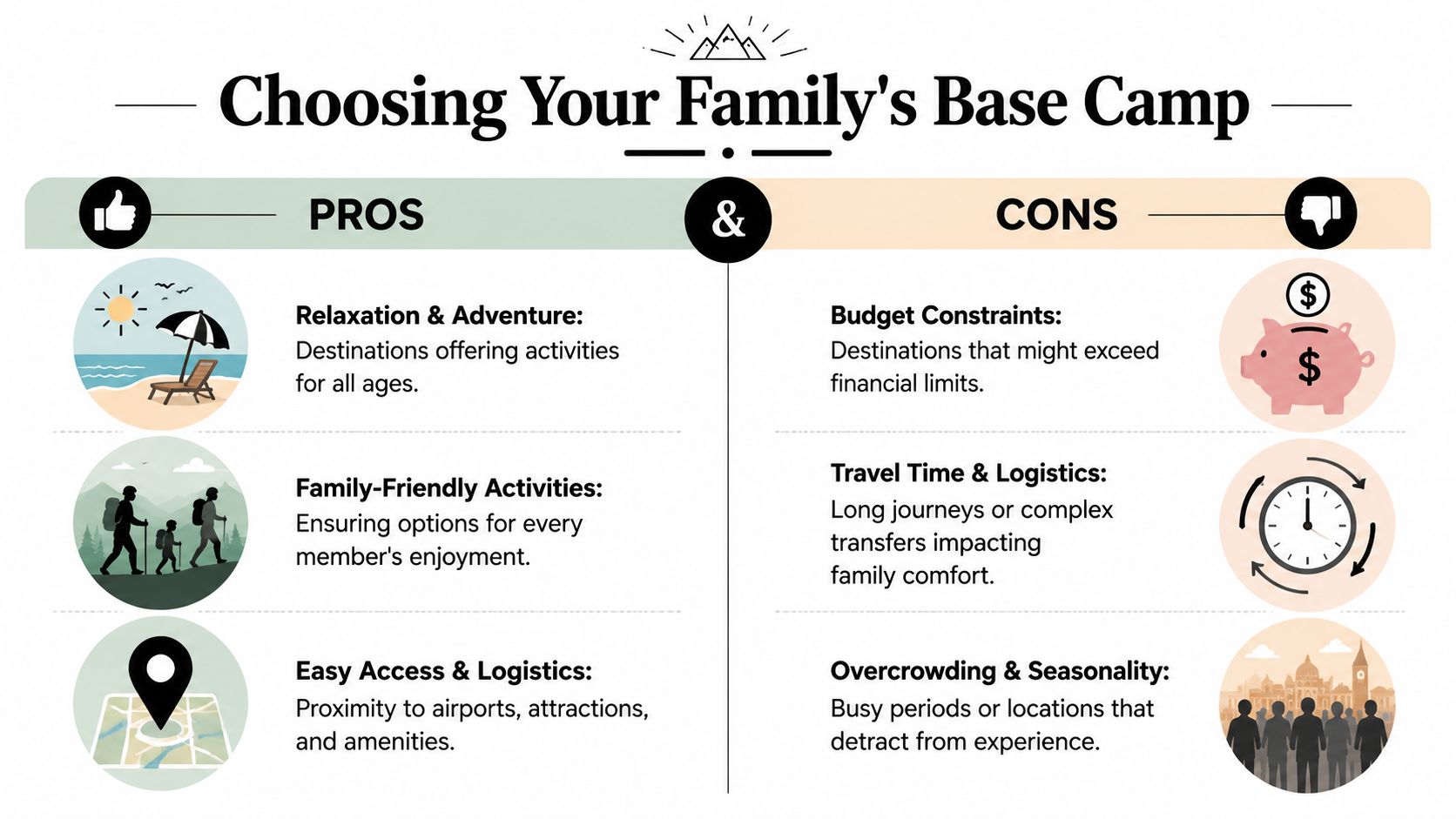
You land after a long travel day. One kid is hungry, one is half asleep, and everyone wants the room now. If your destination is an hour from the airport, the hotel has no food nearby, and the room setup is a bad fit, morale drops fast. Sgt. Travel's order is simple. Choose a destination and base camp that make family life easier the minute you arrive.
A good destination fits your crew's real habits. A bad one forces everybody to work around the plan. Stop building around the fantasy version of your family.
Match the destination to the mission
Start with energy, pace, and tolerance for friction.
Choose a city stay if your family likes short activity blocks, easy food access, and the freedom to change plans on the fly. Choose a national park or nature trip if your crew handles simpler routines well and enjoys long stretches outdoors. Choose a resort or hotel-centered stay if you want built-in convenience, fewer daily decisions, and one dependable home base.
That last option works especially well for families with younger kids. One property with a pool, food on site, and enough room to reset can save the trip.
Keep this rule in your pocket. Do not build the whole vacation around one adult's bucket list. Build it around what the full team can enjoy without daily meltdowns, long recovery periods, or constant transportation battles.
If you need help narrowing the field, review these family vacation destination ideas for different travel styles. Then cut any option that adds friction without adding real value.
Pick a base camp that solves problems
Your lodging is your command post. It handles sleep, snacks, weather delays, downtime, and the occasional emotional collapse after too much sun and not enough lunch.
Choose lodging based on function first:
- Kitchen or kitchenette: Better for breakfast, picky eaters, and quick backup meals
- Separate sleeping zones: Better sleep for kids and actual adult downtime
- Walkable or well-positioned location: Less money wasted on daily transport
- Laundry access: Fewer bags, fewer clothing emergencies
- Included perks: Breakfast, parking, shuttle service, or kid-friendly dining offers
A strong budget move is choosing lodging that offers complimentary breakfasts or kids stay and eat free deals. Meal costs pile up fast on family trips. Free or discounted food matters.
The best room for a family solves the most problems with the least daily effort.
Run this base camp check before you book
Ask these questions and be honest with the answers:
- How long will it take to get there after arrival?
- Can you reach your main activities without wasting half the day in transit?
- Is food easy, nearby, and within budget?
- Will the sleeping setup help everyone rest well enough to function tomorrow?
- Does the property support your trip style, whether that means quiet nights, pool time, or easy access to town?
One more order from Sgt. Travel. Skip the lodging that only looks good in photos. Book the one that gives your family the easiest, calmest base camp possible.
Executing the Booking Find and Compare Deals
This is the phase where a decent plan turns into a real trip. It's also where people make expensive mistakes because they get impatient.
You need discipline here. No random booking at midnight because one fare “looks good enough.” No grabbing the first hotel that has nice photos. Compare everything.
Book airfare at the right time
If you're flying, timing matters. Lake Trust's travel planning guidance says the sweet spot for purchasing tickets is approximately 8 weeks before your planned family vacation.
That doesn't mean stare at prices every hour for six months. It means know your dates, know your route, and be ready when the buying window arrives.
Compare like an adult, not like a gambler
When you compare options, keep the same criteria across every listing:
- Total price: Not the teaser rate. The full cost.
- Cancellation terms: Families need flexibility.
- Location: Cheap and inconvenient often becomes expensive later.
- Included amenities: Breakfast, parking, kitchen access, airport transfer
- Room setup: Beds and layout matter more than trendy decor
Here's the mistake rookies make. They compare unlike-for-unlike offers. One hotel includes breakfast and parking. Another doesn't. One rental puts you close to attractions. Another requires daily driving. Don't compare headline price only. Compare operating cost.
Bundle only when the bundle helps
Sometimes packaging lodging with flights or adding a car rental simplifies the whole mission. Sometimes it just hides weak pricing inside a convenient checkout flow.
Use this rule:
- Bundle when it lowers total stress and total cost
- Book separately when the individual pieces are clearly stronger
A cheap-looking booking can become the most expensive option once you add parking, breakfast, transfers, and wasted time.
Your booking drill
Run this sequence every time:
- Lock your travel dates
- Check flights around the airfare sweet spot
- Shortlist only a few lodging options
- Compare total cost, not just nightly rate
- Read room details carefully
- Save confirmations in one folder and one phone note
- Double-check cancellation policies before you hit purchase
Don't let booking fatigue win
By the time people reach this phase, they're tired. That's why bad decisions happen. They just want it done.
Fight that urge. Booking is not the part to rush. A careful hour here can save a lot of money and a lot of aggravation later. If one property has a better layout, better included perks, and a better location, take it even if it isn't the absolute cheapest line on the screen.
The mission is not to “book something.” The mission is to book the right thing.
Packing Smart and Traveling with Kids
Packing is where confident parents separate themselves from chaos merchants. You do not need more luggage. You need better packing decisions.
The smartest family travelers use a carry-on focused approach when possible, along with packing cubes and simple systems that make transit days smoother. The Family Voyage travel planning discussion also stresses practical habits like downloading shows before departure, keeping passports current, and assigning age-appropriate planning roles to children.
Pack for movement, not fantasy
Most families overpack for “just in case” scenarios and underpack for transit-day survival.
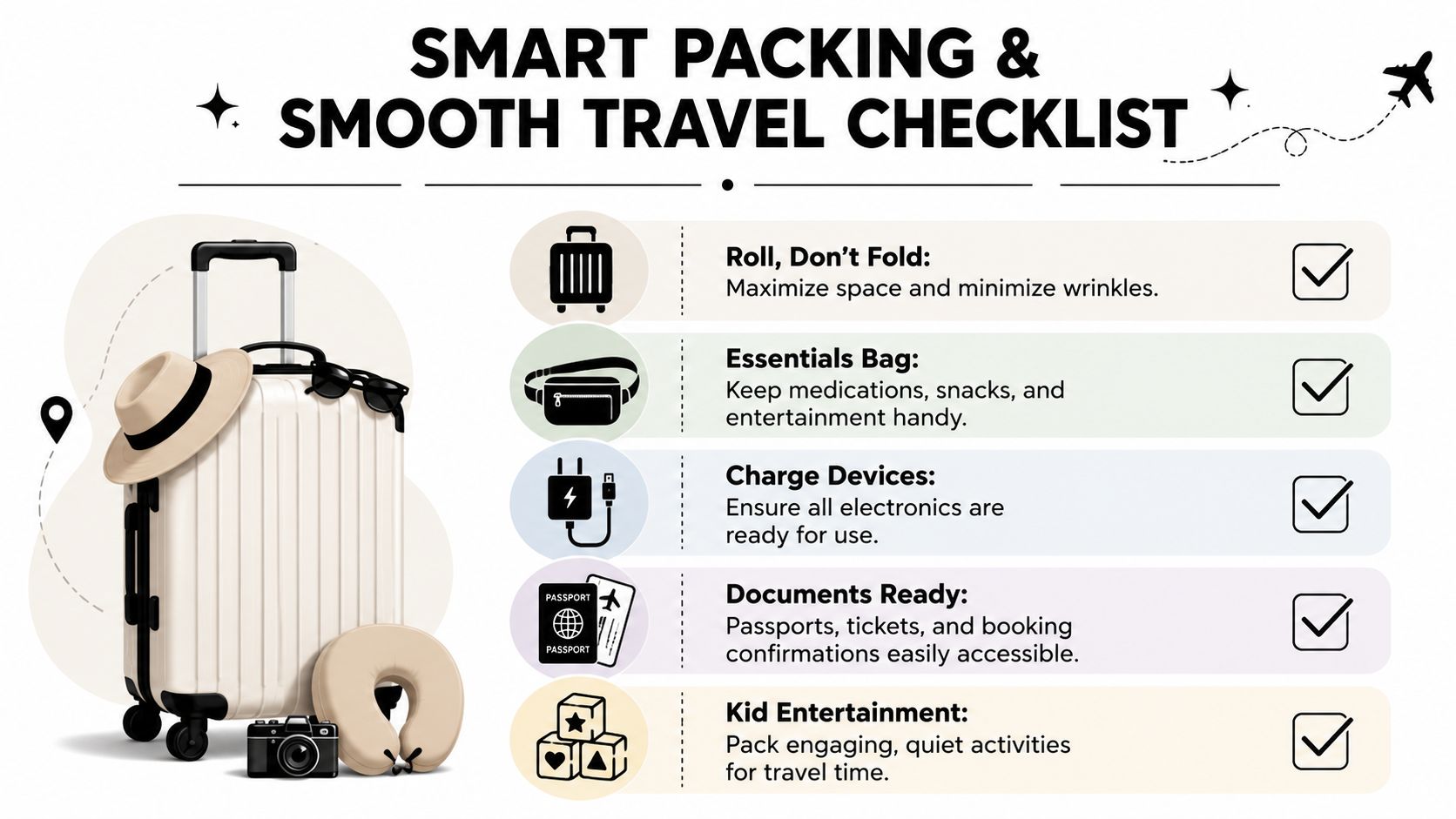
Your core setup should include:
- A personal essentials bag: Medications, wipes, snacks, chargers, one change of clothes for younger kids
- Packing cubes by person or category: Faster unpacking, easier access
- Quiet entertainment kit: Headphones, downloaded shows, coloring items, simple games
- Document pouch: IDs, confirmations, insurance details, boarding info
If you want a visual walkthrough for packing methods, this video is worth a look:
Travel days need a separate strategy
Do not pack for the destination only. Pack for the day it takes to get there.
That means every child needs access to food, comfort items, and boredom control before the suitcase ever gets opened. Don't bury the essentials in the big bag. Keep them within arm's reach.
For an extra practical checklist, use this all-inclusive resort packing list as a starting point, then trim it to match your actual trip.
Plan for different ages without overengineering
Multigenerational travel is a bigger part of family vacation planning now. According to Squaremouth's 2025 travel trends release, multigenerational and family trips surged by 47% in 2025. More families are traveling with grandparents, older relatives, and mixed age groups.
That changes how you pack and move.
- For younger kids: Keep snacks, spare clothes, and comfort items easy to grab
- For older kids: Give them ownership of one backpack and one task
- For grandparents or older adults: Build in convenience, seating opportunities, and easy access to medicines or mobility aids
Your strongest travel move isn't speed. It's reducing friction before it starts.
The family that moves smoothly through airports, check-in lines, and long transfer days usually isn't lucky. They prepared for the weak points.
On-the-Ground Success and Sample Itineraries
You've arrived. Good work. Now don't ruin the trip by overscheduling it.
Families love to think they'll “make the most of every day.” That mindset creates tired kids, cranky adults, and bad memories attached to otherwise good destinations. Build a rhythm, not a marathon.
Use anchor activities, not packed schedules
A smarter trip uses one major activity, maybe two if the day is light, then leaves space around it. Meals take time. Transit takes time. Rest takes time. A family that ignores that reality ends up bickering in a beautiful place.
For larger family groups, one of the best planning rules is simple: schedule 1 to 2 daily anchor activities and leave open time for smaller group choices. That recommendation appears in Showcase the World's multigenerational vacation tips, along with the advice to build in rest breaks after lunch when older adults often have less energy.
Sample mission plans
Here are three mission-ready frameworks you can adapt.
The National Park Explorer
Best for families who want outdoor time, lower daily costs, and simpler fun.
Day rhythm:
- Morning trail, scenic drive, or visitor center
- Lunch and rest break
- Easy afternoon activity like a short walk or picnic
- Early dinner and downtime
Why it works. Nature gives kids room to move, and the itinerary doesn't rely on constant reservations.
The City Base Camp
Best for families that want variety, food options, and flexible half-days.
Day rhythm:
- One main attraction in the morning
- Casual lunch near the activity
- Hotel reset or quiet indoor break
- Evening neighborhood stroll or relaxed meal
Why it works. Cities let you pivot when weather or moods change.
The Resort Recharge
Best for families who want low-logistics travel and built-in amenities without bouncing around.
Day rhythm:
- Pool or beach in the morning
- Lunch on-site
- Quiet time in the room
- One family activity in late afternoon
- Early night for the younger troops
Why it works. You're using the property as a true base camp instead of turning every day into a transport puzzle.
Leave room for the unexpected good stuff. The favorite memory is often the unplanned one.
Keep morale high
On-the-ground success comes from a few simple habits:
- Protect sleep
- Feed people before they get dramatic
- Don't force every family member into every activity
- Call an audible when the day is clearly going bad
That last one matters. Good planners don't cling to bad plans out of pride.
If you run the trip with structure, flexibility, and common sense, you'll come home with the thing you wanted. Not perfect photos. Better memories.
If you want backup for your next mission, join Sgt. Travel Deals Army. It's a veteran-owned travel platform built for travelers who want smart planning, deep discounts, and a responsive booking experience for hotels, all-inclusive resorts, flights, car rentals, activities, and more. You can also check booking options through STD Army Deals, compare side-by-side offers, and enlist in a community that likes saving money almost as much as taking the trip.