
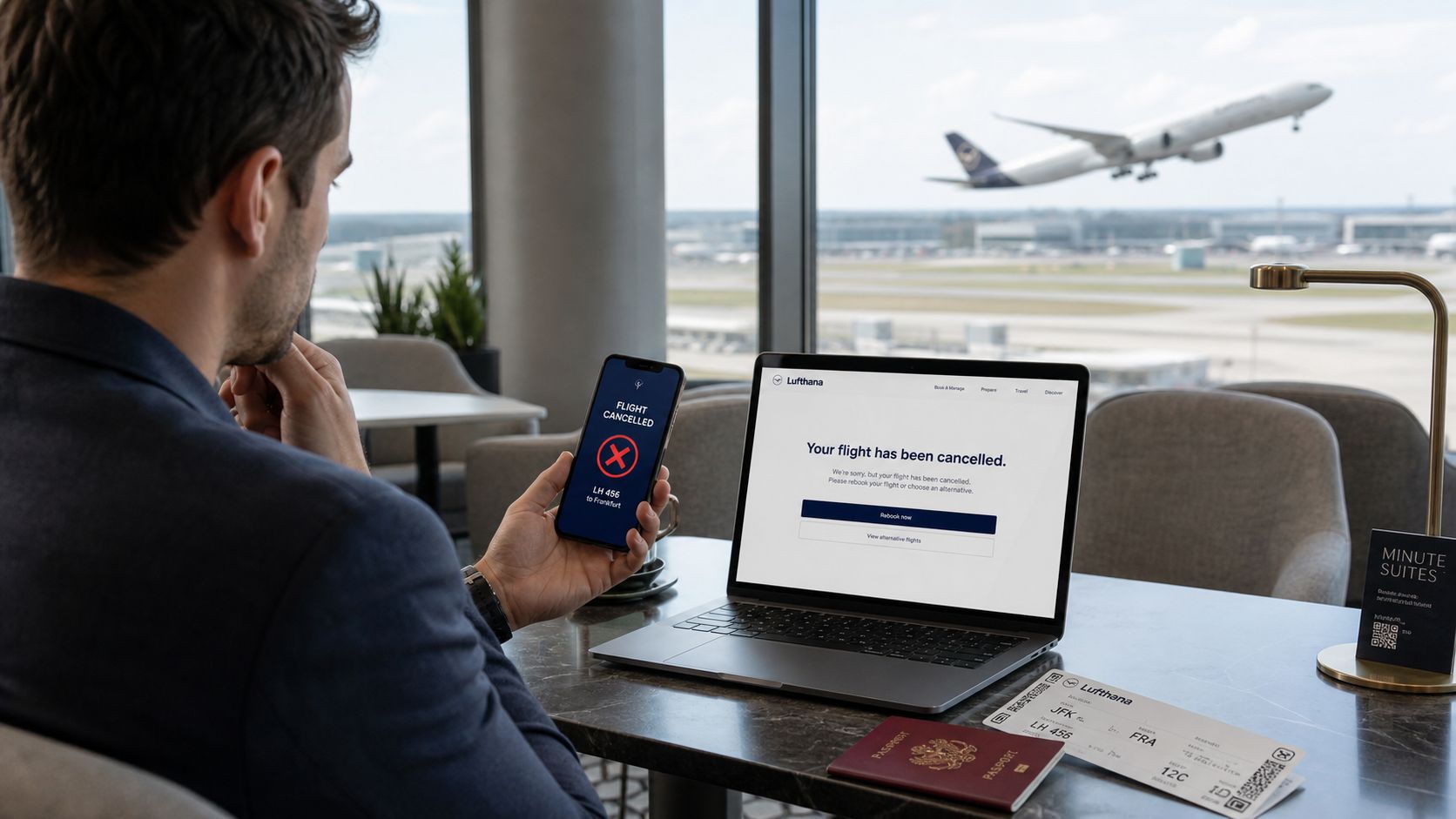
You booked a flight, your plans changed, and now the airline app is acting like you asked it to solve nuclear physics. Relax. This is fixable.
If you're trying to figure out how to cancel a flight without getting trapped in airline nonsense, the mission is simple. Move fast, know your rights, document everything, and don't accept the first weak offer if the rules entitle you to better. Most travelers lose money because they guess. You won't.
A lot of troops make the same mistakes. They wait too long. They click the wrong option. They take a credit when they should've demanded cash. Or they book through a middleman and then wonder why the airline sends them in circles. You can avoid all of that if you work the problem in the right order.
Your First 24 Hours The Ultimate Safety Net
Your strongest move is the 24-hour cancellation window. Use it first, ask questions later.
Under the U.S. Department of Transportation's 2026 regulations, airlines are required to allow consumers to cancel reservation tickets purchased at least seven days before a flight's scheduled departure and receive a full refund without penalty within 24 hours of booking, and travelers who actively contact the airline by chat or email within that window achieve a 75% waiver rate for cancellation fees, according to this refund rights guide.

That means two things matter immediately:
- When you booked
- How far away the flight is
If the flight leaves at least seven days after booking and you bought direct from the airline, you're in the safest position. Don't overthink it. Go to the airline site or app, find the booking, and cancel while the clock is still on your side.
What to demand
Ask for a refund to the original payment method. Not a voucher. Not a travel credit. Not a cheerful email promising “future flexibility.”
Practical rule: If the law says refund, don't volunteer to settle for less.
Use plain language with the airline rep:
- “I booked this within the 24-hour window and the flight is at least seven days out. Cancel it and refund it to my original form of payment.”
- “I am not accepting a voucher. Please process the full refund.”
- “Send me written confirmation by email or chat.”
Why direct booking matters
This is one of the few times where booking direct can save you a serious headache. Federal protection applies to direct airline bookings, not every outside seller. If you're comparing options before you buy, read this guide on how to book refundable flights. It helps you set yourself up before the battle starts.
Your first-hour checklist
- Check the departure date: Make sure the trip is at least seven days away.
- Open the airline chat: Chat and email create a paper trail.
- Take screenshots: Capture the booking, timestamp, fare rules, and cancellation screen.
- Cancel first, argue second: If the window is open, lock in the cancellation.
- Save confirmation: Don't leave the page until you have proof.
If you act inside that first day, you're not begging for mercy. You're enforcing a rule.
Executing the Cancellation A Step-By-Step Mission
Here, many travelers freeze. The website throws up jargon like “Manage Trip,” “Voluntary Changes,” and “Fare Conditions,” and suddenly a simple cancellation feels like a maze. It isn't. You just need a clean sequence.
Start in the right place
Go to the airline's app or website and head straight to Manage Booking, My Trips, or My Bookings. Use your confirmation code, ticket number, or login.
Once you're in, don't click the first shiny button you see. Read the labels carefully. Airlines often separate:
- cancellations
- changes
- same-day adjustments
- rebooking after disruption
You want the cancellation flow tied to your actual reservation.
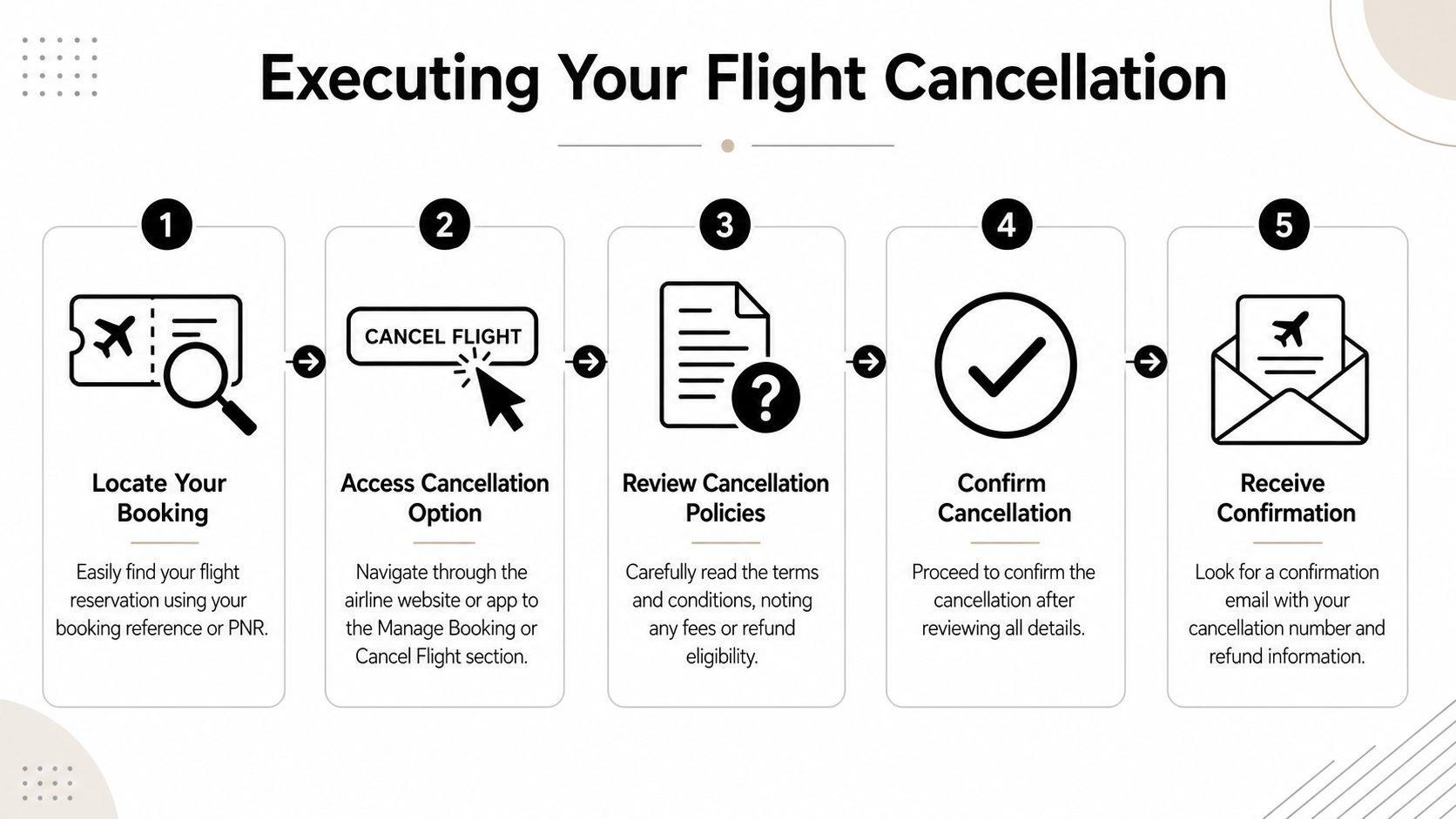
The clean five-step drill
- Locate the reservation using your booking reference.
- Open the booking details and look for cancellation or refund options.
- Review the result before confirming. The page usually tells you whether you're getting cash, credit, or nothing.
- Confirm the cancellation only after reading the outcome line by line.
- Wait for the email confirmation and save it immediately.
A short walkthrough helps if you want a visual refresher:
The trap almost nobody explains
If you've already checked in, the airline system may block the cancellation until you reverse that status.
People frequently ask how to cancel a flight after already checking in, but many guides skip the mandatory uncheck-in step. Check-in status can block cancellation until it's reversed, with fees varying by how far before departure the uncheck-in and cancellation occur, according to Trip.com's flight cancellation guide.
If the app says you can't cancel, don't assume you're stuck. Check whether you're already checked in.
What “uncheck-in” usually looks like
Airlines don't all use the same words. Look for options such as:
- Cancel check-in
- Undo check-in
- Remove boarding pass
- Manage check-in
After you reverse check-in, go back to the booking screen and restart the cancellation flow. This little detail saves people from panic every day.
Before you leave the page
Don't trust memory. Save evidence.
| What to save | Why it matters |
|---|---|
| Confirmation number | Proves the cancellation went through |
| Refund screen | Shows what the airline promised |
| Chat transcript | Helps if support changes the story |
| Email receipt | Useful for disputes or insurance claims |
If the system crashes, reopens the trip, or gives a vague message like “request received,” contact support right away and ask them to confirm the reservation status in writing.
Refund Credit or Change Choosing Your Best Outcome
Canceling a flight isn't just about getting out. It's about choosing the outcome that helps you most. Cash is usually king, but not always. Sometimes a change beats a cancellation. Sometimes a credit is acceptable. Most of the time, you need to decide before the airline decides for you.
One rule matters more than the rest in disruption cases. If an airline cancels your flight or causes a significant delay, typically defined as 3 to 6 hours, you're entitled to a full refund regardless of ticket type, and you don't have to accept rebooking or travel credits, as explained in this passenger rights guide.
Refund vs. Travel Credit vs. Flight Change
| Outcome | What It Is | Best For | Watch Out For |
|---|---|---|---|
| Refund | Money returned to your original payment method | Trips you no longer want, unstable plans, expensive bookings | Agents may push a voucher first |
| Travel Credit | Stored value for future use with the airline | Travelers who know they'll rebook soon with the same carrier | Expiration rules, name restrictions, fare differences |
| Flight Change | Move the same booking to another date or route | Trips still happening, just not on the original schedule | New fare may cost more, change rules may be strict |
My advice on each option
Take the refund when you're done with the trip, the route no longer works, or the airline caused the disruption. Cash is flexible. Credits trap you inside one system.
Take the credit only if you know you'll use it and you've checked the fine print. If the airline won't budge on cash in a voluntary cancellation, credit may still be better than losing the whole value.
Choose a flight change if the trip still matters and the replacement is useful. Don't let an agent slide you into a terrible itinerary just to avoid processing a refund.
Field note: A “solution” that gives you more hassle later isn't a solution.
One more angle worth checking
If you're trying to protect the value of future travel, this overview of flight ticket insurance options is worth a read. Insurance won't fix every fare problem, but it can matter when life blows up a trip for reasons the airline doesn't care about.
The best outcome is the one that leaves you with the fewest restrictions. For most travelers, that's cash.
Third-Party Bookings and Non-Refundable Fares
Travelers often get ambushed. They assume the airline controls everything, but if you booked through an online travel agency or another outside seller, you're often fighting under that seller's rules first.
The key fact is blunt. The DOT 24-hour cancellation rule only applies when bookings are made directly with the airline. Third-party booking platforms and outside ticket agents are not legally required to follow that rule, and their cancellation process may deduct both airline penalties and platform service fees, according to Consumer Reports' explanation of the rule.
That doesn't mean you're helpless. It means you need to stop calling the wrong party.
Who you should contact first
If the booking came from a third-party platform, start with the seller that issued the ticket. The airline may tell you, correctly, that it can't alter a booking it doesn't control.
Use this order:
- First: the platform or agency that sold the ticket
- Second: the airline, but mainly to confirm flight status, schedule changes, or cancellation notes
- Third: your payment card provider if the seller fails to honor the terms you were shown
How to push on a non-refundable fare
“Non-refundable” doesn't always mean “zero value under all circumstances.” It often means the seller defaults to credit, keeps fees, or limits your options. You need to ask direct questions:
- Can the value be converted to airline credit?
- Is there any fare flexibility on this ticket?
- Has the airline made a schedule change that changes my options?
- What exact fees are being deducted, and by whom?
If the agent stays vague, ask for the fare rules in writing. That's not being difficult. That's being smart.
My opinion on middleman bookings
Third-party sites can be useful for comparison, but they add friction when plans fall apart. Every extra layer means another support queue, another policy, another chance for someone to blame someone else.
That's one reason many travelers prefer clear booking environments like STD Army Deals, where the experience is built around transparency and easier comparison instead of mystery fees and scattered terms. For broader travel support and deal access, Sgt. Travel Deals Army is also worth knowing about.
If you booked through a third party, don't waste energy arguing abstract fairness. Pull the confirmation email, find the seller, read the cancellation terms, and pressure the right gatekeeper.
Veteran Tactics for Maximum Value Recovery
Basic cancellation gets you out. Smart negotiation gets you more back.
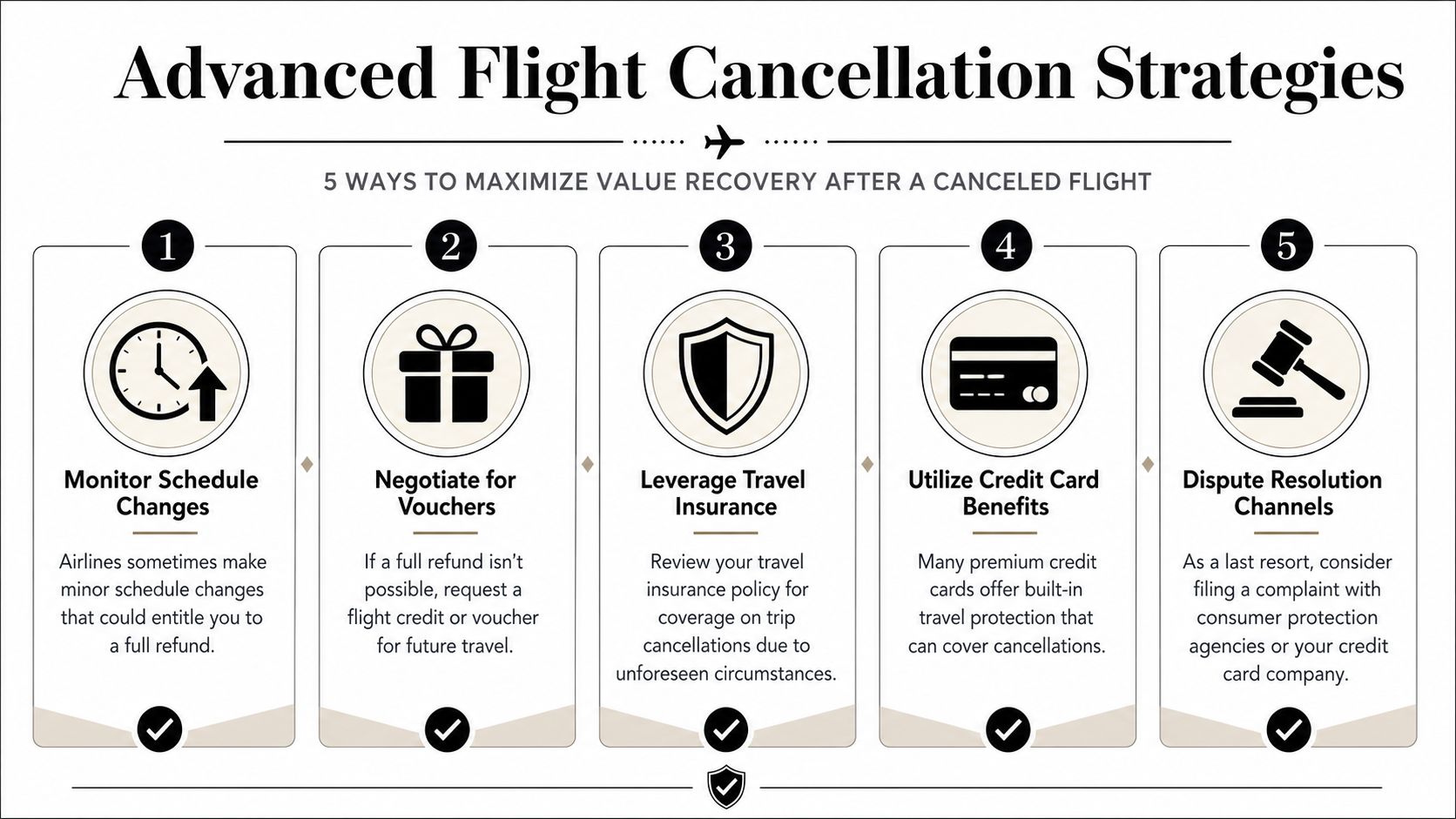
A lot of travelers quit too early. They see “non-refundable” or “credit only” and surrender. Bad move. Many travelers don't know to explicitly ask for a refund loophole or voucher after the initial period, and airlines rarely disclose fare flexibility options unless you ask, as noted in the DOT FAQ draft page.
Scripts that actually work
Use short, calm language. Agents deal with screaming people all day. Be firm, not sloppy.
Use this line: “I understand the standard policy. Please check whether any fare flexibility, waiver, or voucher option is available on this reservation.”
Other good scripts:
- “Please review the booking for any exception or documented flexibility option.”
- “If a cash refund isn't available, what is the best credit or voucher you can authorize today?”
- “Please note in the record that I'm requesting the maximum available recovery under the fare rules.”
- “Can you email the final disposition and remaining value of the ticket?”
What gives you leverage
Airlines respond better when you sound organized. Bring receipts.
| Leverage tool | How it helps |
|---|---|
| Screenshots of fare terms | Stops support from changing the rules mid-call |
| Proof of schedule changes | Can unlock better options |
| Written chat transcripts | Strong evidence if the case escalates |
| Clear ask for voucher or flexibility | Forces the agent to check, not guess |
Check the benefits you already have
Some travelers chase the airline and forget the backup systems sitting in their wallet. Travel insurance and certain credit card protections can matter when the fare rules don't.
Review your trip protection details before you give up. If you carry travel perks, inspect the cancellation and interruption language. If you're military, veteran, or traveling often enough to care about recurring savings, take a look at military discounts on flights for future bookings that give you more breathing room from the start.
Don't ask, “Can you do anything?” Ask, “What is the best exception, waiver, voucher, or flexibility option available on this ticket?”
Last resort still counts
If support misrepresents the terms, ignores a written promise, or refuses to process what you're entitled to, escalate. Ask for a supervisor. Ask for written denial. Then consider a complaint path or card dispute based on the actual terms shown at purchase.
Negotiation isn't magic. It's discipline. You ask the right question, keep records, and make the rep check the system instead of brushing you off.
Frequently Asked Questions From The Field
Can I cancel a Basic Economy ticket?
Usually, Basic Economy is the toughest fare. If your cancellation is voluntary, expect restrictions. Your best shot is to inspect the exact fare rules, look for any flexibility language, and ask whether the value can become a credit instead of disappearing.
If the airline cancels or heavily disrupts the trip, your rights are stronger than the fare label. In those cases, push for the remedy tied to the disruption rather than arguing about Basic Economy branding.
Can I cancel a flight booked with points or miles?
Yes, but the process depends on the airline loyalty program. Go into your mileage account, open the reservation, and read whether the airline returns the points, taxes, or both. Some programs also require you to cancel before departure to preserve value.
Take screenshots before you confirm. Award bookings can behave differently from cash bookings, and you want proof of what the account showed.
Can I cancel one person from a group booking?
Often yes, but don't assume it's a one-click job. Some systems let you split the reservation first. Others require a phone agent to separate one traveler from the rest.
If the trip includes seats, bags, or extras, ask how those attached items will be handled before you approve the split. That's where group cancellations get messy.
What if I already checked in and now need to cancel?
Go back to the booking and look for the check-in reversal option. If you stay checked in, the system may block your cancellation request. Reverse the check-in first, then run the cancellation again.
Should I call or use chat?
Use whichever gets you a written record fastest. Chat is excellent because it gives you a transcript. Phone can work better when the booking is messy, but ask the agent to email the result while you're still on the line.
Is there a good video walkthrough?
Yes. If you want a visual walk-through of airline cancellation screens and common trip-change issues, the YouTube video earlier in this guide is a useful place to start. It helps when the airline app uses different wording than you expected.
If you want a better way to book smarter in the first place, enlist with Sgt. Travel Deals Army. It's a veteran-owned travel platform built for deal hunters, frequent travelers, military families, and anyone tired of bloated booking apps. You can compare options, track better travel value, and check out the booking platform at STD Army Deals before your next mission.