

You're staring at fares, port fees, cabin choices, drink packages, excursion upsells, and enough shiny add-ons to make any budget salute and surrender. This is a common pitfall. Not because the trip was impossible, but because they walked into the booking process without a plan.
A smart traveler handles this like a mission. You lock in the right sailing, stack the right discounts, and control spending before the ship ever leaves port. That's how to save money on cruises without downgrading the whole vacation into a floating compromise.
Your Mission Should You Choose to Accept It
A lot of travelers start the same way. They spot a beautiful sailing, pick a date, get excited for about ten minutes, then see the running total and back away slowly like they've triggered an alarm.
That reaction is normal. It's also fixable.
The problem usually isn't the trip. It's sloppy planning. People focus on the headline fare, ignore the timing, skip discount stacking, and then act shocked when the final bill lands like a supply crate on their chest. You don't need luck. You need discipline.
Veterans already understand this mindset. Civilians can learn it fast. A solid trip comes from preparation, not wishful thinking.

If you're still sorting out the basics, start with this practical guide on planning a cruise vacation without rookie mistakes.
The mindset that saves money
Stop asking, “What's the cheapest sailing?”
Start asking:
- What's the total trip cost
- Which discounts can I stack
- Which extras will ambush my wallet later
- What gives me flexibility if the fare changes
That shift matters. Big time.
Practical rule: The cheapest advertised fare often becomes the most expensive trip once add-ons, excursions, and onboard spending pile up.
You can absolutely take a great trip without getting smoked on cost. But you need a playbook that covers booking timing, itinerary selection, discount layering, and onboard discipline. Follow that, and the vacation feels like a reward instead of a financial punishment.
Mission Prep Timing and Itinerary Intelligence
Timing isn't a side issue. It's one of your strongest weapons. Pick the wrong booking window or the wrong route, and you'll spend the rest of the trip trying to “make up for it” by cutting corners where you shouldn't.
Book with the full budget in mind
Most travelers compare only the base fare. That's a rookie move.
A cheaper itinerary can cost more once you count excursions, transport in port, food off the ship, and the temptation to buy your way out of boredom every day ashore. A smarter traveler looks at the whole mission cost.
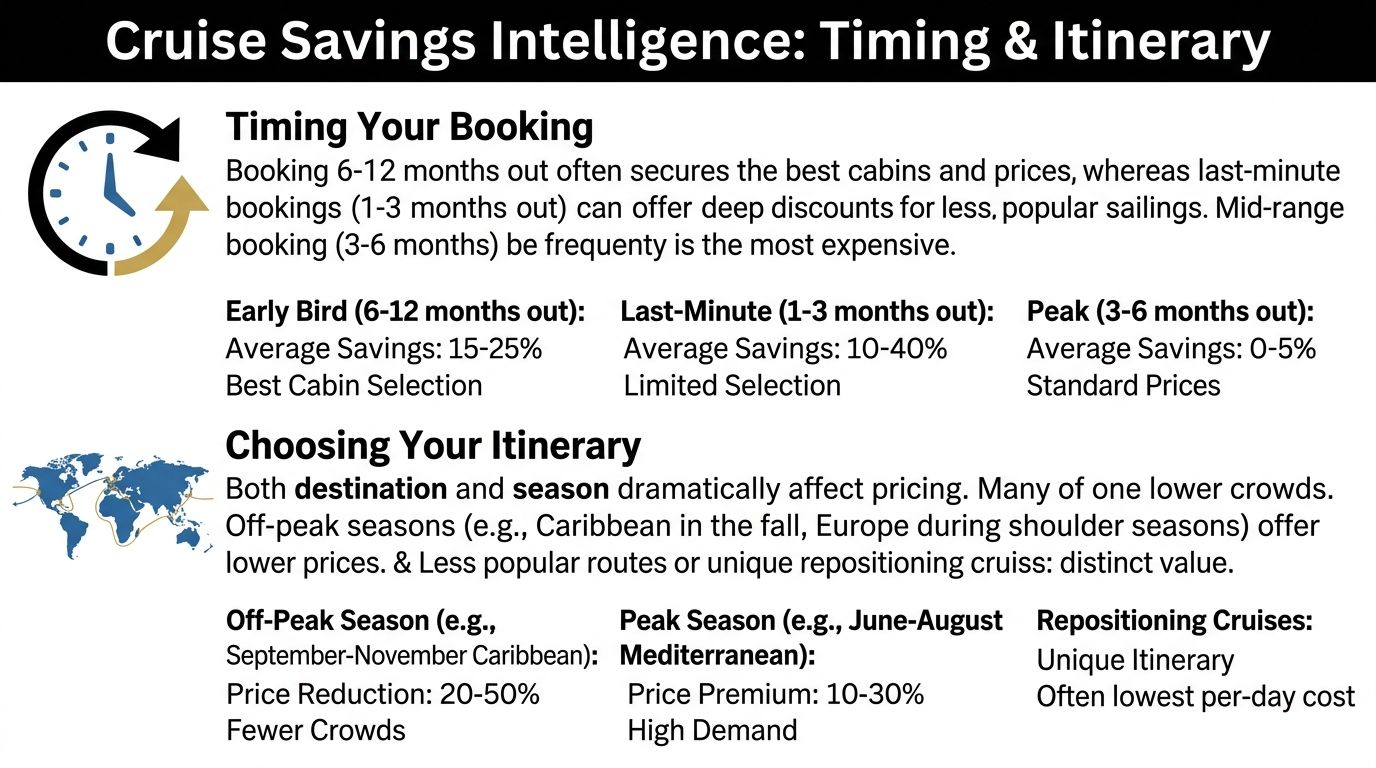
One of the clearest examples is the port-heavy versus resort-focused choice. Data cited by this analysis of cruise perks and total trip costs says port-heavy cruises average $210/day in total spend including excursions, while resort-focused cruises average $165/day, even with a $300 higher base fare. That's the kind of number that should stop you cold before you click “book now.”
Don't worship the lowest sticker price
A port every day sounds exciting until every stop becomes another spending decision. You pay for transport, tours, beach clubs, lunch, gear rental, or some “once in a lifetime” package the cruise line pitched like an ambush in a glossy brochure.
A resort-heavy itinerary often works better for budget control. You get more built-in value, more low-effort enjoyment, and fewer moments where you feel pressured to spend just to have a decent day.
Use that standard when comparing options:
| Itinerary type | Budget effect | Best for |
|---|---|---|
| Port-heavy | Higher chance of daily spending creep | Travelers who love independent exploring |
| Resort-focused | Easier to predict total trip cost | Families, veterans, and value-minded planners |
| Repositioning | Often attractive for value seekers | Flexible travelers who care more about price than routine port patterns |
If you want route ideas that can stretch your dollar, browse these repositioning cruise deals for flexible travelers.
Use timing as leverage
The best booking strategy starts before you compare cabin categories. You need dates that work for your wallet, not just your PTO calendar.
Focus on:
- Shoulder season sailings: These often give you a better balance of value and experience.
- Less hype-driven departures: If everyone wants the same week, expect less pricing mercy.
- Itineraries with built-in low-cost enjoyment: Private island stops or more ship time can protect your budget.
A fare is only “cheap” if the whole vacation stays affordable after you board.
That's the standard. Hold every itinerary against it.
The Booking Battle Plan Secure Your Fare for Less
You don't win at booking by refreshing random deal pages and hoping the travel gods salute you. You win by locking in a strong fare early, then monitoring it like a hawk.
The smart booking window
Cruise lines report that early bookers who reserve 6 to 12 months in advance save an average of 15–25% compared to travelers booking within 3 months of departure, according to CruiseDirect's insider savings guide. That same source says only 30% of travelers actively monitor for fare drops post-booking to claim additional savings.
That tells you two things.
First, early booking isn't just for anxious planners. It's a money move. Second, most travelers leave savings on the table after they book because they stop paying attention.
Your four-step fare attack
Use this sequence.
Choose your sailing early
Grab the route and cabin type you want while selection is still strong. Waiting too long forces you into leftovers.Check the fare rules before paying the deposit
You need to know whether the line allows price adjustments before final payment and what form that adjustment takes.Track the fare after booking
Use tools like CruisePlum or Shipmate, or set your own calendar checks. Don't assume the booking is done just because the confirmation email arrived.Act before final payment
If the fare drops and your booking terms allow adjustments, request the benefit immediately. That might come back as onboard credit or another form of value.
The rate drop trap
Here's where people get sloppy. They see a lower fare and assume rebooking or repricing is automatically a win.
Not always.
According to Cruise Critic's discussion of saving strategies and fare-drop pitfalls, 68% of travelers who rebooked due to a drop lost their original free perk incentives, and 42% of cruise lines now restrict perk retention post-rate-drop in a recent trend referenced there. If your original booking included prepaid gratuities, a drink package, or onboard credit, a lower fare can turn into a worse deal once those perks vanish.
Check the value of the whole booking, not just the new fare line.
That single habit can save you from making an expensive “savings” decision.
What to compare before you reprice
Run this checklist before calling the cruise line or agent:
- Original perks: Are you giving up anything valuable?
- Fare difference: Is the lower rate meaningful after perk loss?
- Cabin category: Are you staying in the same class, or getting bumped into a weaker option?
- Final payment deadline: If you wait too long, your bargaining power may shrink.
A clean booking strategy isn't flashy. It's disciplined. Reserve early, monitor hard, and never chase a lower fare blindly.
If you want a broader look at booking platforms before choosing where to reserve, review these best cruise booking sites for comparison shopping.
Advanced Tactics Discounts Promos and Loyalty Perks
Standard pricing is for people who enjoy overpaying. You're not one of them.
Here, you stack advantages and turn a decent fare into a sharp deal.

Start with military and veteran discounts
If you've served, or you qualify through a military household, check that benefit before you do anything else. Many cruise lines offer military or veteran pricing, but they don't always put it front and center. That means you need to ask directly and verify eligibility early.
Don't assume the first public fare is your fare.
Also check for:
- Resident rates: Some lines discount by state or region.
- Loyalty pricing: Returning guests often get access to targeted offers.
- Promotional bundles: These can be useful, but only if the included extras match what you'd buy.
The gift card move is elite
One of the strongest savings tactics available is buying discounted gift cards for the cruise line before you pay. According to this cruise savings breakdown featuring discounted gift cards, resale platforms such as CardCash can offer discounts of up to 35% on unused gift cards. The same source notes that a $1,000 cruise fare can be reduced by $350 out-of-pocket when you use that approach.
That's not a cute little coupon. That's a real hit against the total.
Use this move carefully:
- Verify the card applies to your cruise line
- Confirm how the cruise line accepts gift cards
- Buy from established resale platforms
- Apply the card to a fare you've already vetted, not a random bad deal
Stack, don't substitute
The power move isn't one discount. It's layered savings.
Here's the smart order of operations:
| Tactic | What it does |
|---|---|
| Early booking | Secures a stronger starting fare and better cabin choice |
| Military or veteran pricing | Lowers the booked rate if eligible |
| Discounted gift cards | Cuts your out-of-pocket cost when paying |
| Loyalty or resident offers | Adds another layer when available |
Most travelers use one of these. Sharp travelers stack them.
Here's a helpful video if you want more deal-hunting motivation before you book:
Loyalty perks matter when they match your habits
Loyalty programs can help, but don't get hypnotized by labels and tier names. If a perk only matters after multiple sailings and you're booking one trip right now, it shouldn't drive your whole decision.
Use loyalty benefits as a bonus, not a reason to overpay.
Field note: A stackable discount you can use today beats a future perk you may never reach.
That's the veteran mindset. Respect the immediate value.
Onboard and Ashore Controlling Total Vacation Cost
Winning the fare battle doesn't mean the campaign is over. Plenty of travelers save on the booking, then get wrecked by drinks, dining, excursions, internet, and pre-trip costs.
Control those, and your vacation stays fun instead of financially stupid.
Keep pre-trip spending from drifting
Flights and hotels before embarkation can inflate the trip. Bundle carefully, compare options across booking tools, and don't book the first airport hotel with a shuttle just because you're tired.
A few practical rules help:
- Arrive with a buffer: Cutting it too close can turn one delay into a disaster.
- Stay where transport is simple: Cheap isn't cheap if every ride costs extra.
- Check cancellation terms: Flexibility matters when travel plans shift.
Audit every onboard upsell
Cruise lines are masters at getting passengers to spend in small bursts. Specialty coffee here. Premium dessert there. A photo package. A tasting. A game. A class. None of these is evil. But they add up fast if you never stop to ask whether you actually want them.
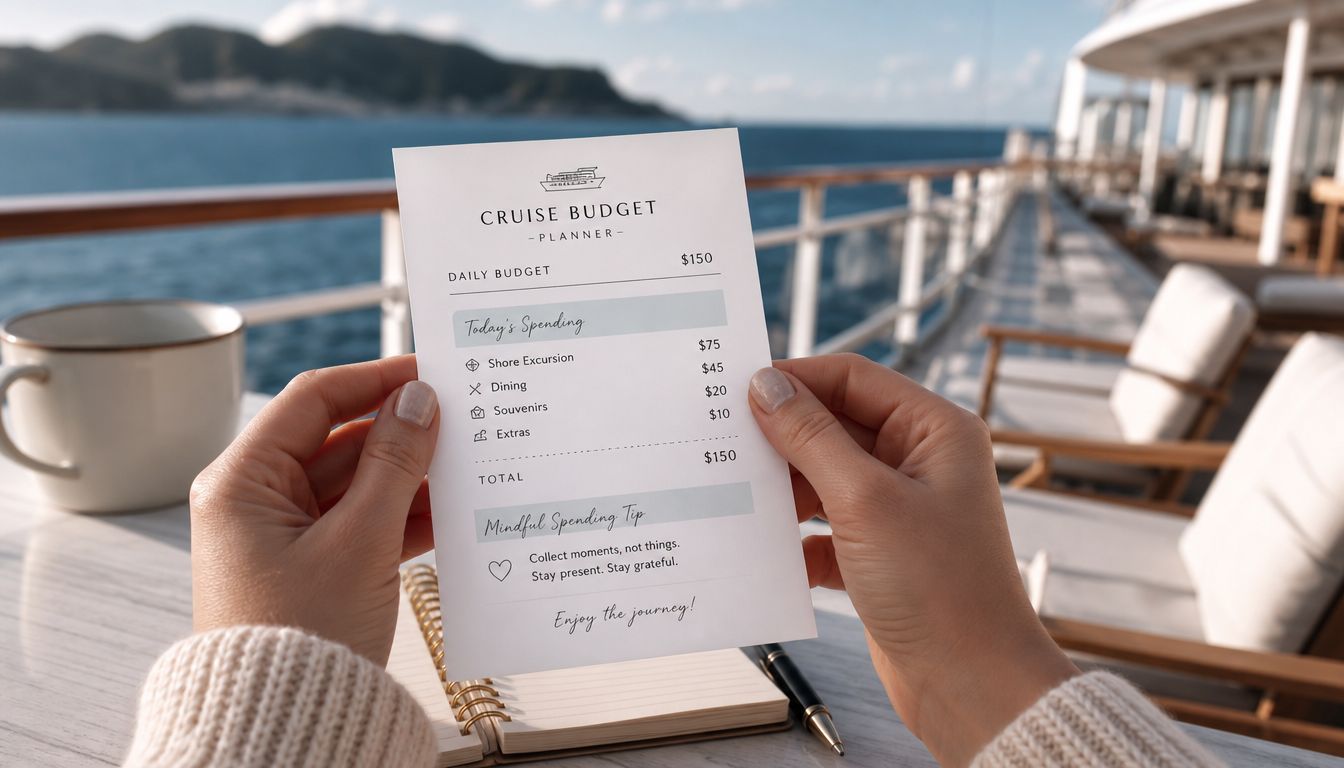
Use this onboard filter:
- Drink package: Buy it only if your real habits justify it. If you're forcing yourself to “make it worth it,” it probably wasn't worth it.
- Specialty dining: Pick one meal you'll remember instead of trying to conquer every venue.
- Wi-Fi: Decide whether you need full connectivity or just a few check-ins.
- Photos and shopping: These are optional. Treat them that way.
Handle port days like a pro
A shore day can be cheap and enjoyable or expensive and chaotic. The difference is usually planning.
Some ports reward independent exploration. Others work better with organized transport. The point is to decide before you get off the ship, not while you're standing in a tourist zone getting pitched by everybody with a lanyard and a laminated sign.
Try this approach:
Identify one priority per port
Beach, history, food, snorkeling, shopping, or just a walk. One mission is enough.Research what's easy to do independently
Many ports have low-cost options that don't require a cruise line excursion.Leave room for one paid splurge
If there's a port where the premium experience is worth it, choose that one and keep the others lean.
You don't need to buy an excursion at every stop to have a great trip. You need a plan for each stop.
That mindset protects your budget without making the vacation feel restricted.
Your Debriefing Savings Checklist and Final Orders
You don't need a miracle fare. You need a disciplined process. That's the whole game.
Use this checklist before you book and again before you sail.
Final savings checklist
- Choose by total trip cost: Don't judge an itinerary by base fare alone.
- Book early when the route matters: Better choice and stronger pricing beat panic booking.
- Track your fare after booking: Most travelers don't. That's their mistake.
- Read the repricing rules: A lower fare can cost you valuable perks.
- Ask for military or veteran pricing: If you qualify, don't leave it on the table.
- Use discounted gift cards when the math works: This is one of the strongest stackable tactics available.
- Set a spending plan for onboard extras: Decide before temptation takes over.
- Treat shore excursions selectively: Every port doesn't need a paid tour.
Sample Cruise Cost Comparison
| Cost Item | Rookie Booker | S.T.D. Army Pro |
|---|---|---|
| Booking window | Waits and takes whatever fare is available | Books early for stronger pricing and selection |
| Fare monitoring | Never checks again after deposit | Watches for eligible fare drops before final payment |
| Perk protection | Rebooks blindly and risks losing perks | Compares total value before changing fare |
| Military discount | Forgets to ask | Checks eligibility upfront |
| Payment strategy | Pays full posted amount | Uses discounted gift cards when possible |
| Itinerary choice | Picks lowest headline fare | Compares total vacation cost, including port spending |
| Onboard spending | Buys extras reactively | Sets a spending plan before sailing |
| Port days | Books expensive excursions at every stop | Mixes free, low-cost, and selective paid activities |
Your final order is simple. Don't pay lazy prices for a trip you can book strategically. If you've got the patience to compare, the discipline to track fares, and the nerve to skip bad upsells, you can travel well without draining your account.
If you want a veteran-owned place to compare travel deals, enlist with Sgt. Travel Deals Army. It's free to join, built for smart deal hunters, and worth checking before you book your next getaway. You can also compare options on their booking platform at STD Army Deals.