
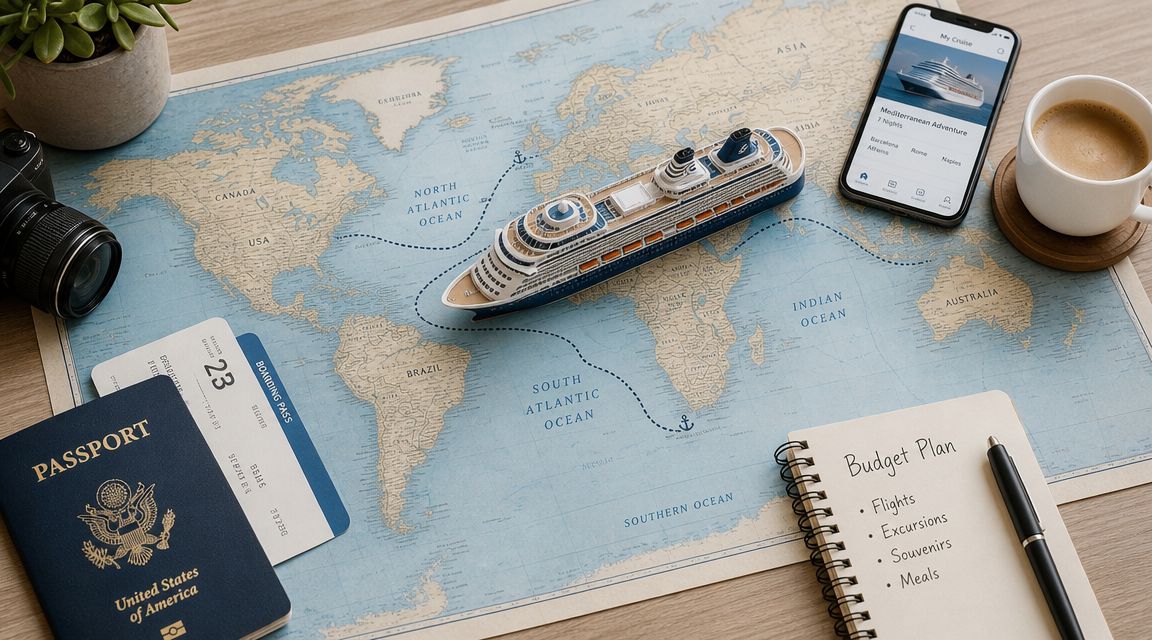
You're probably staring at a one-way ocean itinerary with a surprisingly low fare and thinking, “This looks like a steal. What's the catch?” Good instinct. That fare might be excellent, or it might be a budget trap once flights, hotels, transfers, and baggage start piling on.
Listen up. Repositioning cruise deals can be some of the smartest travel buys on the board, but only if you judge the whole mission, not just the sticker price. The rookies focus on the cabin fare. Veterans price the entire operation from front door to final airport ride.
That's the briefing today. Not fantasy. Not fluff. Just a hard-nosed way to figure out when a repositioning sailing is a real bargain and when it's just a cheap-looking headline.
Understanding Repositioning Voyage Deals
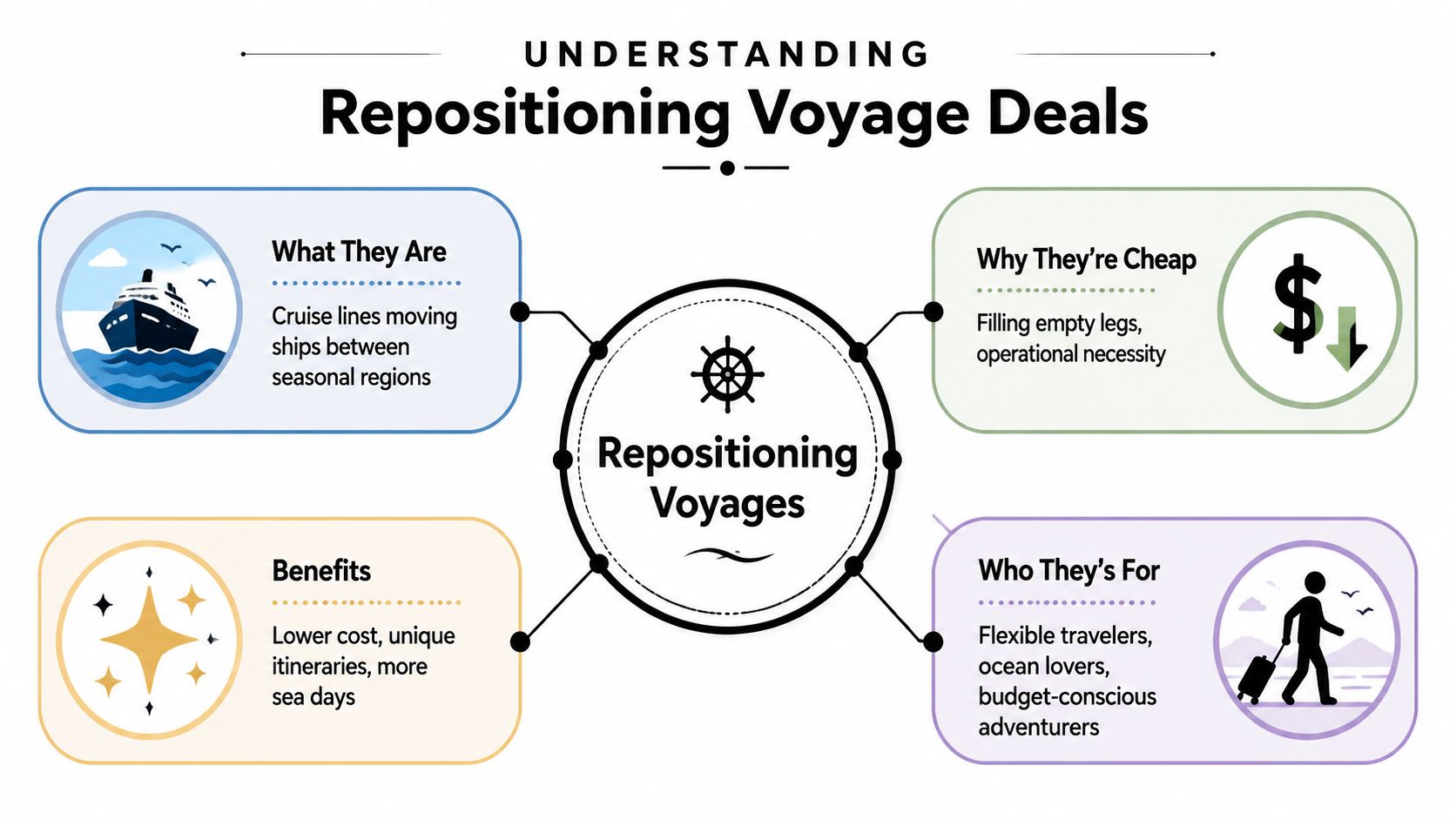
You want a long ocean trip, a more unusual itinerary, and a fare that doesn't punch you in the teeth. That's where repositioning sailings come in. A cruise line runs these trips when it needs to move a ship from one seasonal region to another. Think Caribbean to Europe, or one coast to another, because demand shifts with the calendar.
That operational move is the whole reason the deal exists. The ship has to relocate anyway, so the line sells cabins on the transfer instead of moving the vessel empty. These trips are usually one-way, and they tend to pack in more sea days than a standard round-trip vacation.
Why the prices can look so good
The headline bargain usually comes from one thing. These voyages appeal to a narrower crowd. Not everyone wants a one-way trip with a stack of sea days, so lines often price them aggressively.
One expert review cited a case where a repositioning fare ran at about half the nightly rate of a regular sailing on the same ship, as noted in this expert video review of repositioning pricing. That's why these trips get veteran deal hunters excited.
Practical rule: If you love the ship experience as much as the ports, you're the target customer for this kind of deal.
Who should book one
These trips are best for travelers with flexibility, patience, and a little appetite for the unusual. If you need a quick weekend break with nonstop port action, keep moving. If you want a longer journey and you enjoy sea days, this category deserves your attention.
The strongest fit usually looks like this:
- Flexible schedules: You can work with one-way routing and odd departure dates.
- Ocean-day fans: You don't need a new port every morning to feel entertained.
- Budget-minded planners: You're willing to do the math on airfare, hotels, and transfers.
- Travelers who like unusual routes: You enjoy the idea of crossing an ocean more than repeating a standard loop.
Some travelers first get curious about these sailings while researching route-based options like Alaska departures from California, then realize true value often shows up when ships are being moved rather than when they're running their standard pattern.
Here's my opinion. Repositioning cruise deals are not “cheap vacations” by default. They're strategic buys. Treat them that way and you'll make smarter decisions than casual browsers of fare listings.
Prime Time and Prime Routes for Deals
Timing isn't optional. It's the whole game.
Repositioning inventory follows the fleet calendar, not your vacation calendar. CruiseMapper's repositioning hub lists 1,574 repositioning itineraries, including 647 in spring, 140 in summer, 514 in fall, and 258 in winter, which makes spring and fall the main hunting seasons for recurring opportunities rather than random flukes, according to CruiseMapper's repositioning listings.
The two windows that matter most
The strongest deal-hunting periods are spring and fall. That's when lines reshuffle ships to match seasonal demand. In plain English, they're moving hardware where the money is.
Spring often lines up with ships shifting toward Europe or other warm-season regions. Fall often lines up with ships heading back toward winter-heavy markets. If you search outside those windows, you can still find sailings, but the board is usually less active.
Don't hunt these trips like they're random flash sales. Hunt them like seasonal migrations.
Routes worth stalking
Some patterns show up again and again because they match how fleets move around the world. A few examples matter more than others.
| Route pattern | What it usually means for you | Best fit traveler |
|---|---|---|
| Transatlantic | Long ocean crossing, many sea days, one-way finish in a different region | Travelers who want pure ship time |
| Pacific repositioning | Bigger logistics puzzle, potentially excellent value, more planning required | Flexible travelers who don't mind complexity |
| Coastal or regional moves | Shorter one-way routing, easier flight planning | First-timers testing the waters |
What to expect by route type
- Transatlantic runs: These are the classic examples. Lots of sea days. Fewer port stops. Strong fit for readers who want the voyage itself.
- Pacific crossings: More adventurous, often more complicated on the airfare side. These can be strong buys, but the logistics matter more.
- North American coastal moves: Easier entry point. Less dramatic than crossing an ocean, but often simpler to price out.
My recommendation is simple. Start with routes that are easy to reach from your home airport. Don't chase an exotic one-way route just because the fare looks sexy on the screen. If getting to the departure port and home from the arrival port is a pain, the “deal” can go bad fast.
Your Search and Booking Toolkit
Most travelers search for these sailings badly. They browse aimlessly, compare the wrong dates, and ignore the one-way logistics until the last minute. That's how you miss the good stuff.
Listen up. Use a system.
Start with the right search frame
You are not shopping for a normal vacation. You are looking for a one-way operational sailing. That means your search terms and filters need to reflect reality.
Use route-first thinking. Search by region shift, not just by brand. Look for one-way itineraries, transoceanic runs, and shoulder-season sailings. If a site has a one-way filter, use it immediately.
Industry coverage consistently notes these voyages often cost less per day than regular sailings. Some transatlantic examples have been listed as low as $65 per person per day, and one published deal showed a 16-night Celebrity Constellation sailing in April 2025 marketed from $132 per couple per day for an inside cabin, as detailed by About Luxury Cruising's repositioning deal roundup.
Build a repeatable hunt routine
Don't search once and call it good. Run a pattern.
Check seasonal windows first
Search spring and fall before anything else. That's where the action usually is.Filter for one-way itineraries
Remove round-trip noise fast. You're trying to isolate relocation sailings.Compare inside cabins first
Start with the lowest cabin category to judge base value. Then decide whether an upgrade is worth it.Save the route, not just the date
If one sailing sells out or jumps in price, another similar route may still be workable.Track total travel friction
A cheap fare from a hard-to-reach departure port may be weaker than a slightly higher fare from an easy gateway.
Use tools like a pro
You don't need fancy software. You need discipline.
- Set fare alerts: Let price changes come to you instead of manually checking every day.
- Bookmark route searches: Keep a small list of favorite routes and revisit them on a schedule.
- Check line websites and aggregators: Some deals appear clearly on one platform and poorly on another.
- Review cabin categories carefully: A low fare can look great until the cabin location makes the trip less appealing.
If you want a broader comparison workflow for travel shopping, this guide to the best cruise booking sites can help you structure the search process more efficiently.
A smart hunter doesn't ask, “Is this fare low?” A smart hunter asks, “Is this the best total-value option on this route?”
Early booking versus waiting
Here's my take. If the route is highly specific and you care about cabin choice, book earlier. If you're flexible on ship, date, and stateroom, you can sometimes benefit by waiting while lines try to fill unsold cabins.
But don't get cute if airfare is likely to be the expensive part of the mission. Saving on the sailing and losing on flights is amateur hour.
Mastering One-Way Travel Logistics
Ultimately, cheap-looking deals get exposed.
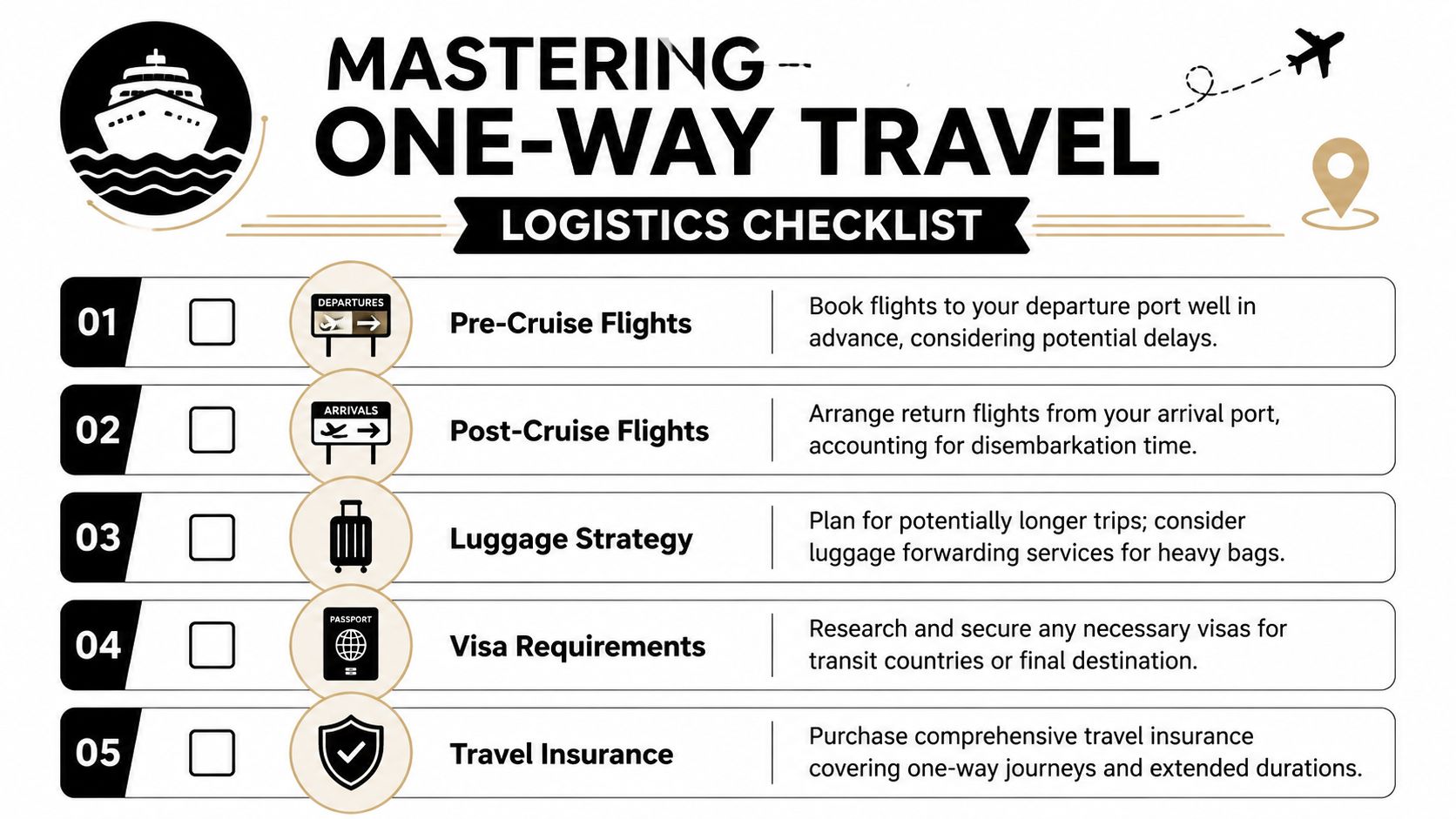
A repositioning fare can be excellent and still fail the value test once you bolt on the rest of the trip. One-way airfare, pre-night hotel, post-trip hotel, port transfers, baggage fees, and awkward airport timing can wreck the budget if you don't price them upfront.
The all-in test
A major overlooked question is whether these trips still hold up after adding the hidden extras. Industry discussion confirms the low per-day pricing angle, but it also points out that travelers often don't get a clear answer on total trip cost once one-way airfare and hotels enter the picture, as explained in this YouTube discussion on the hidden costs of repositioning trips.
That's the main battlefield. Not the cabin fare. The all-in number.
Use this checklist before you call any itinerary a bargain:
- Departure flight: Can you reach the embarkation city without forcing a brutal connection or overnight scramble?
- Arrival flight: Is the return airport practical, or are you ending far from a useful flight network?
- Pre-trip hotel: If a delay would make you miss departure, add a hotel night and price it accurately.
- Post-trip hotel: If arrival timing is messy, don't pretend you can always fly home the same day.
- Transfers and baggage: Port-to-airport transport and bag costs are part of the trip. Count them.
Build your decision around friction
Here's my rule. The best repositioning cruise deals are often the itineraries with the least painful air setup, not always the lowest cabin fare.
A one-way trip becomes attractive when the flight pieces line up cleanly. It starts losing appeal when you need awkward city pairs, expensive bags, or extra hotel nights that erase the cabin savings. That's why it helps to understand broader airfare strategy, including whether round-trip tickets are cheaper, before you commit to a one-way ocean itinerary.
This video is worth your time before booking:
A simple framework that works
Don't overcomplicate it. Compare three scenarios side by side.
| Option | What to compare |
|---|---|
| Repositioning sailing | Fare plus flights, hotels, transfers, baggage |
| Standard round-trip sailing | Cruise fare plus simpler round-trip air |
| Land vacation alternative | Flights plus hotel nights plus local transport |
If the repositioning option still wins after honest math, salute and book it. If not, move on. There's no medal for forcing a deal that doesn't work.
Cheap fares don't matter if the route bullies your budget on the back end.
What to Expect Onboard Your Voyage
The onboard mood is different. Slower. Calmer. More focused on the ship than the next port sprint.
That change is exactly why some travelers get hooked on these trips. You wake up, grab coffee, look out at open water, and your day isn't dictated by a whistle-stop port schedule. You've got room to breathe.

Life at sea feels more deliberate
A sea-day-heavy voyage rewards travelers who like routines. Breakfast without rushing. Time by the pool. Long lunches. A book you finally finish. Evening entertainment that feels like part of the trip rather than a filler between port calls.
The people onboard often feel different too. You'll usually notice more travelers who chose the journey on purpose. They tend to enjoy conversation, ship life, and the rhythm of being at sea for longer stretches.
Pack for range, not just style
This kind of sailing often crosses climates, so pack for movement. You may leave warm weather and arrive somewhere cooler, or the reverse. Build around layers, comfortable deck clothes, one or two polished evening options, and shoes you'll wear.
A practical packing mix looks like this:
- Layers first: Light outerwear and easy mix-and-match basics beat overpacking.
- Sea-day comfort: Bring what you'll wear for lounging, walking decks, reading, and casual dining.
- Evening coverage: Pack enough for nicer dinners without dragging your whole closet along.
- Small-day essentials: Medication, motion aids if you use them, chargers, and a carry-on setup that keeps embarkation easy.
The travelers who enjoy these voyages most don't chase constant stimulation. They settle into the rhythm and let the trip unfold.
If you're the type who gets restless without nonstop activity, this style may test your patience. If you like the ship itself, a longer ocean crossing can feel less like dead time and more like the vacation finally slowing down enough to enjoy.
Advanced Tips for Seasoned Deal Hunters
Veteran move number one. Stop assuming the cheapest fare is the best value.
A key question is whether you should prioritize a newer ship or the lowest possible price. Recent analysis notes that new-ship repositioning sailings can be about 50% cheaper than their typical pricing, while older ships often deliver the lowest per-day cost overall, according to Royal Caribbean's repositioning guide.
New ship versus old ship
If you care about hardware, entertainment, dining variety, and a fresher onboard feel, a repositioning sailing on a newer ship can be a sharp buy. You're often accessing a more premium experience at a better relative value than that ship usually commands.
If your mission is pure budget efficiency, older ships often win. They may not have every flashy feature, but they can be the stronger purchase when your only question is cost per day.
My recommendation:
- Pick newer ships when the onboard experience is central to why you're booking.
- Pick older ships when price discipline matters more than novelty.
- Don't split the difference blindly. Decide what matters before you compare fares.
Solo travelers need a tougher filter
Solo travelers have to be more selective. One-way sailing value gets harder to protect when pricing structures punish single occupancy. That means the cabin fare alone doesn't tell the story.
Focus on sailings where the total logistics are easy and the itinerary itself is compelling enough to justify the premium. If the route is messy and the solo pricing feels heavy, keep your powder dry and wait for a better fit.
Last-minute booking is not for everyone
Last-minute strategy only works if your schedule is flexible and your airfare options aren't likely to sabotage you. The cabin fare might improve close to departure, but your transport setup can get uglier just as fast.
That means last-minute booking works best for travelers who can move quickly, depart from strong airport markets, and treat cabin selection as secondary. If you need a specific room, specific airport pairing, or careful timing, book earlier and protect the whole trip.
Listen up. The strongest deal hunters don't chase every low number. They chase the right combination of route, ship, timing, and total trip cost. That's the difference between looking clever online and actually traveling well.
If you like your travel advice straight and your booking strategy sharper than the average bargain hunter, enlist with Sgt. Travel Deals Army. It's a veteran-owned platform built for travelers who want to compare smarter, find real discounts on flights, hotels, resorts, car rentals, and more, and skip the bloated big-app nonsense. You can also check out STD Army Deals when you're ready to start pricing your next mission.
1 thought on “Repositioning Cruise Deals: The Ultimate Savings Guide”