
You've got the bags half-packed, the leash by the door, and your dog is already running pre-deployment enthusiasm drills in the living room. Then the fine print hits. Pet fee. Breed rule. Weight cap. “Dogs allowed” suddenly means “dogs tolerated, under strict supervision, in two rooms near the ice machine.”
Don't book dog friendly lodging on vibes.
Treat it like a mission. The win is not finding a place that merely says yes to pets. The win is finding a stay that is honest about its rules, fair on price, and set up so both you and your co-pilot can settle in without friction.
That matters because dog-friendly travel is no longer some weird side request. Hotels, cabins, and vacation rentals are competing for pet owners now, which gives deal hunters real room to work. Better options exist. Better prices exist too, if you know where to look and what to ask before you lock in a reservation.
Your job is simple. Cut through the fake-friendly listings, spot the hidden costs, and book the place that fits the mission. That is how you avoid surprise fees, hallway chaos, and a “pet welcome kit” that turns out to be one plastic bowl and a dirty patch of grass behind the dumpster.
Why Your Co-Pilot Deserves a Great Barracks
You roll into town after a long drive, your dog has held it together for six hours, and the hotel clerk finally drops the bad news. The only pet rooms are by the side exit, the relief area is a sad strip of gravel, and the pet fee is high enough to buy your co-pilot a better bed at home.
That is a bad barracks selection, plain and simple.
Your dog is not extra baggage. Your dog is part of the travel unit. A good stay gives your pup room to settle, a safe place to walk, and a setup that does not turn every potty break into a logistics problem. It also gives you fewer headaches, which matters when you are trying to keep the trip on schedule and the budget under control.
A dog-friendly label means nothing by itself
Some properties welcome dogs. Others just permit them.
You can spot the difference fast. A place that gets it right spells out the fee, lists the size or breed rules clearly, points you to a real relief area, and puts you near practical exits without sticking you in the worst room on the property. A place that merely tolerates pets hides the rules, charges a chunky fee at check-in, and acts surprised that dogs need outdoor access.
That difference changes the whole trip. The better property helps your dog settle faster and keeps normal dog behavior from becoming a problem. The weaker one creates friction every few hours, then makes you pay for the privilege.
Practical rule: Book lodging that was set up for dogs on purpose, not lodging that grudgingly made an exception.
Good lodging protects your budget too
A rough pet stay costs more than the room rate. You pay in surprise fees, wasted time, extra cleaning charges, and the occasional panic rebooking when the “pet-friendly” policy turns out to be a mess.
Smart deal hunters, especially families and veterans who already know how to stretch travel dollars, do not fall for the cheapest headline rate. They compare the full cost of the stay, including pet fees, parking, and whether the property layout will force extra hassle. If you need help sizing up total value, use these hotel price comparison websites for smarter travel deals before you commit.
What smart travelers judge first
Rookie travelers chase pretty photos. Sharp travelers check the parts that affect real life with a dog.
Focus on these three:
- Policy clarity: Clear pet rules save you from ugly surprises at the desk.
- Room access: Ground-floor rooms, easy exits, and nearby walking space make every break easier.
- Actual value: A slightly higher nightly rate can be the better deal if the pet fee is fair and the stay works.
A strong dog-friendly stay keeps the mission calm. Your dog settles. Your routine stays intact. You are not arguing with staff, hunting for grass in the dark, or paying luxury prices for bare-minimum pet access.
Book for function first. Cute lobby second.
The Recon Phase Where to Search for Pawesome Stays
The first mistake people make is trusting one booking site. Don't do that. Dog friendly lodging gets listed inconsistently, filters are often sloppy, and the fine print can be buried three clicks deep.
Use a layered search. Broad sweep first. Verification second. Deal comparison last.
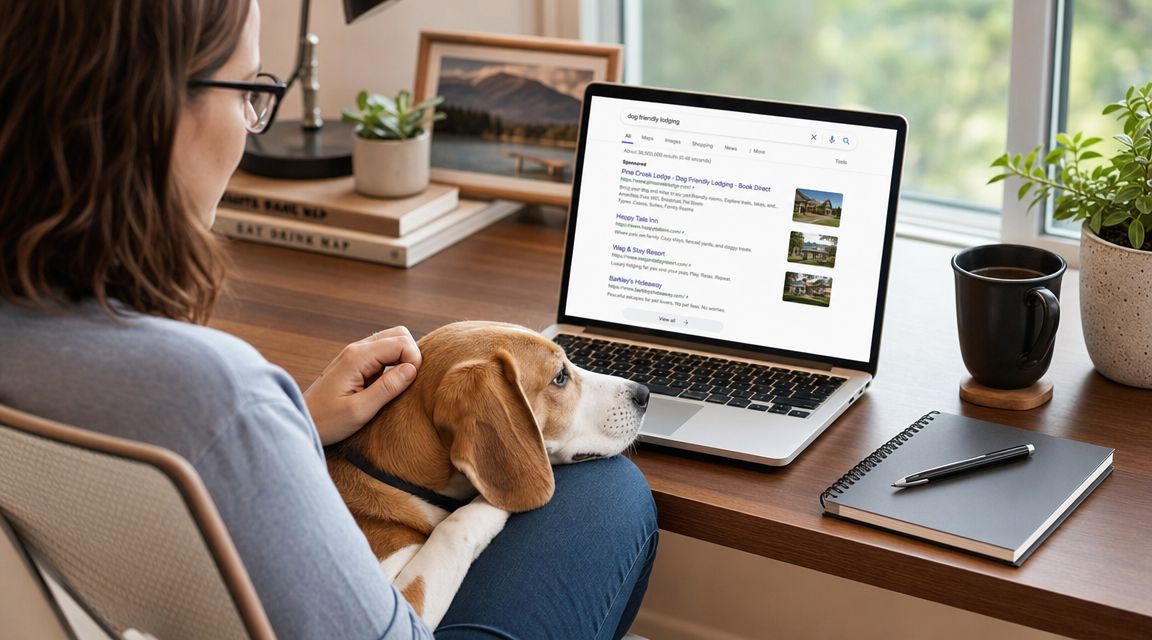
Start wide, then narrow hard
A useful reality check: 53% of travelers now take holidays with their pets, and that figure is 19% higher than a decade ago, according to Condor Ferries' pet travel statistics roundup. That matters because rising demand pushes more hotels to chase pet-owning travelers. You have options. Act like it.
Here's the workflow I recommend:
Run a broad map search
Use Google Maps or your preferred booking platform to identify hotels in the right area first. Don't obsess over pet filters yet. Lock down location, parking, and neighborhood walkability.Apply pet filters carefully
Once the field is smaller, turn on the pet-friendly filter. Then open each listing and look for signs of weak policy disclosure. If the listing says “pets allowed” but skips the operational details, put that hotel in the maybe pile, not the yes pile.Compare rate types
Check refundable versus nonrefundable options. With dogs, flexibility matters more. If your pet gets sick, travel changes, or weather goes sideways, a rigid booking can become an expensive mistake.Read recent reviews with one mission
Search within reviews for words like “dog,” “pet fee,” “barking,” “grass,” “elevator,” and “clean.” You're looking for real-world friction points.
For a broader price-checking workflow, this guide on hotel price comparison websites is worth a quick look before you lock anything in.
Use video to sharpen your filter game
A lot of travelers think they know how to use booking filters. Most don't. They click the obvious buttons and miss the details that save money and hassle.
This quick video is a solid refresher before you start hunting:
Watch it, then go back and search again with a colder eye.
Your search priorities in order
Don't rank properties by vanity. Rank them by function.
| Priority | What to check | Why it matters |
|---|---|---|
| 1 | Pet policy detail | Prevents ugly surprises |
| 2 | Total trip cost | Nightly rate alone lies |
| 3 | Nearby walking access | Your dog needs easy routine |
| 4 | Room location options | Easier exits help everyone |
| 5 | Guest review patterns | Tells you how the policy works in real life |
Search like an operator, not a tourist. A hotel can look beautiful and still be a terrible fit for a dog.
The win condition is simple. Find a property where the location works, the rules are clear, and the total cost still makes sense after the pet fee enters the room.
The Interrogation Asking the Right Questions Before You Book
“Pet friendly” is not a real answer. It's a label. Labels don't tell you whether your dog fits the rules, whether the fee wrecks the budget, or whether you're about to get shoved into the worst room on the property.
A lot of booking pages still hide the details that matter most, including weight caps, number-of-pets limits, and specific nightly fees, as explained by Petswelcome's dog-friendly hotel policy examples. That hidden stuff can change your total trip cost and your whole plan.
So call the hotel. Yes, call. Two minutes on the phone beats one nasty surprise at the front desk.
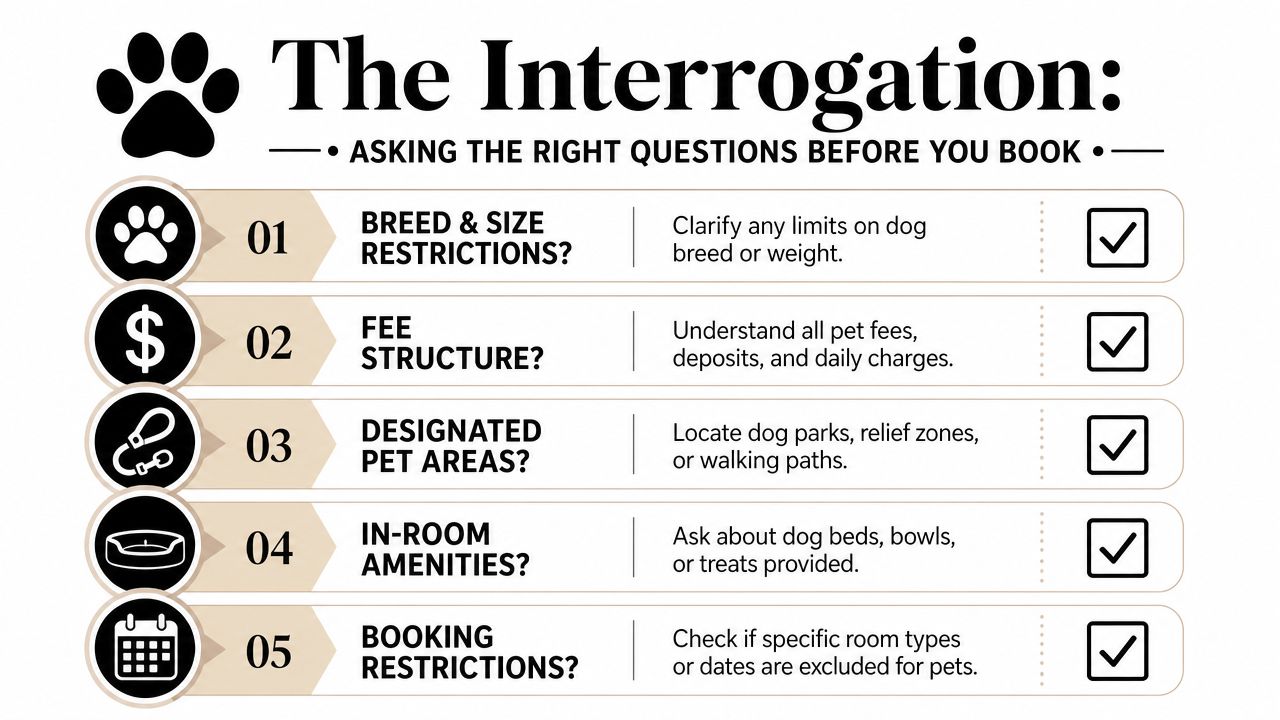
The five questions that matter
Ask these in plain English. Then write the answers down.
If the staff member sounds unsure, you don't have a clear policy. You have a gamble.
- What dogs do you allow? Ask about breed rules, size caps, and whether there's a limit on the number of dogs.
- What's the full pet charge? Don't ask only “Is there a pet fee?” Ask whether it's nightly, per stay, per pet, refundable, or tied to a cleaning charge.
- Which rooms can I book with a dog? Some properties restrict pets to certain floors, entrances, or room categories.
- Where does my dog go outside? Ask about relief areas, walking routes, nearby grass, and whether there's a safe place for early morning or late-night breaks.
- What behavior rules should I know now? Ask about barking complaints, crate expectations, housekeeping access, and whether dogs can be left alone in the room.
The script that gets clean answers
You don't need a fancy speech. Use this:
“I'm traveling with my dog and I want the exact pet policy before I book. Can you walk me through fees, size limits, room restrictions, and whether the dog can be left alone in the room?”
That wording works because it forces specifics.
If you need backup on flexibility before paying, review a smart refresher on hotel cancellation policy basics. Dog travel goes smoother when your booking terms aren't a trap.
Red flags that should make you walk
Some properties aren't worth the hassle. Bail out if you hear any of these:
- “It depends who checks you in.” That means the policy isn't managed well.
- “I think the fee is…” No. If they charge it, they should know it.
- “Just book and ask later.” Terrible advice.
- “We're pet friendly, but not all dogs.” Fine, but they need to define that immediately.
- “You'll see the policy after checkout details.” Weak transparency.
The best dog friendly lodging options don't make you play detective after you've paid. They answer fast, answer clearly, and answer consistently.
Beyond Pets Allowed What Truly Great Lodging Looks Like
A hotel that says yes to dogs isn't automatically a good dog hotel. That's the key distinction.
The better properties have moved beyond simple permission. They build a stay around convenience. Some now offer pet beds, bowls, treats, and maps of nearby walking trails, which shifts the experience from “allowed” to “welcomed,” as shown in Visit Central Oregon's roundup of pet-friendly stays and dog-ready perks.
What separates weak from strong
Think of dog friendly lodging in two tiers.
Tier one is tolerance. Your dog can stay, but the hotel does nothing to make that easy.
Tier two is readiness. The property has thought through the stay from arrival to bedtime to the first walk in the morning.
Here's what readiness looks like:
Arrival that makes sense
Easy entry points, space to unload, and no awkward lobby gauntlet if your dog is excited after the ride.Simple room function
Durable flooring, enough room for a crate or dog bed, and a layout that doesn't feel like a booby trap of cords, snacks, and breakables.Dog-specific support
Bowls, treats, spare cleanup supplies, couch covers, or guidance on nearby walking routes.Location that reduces friction
Good sidewalks, nearby green space, and practical outdoor access beat fancy wallpaper every day of the week.
Cheap can be expensive
Travelers often outsmart themselves. They choose the lowest base rate, ignore the pet setup, and then spend the whole stay fighting the property.
That “cheap” room can cost more in stress, more in extra fees, and more in lost time if you have to drive somewhere every time your dog needs a proper walk.
A slightly pricier room can be the better value if it gives you:
- easier outdoor access
- fewer restrictions
- better dog amenities
- less need to buy supplies on arrival
- a calmer environment for sleeping and downtime
Good value isn't the lowest sticker price. Good value is the stay that works without constant correction.
My standard for a yes
I'd greenlight a property faster if it checks most of these boxes:
| Feature | Why I care |
|---|---|
| Clear dog rules | Saves you from check-in drama |
| Nearby walking area | Helps your routine immediately |
| Dog amenities on site | Cuts packing and stress |
| Reasonable room assignment | Makes exits and cleanup easier |
| Staff who answer directly | Tells you the hotel is organized |
Don't reward vague hotels with your money. Pick the place that has thoughtfully considered what traveling with a dog feels like.
Mission Prep Getting Your Dog and the Room Ready
A smooth stay starts before check-in. If your dog arrives overstimulated, under-exercised, or missing key supplies, you're setting both of you up for a sloppy operation.
Hotels also expect you to handle your business. Owners are often required to accept liability for damage or disturbances, and properties commonly expect leashes, crates, and cleanup supplies to be part of the package, according to hospitality research on pet policy design and owner responsibility.
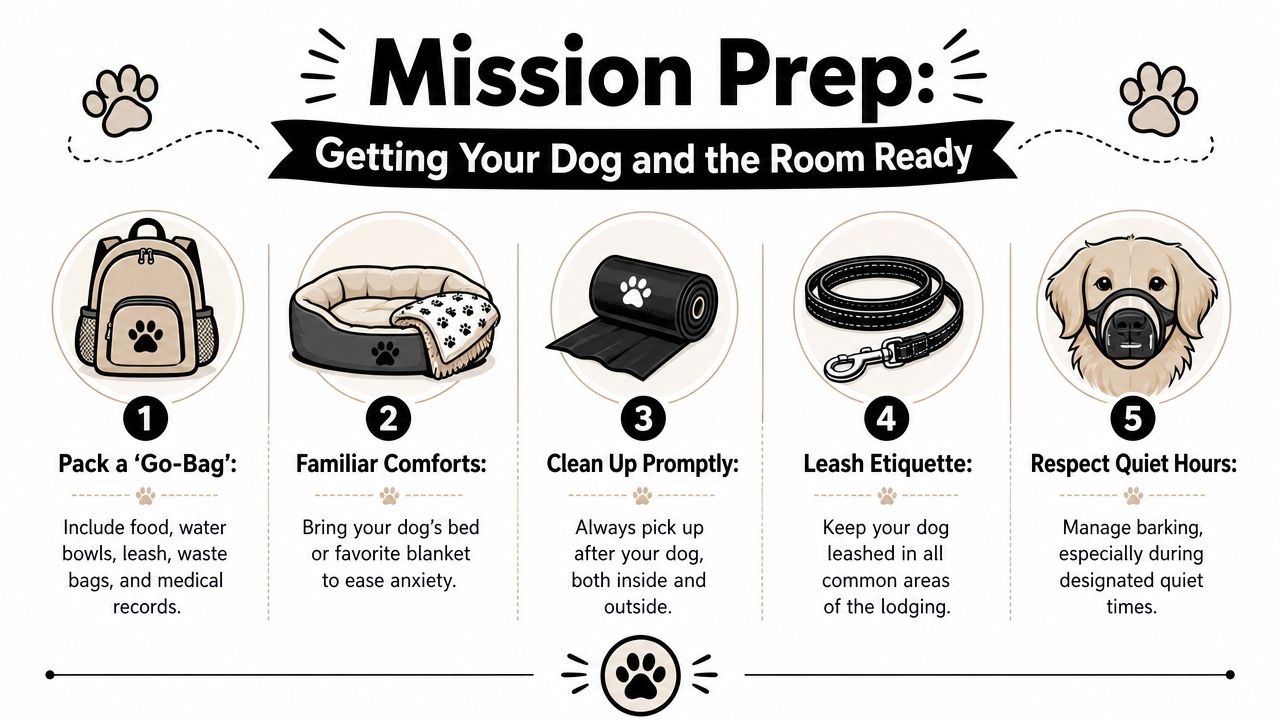
Pack like your dog is a real traveler
Don't rely on the hotel to fill gaps. Bring your own kit.
- Food and feeding gear: Pack enough food for the full stay, plus a little buffer. Bring bowls you already use.
- Leash and backup leash: Gear fails. Have a spare.
- Waste bags and wipes: Keep them on you, not buried in the suitcase.
- Medication and records: If your dog needs anything daily, it stays with you, not in checked luggage or a random tote.
- Comfort items: Favorite blanket, toy, or bed. Familiar scent helps your dog settle faster.
If you want a general packing mindset for organizing gear efficiently, this broader all-inclusive resort packing list has useful carryover habits even if your mission is a hotel stay.
Set the room conditions fast
When you enter the room, don't just toss your stuff down and admire the decor. Sweep the space.
Check for:
- dropped food near furniture
- exposed cords within chewing range
- cleaning chemicals stored low
- fragile items near tail height
- gaps where a nervous dog might wedge itself
Then set your dog's zone. Put the bed or blanket in one corner. Place water immediately. Give your dog a few quiet minutes to sniff and reset.
The first fifteen minutes in the room shape the next fifteen hours. Keep it calm.
Behavior rules that keep you welcome
Hotel success with dogs comes down to routine and control.
Take your dog out soon after arrival. Keep leash discipline in common areas. Don't assume “friendly” means other guests want an off-duty greeting in the elevator. If your dog is barky when left alone, don't test that in a hotel for the first time.
A few hard truths:
- Exercise before downtime: A tired dog is easier in a hotel.
- Skip housekeeping if needed: If your dog gets stressed by strangers entering, decline service during the stay.
- Respect quiet hours: That includes hallway noise, door slams, and reactive barking.
- Clean up immediately: Inside or outside. No excuses.
The goal is simple. Leave the room in a condition that makes the hotel glad it accepted dogs in the first place.
Operation Save-a-Buck Pro Tips for Deal Hunters
Dog travel can get expensive fast if you shop lazily. The room rate is only one part of the bill. The pet fee, parking, cancellation terms, and room restrictions can turn a “deal” into nonsense.
So tighten up. Here's how to save money without booking a miserable stay.
Judge the total cost, not the teaser rate
When comparing dog friendly lodging, calculate the full trip cost before you book. One property may have a better base rate but a worse pet policy. Another may look pricier upfront yet become the cheaper overall pick once the fee structure and flexibility are factored in.
Ask yourself:
- Is the pet fee charged per night or per stay?
- Is the dog allowed in the room type I want?
- Will I have to pay extra for parking or upgraded room placement?
- Is the booking refundable if plans change?
That's the kind of math that keeps your budget intact.
Hunt for the fee traps
Some pet fees are fair. Some are pure ambush.
A flat fee can be a better value for a longer stay. A nightly fee can be fine for a quick overnight. Neither is good or bad by itself. The trick is matching the fee structure to the length of your trip.
Budget rule: if a pet fee changes the trip total enough to annoy you, it should change the booking decision too.
Call and ask for unlisted discounts
This is one of the easiest wins in travel, and people still skip it.
Ask:
- Do you offer a military or veteran rate?
- Are there any member discounts I should know about?
- Do you waive pet fees on any packages or longer stays?
- Is there a better rate if I book direct?
You won't always get a break. But when you do, it takes almost no effort.
Book for function, then value
A strong deal has three parts:
| Part | What to look for |
|---|---|
| Fit | Your dog meets the policy cleanly |
| Clarity | Fees and rules are confirmed before payment |
| Savings | The total cost holds up against alternatives |
If one of those is missing, you don't have a great deal. You have a future headache with a confirmation email.
Traveling with your dog doesn't have to blow up your budget. It just requires discipline. Compare carefully. Interrogate the policy. Pick properties that are ready, not just technically permissive. Then move out with confidence.
If you want to keep your travel budget in fighting shape, join the crew at Sgt. Travel Deals Army. It's a veteran-owned platform built for travelers who like straight answers, strong value, and fewer pricing games. You can also run your own booking recon through Sgt. Travel Deals Army's deal search tool to compare options for hotels, flights, cars, resorts, activities, and more. Enlist, price-check like a pro, and give your dog the kind of stay a proper co-pilot deserves.