

You're on your laptop, coffee in hand, daydreaming about warm water, easy sunsets, and finally using that vacation time you've been hoarding like emergency rations. Then the fares pop up, the extras start piling on, and suddenly your “cheap getaway” looks like a budget ambush.
Listen up, troop. That's where most travelers break formation.
They chase shiny headline fares, book the wrong week, pick the wrong route, and get smoked by fees they never saw coming. A smart traveler does the opposite. A smart traveler uses timing, route selection, cabin discipline, and real comparison tools to lock in budget cruise deals without getting hustled.
That's the mission today. No fluff. No fantasy math. Just clean intel, practical tactics, and a straight-ahead battle plan you can use.
Your Mission Should You Choose to Accept It
Listen up, troop. The cruise industry wants you tired, rushed, and dazzled by a headline fare that falls apart the second you click through. Your mission is simpler than that. Spot the actual price, ignore the glitter, and book like a pro on shore leave.
Affordable cruises are not reserved for full-time deal hunters or travelers with secret-agent connections. They go to people who keep their formation, compare the right numbers, and refuse to pay for fluff.

The rookie mistake
A rookie sees a low fare, gets starry-eyed, and calls it a win before checking the full damage report. Then the extra charges roll in. Taxes. Port fees. Gratuities. Cabin upgrades. Getting to the port. Just like that, the “deal” turns into a budget ambush.
A veteran traveler runs a tighter operation. You check the full trip cost first. You compare the nightly rate so a short sailing does not fool you. You stay flexible on dates, cabin type, and departure port because those choices decide whether you pay recruit prices or luxury-level nonsense.
Field note: The cruise line is trying to fill inventory. You are trying to keep more of your cash.
Your objective
Your goal is not to brag about the newest ship or the flashiest balcony. Your goal is to deploy your vacation budget with precision and come home feeling smart, not fleeced.
Sgt. Travel and the booking tools at STD Army Deals give you a practical way to compare options across cruise lines and categories without saluting the first inflated listing you see. That is the whole angle of this boot camp. Cut through the noise, use the right intel, and make decisions based on value you can measure.
Carry that mindset into every search. Timing, cabin choice, itinerary, and total out-of-pocket cost are your weapons. Use them like you mean it.
The Art of Timing Your Attack for Max Savings
Listen up, troop. Two cruisers book the same ship, eat the same buffet, and watch the same sunset. One pays a bargain fare. The other pays peak-season nonsense. The difference is timing.
For Caribbean, Bahamas, and Bermuda sailings, September is the cheapest month, with average inside-room fares of $807, while July is the most expensive month at $1,162. Travelers who shift from peak summer to early fall can save more than 30% on average fares, according to NerdWallet's cruise pricing analysis.
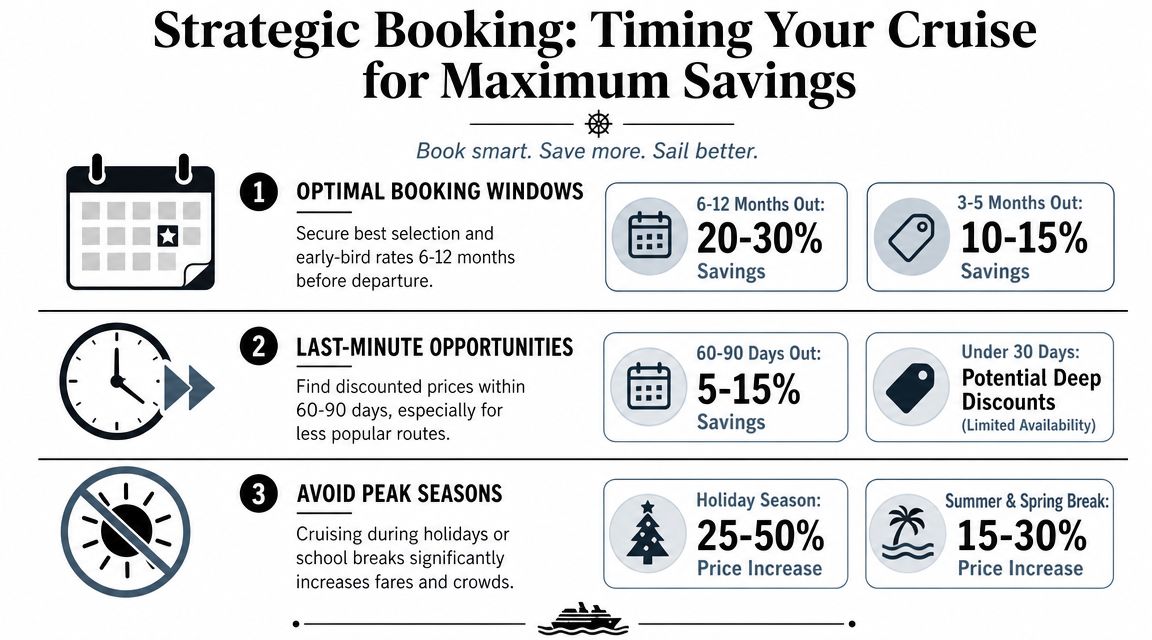
That gap matters. It can cover flights, gratuities, or a pre-cruise hotel instead of disappearing into the fare.
What the calendar is really telling you
Cheap cruises do not come from wishful thinking. They come from sailing when demand softens and from picking routes other travelers overlook.
Analysts at NerdWallet found a big spread even within the broader Caribbean. A 7-night Bahamas interior cabin averaged $614 in September, compared with $703 for the Western Caribbean, $771 for the Southern Caribbean, and $1,261 for the Eastern Caribbean in the same month.
| Route choice | Average September interior fare |
|---|---|
| Bahamas | $614 |
| Western Caribbean | $703 |
| Southern Caribbean | $771 |
| Eastern Caribbean | $1,261 |
Here is the order of operations. First, move off the most expensive month. Second, compare sub-regions instead of treating every Caribbean cruise like the same mission. Third, pounce when a real fare shows up.
That is how disciplined deal hunters operate.
Use seasonality like a weapon
Warm-weather routes often price better in slower travel windows such as early December, January, and early February, as noted earlier in the article. Alaska usually gets friendlier on price at the edges of the season, not in the heart of summer.
You do not need perfect timing. You need smart timing.
If your schedule has any flex at all, stop targeting school-break dates and prime summer weeks first. Those weeks are crowded, expensive, and far less forgiving. Shift your search window before you start obsessing over tiny fare changes.
One more move for advanced recruits. Add a watchlist for repositioning cruise deals if your calendar can handle odd departure dates or one-way logistics. Those sailings often line up with seasonal shifts, which is exactly where pricing gets interesting.
A quick watch can help if you like learning visually:
Sgt. Travel's marching orders
- Get out of July if you can. That month punishes your budget on popular warm-weather routes.
- Target September first. The verified pricing data points there for Caribbean value.
- Price the Bahamas against other Caribbean options. Do not assume every island run costs about the same.
- Track one actual sailing and be ready to book. Random browsing is not a strategy.
- Use STD Army Deals to scan timing windows fast. Your job is to compare, strike, and move on.
Good timing will not hand you the cheapest cruise on earth every time. It will keep you from overpaying for the exact same vacation, and that is a win worth saluting.
Decoding Classified Deal Types
Listen up, troop! You spot a fare that looks dirt cheap, your pulse jumps, and five minutes later the add-ons start firing from every direction. Port fees. Gratuities. Airfare. Cabin upgrades. Congratulations, you just walked into an ambush.
Cheap cruise hunting works better when you know what kind of deal is sitting in front of you. Some fares are clean value. Some only work for flexible travelers. Some are dressed-up nonsense with a countdown clock slapped on top.
Repositioning sailings
Repositioning cruises are one of the sharpest tools in the budget arsenal. Cruise lines move ships between regions for the season, and those one-way sailings often come with lower nightly rates because the route is less convenient for the average shopper.
That inconvenience is your opening.
If you care more about ship time than port count, study repositioning cruise routes with one-way value potential. This play works best for travelers who can handle odd departure dates, open-jaw flights, or an extra hotel night without losing their cool.
Here is the straight answer. A repositioning fare can be excellent on paper and mediocre in real life if the flight home eats your savings. Price the whole mission, not just the cabin.
Short sailings
Short cruises are often the cleanest low-cost entry point. They work well for recruits testing a line, grabbing a quick escape, or keeping total trip spend under control.
As noted earlier, a strong cheap-cruise benchmark usually shows up on shorter sailings, older ships, and off-peak departures. That is where you find fares that look like real value instead of marketing theater.
Do not confuse “short” with “automatic bargain,” though. A flashy weekend sailing can still carry expensive drink packages, premium dining upsells, and parking costs that bloat the final bill. Keep your eyes on total out-the-door cost.
Last-minute deals
Last-minute deals get too much hype. They can work. They can also blow up your plan if you need specific dates, a certain cabin type, or a convenient airport.
Use this tactic only if you can move fast and stay flexible. That means you can leave on short notice, accept a less-than-perfect cabin, and switch departure ports if the numbers justify it.
If your group needs connecting rooms, ideal cabin placement, or a narrow school-break window, skip the last-minute fantasy. That is not strategy. That is gambling in a sailor suit.
Guarantee cabins and flash sales
Guarantee cabins are simple. You pay less, and the cruise line assigns the cabin later. Good deal for travelers who sleep anywhere. Bad deal for anyone sensitive to noise, motion, or being parked under the pool deck at 6 a.m.
Flash sales deserve even more suspicion.
A sale banner means nothing without a baseline. The cruise lines know exactly how to trigger urgency, so your job is to stay disciplined and run a three-part inspection:
- Is the nightly rate strong for that route and ship?
- Does the full trip still make sense after fees, gratuities, flights, hotels, and extras?
- Would you still book it if the red “sale ends tonight” sticker vanished?
If that third answer is no, stand down and save your ammo for a better target.
Smart Mission Selections on Cabins and Itineraries
Listen up, troop. The cruise line wants you staring at balcony photos, shiny new ships, and dreamy route names until your budget surrenders. Your job is simpler. Pick the setup that delivers the trip you want at a price that keeps you in the fight.
Start with the cabin.
Pick the cabin that serves the mission
An interior cabin is the workhorse choice for budget cruise hunting. If you plan to spend your days in port, on deck, at shows, or raiding the buffet like a trained professional, paying a premium for extra cabin space is weak strategy.
A balcony has a place. Book it if you know you will use it. Early mornings with coffee. Private downtime. Sea days where your cabin is part of the entertainment. If that is not your actual plan, keep your money holstered.
A common pitfall is assuming the cheapest sailing stays cheap after a cabin upgrade. It often doesn't. A bargain fare can turn into a bloated booking the second you jump from interior to balcony. That is why disciplined deal hunters compare cabin categories on the same ship before they get emotionally attached.
Choose itineraries with value, not bragging rights
Short sailings usually make the cleanest starter mission for budget travelers. They keep the total trip cost lower, they are easier to compare by nightly price, and they let you test a cruise line without committing to a long, expensive run.
Older ships deserve more respect than they get. You still reach the same ports. You still eat, sleep, swim, and go ashore. What you give up in hardware flash, you often gain in lower fares.
Route choice matters too. A flexible itinerary gives you more room to strike when pricing lines up. If one port or one exact island is your whole identity for the trip, expect to pay for that stubbornness.
Here is the field guide:
| Option | Best use for budget travelers |
|---|---|
| Interior cabin | Lowest fare when the room is mainly for sleep and showers |
| Balcony cabin | Worth it only if private outdoor space is part of your real plan |
| Short sailing | Lower total spend and easier value comparison |
| Older ship | Better pricing when destination matters more than ship features |
| Flexible itinerary | More chances to catch a strong fare |
Match the cruise line to the mission
Not every line gives value in the same way. Some win on low entry price. Others look cheap at first and then nickel-and-dime you with extras. Before you book, use this cruise line comparison chart for budget-focused cruise shoppers to compare the major players side by side.
That one step saves a lot of rookie mistakes.
Cut the ego, keep the vacation
Here's Sgt. Travel's blunt order. Stop shopping for a cruise that impresses strangers. Shop for one that fits your budget, your travel style, and your tolerance for small tradeoffs.
Choose interior if price is your top priority. Choose shorter routes if you want a low-risk test run. Choose older ships if the destination is the star. Choose flexibility if you want the best shot at a deal worth saluting.
The best cabin is not the fanciest one. It is the one that keeps your trip affordable without turning the mission into misery.
Your Secret Weapon The STD Army Deals Portal
Listen up, troop. You have ten browser tabs open, three “limited-time” offers staring you down, and one job: find a genuine bargain before the cruise line sneaks extra costs into your pack. That is where disciplined deal hunting wins.
The portal is not magic. It is a tool. Use it like a trained budget hunter and it will help you spot strong fares fast, cut the junk, and compare sailings without getting distracted by glossy nonsense.
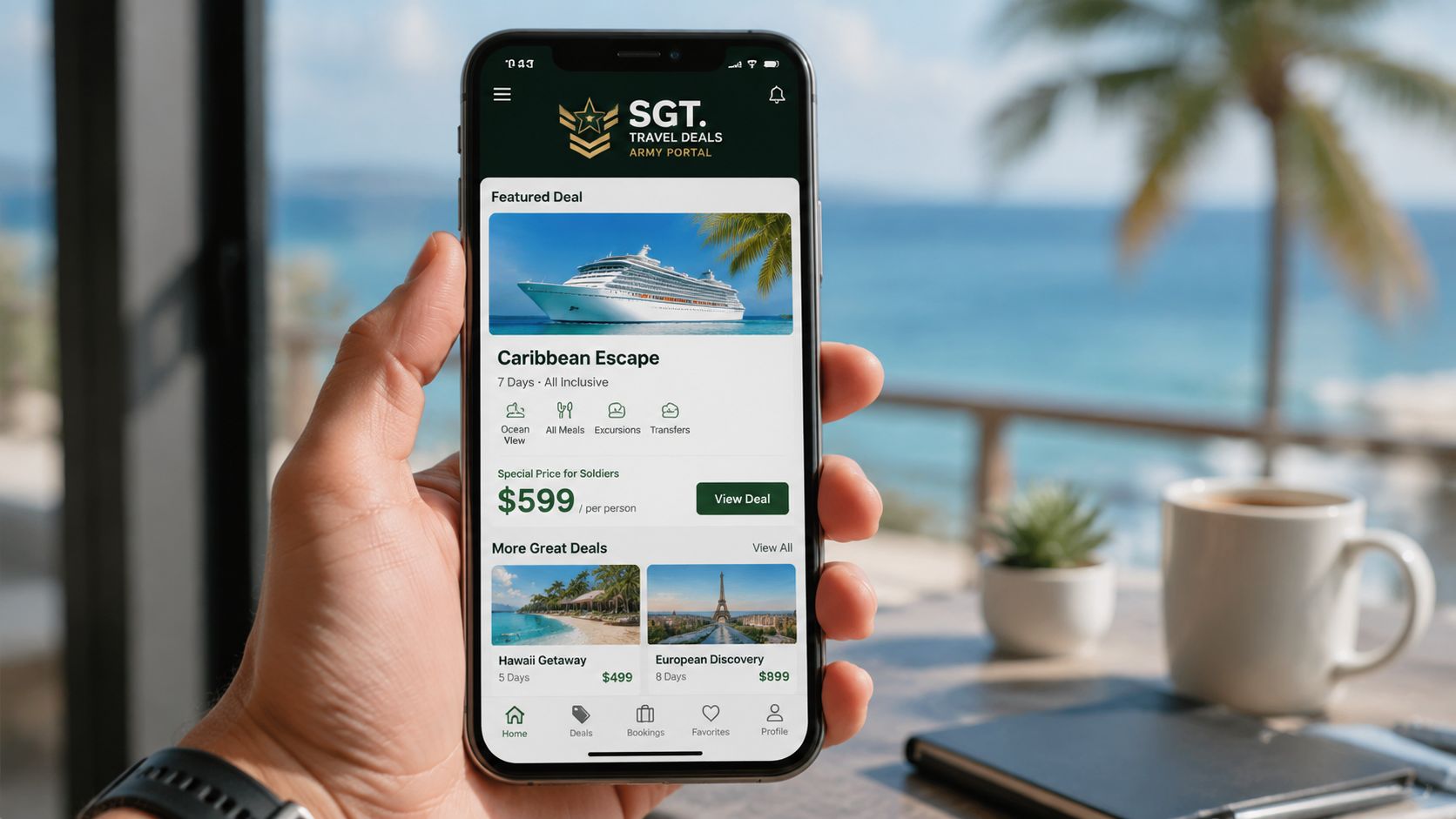
Start with a clean search, not a cheap-looking one
Rookies chase the lowest headline price. Smart travelers sort for value.
Your first pass should narrow the mission by the factors that determine what you pay and what you get. Set your departure area. Pick the cabin class you are willing to book. Filter by sailing length. Then compare on price per night so a short teaser fare does not fool you into saluting a weak offer.
If you want a second opinion on what a strong search tool should let you compare, use this guide to the best cruise deal websites for comparing fares and filters.
Open the details page and inspect the fare like a drill sergeant
A cruise deal is never the tile on the search page. The true story lives in the details.
Check the fare format first. Per-person pricing trips up plenty of travelers, especially when taxes, port charges, and gratuities are still waiting in ambush. Then confirm the cabin category, because an interior fare can look fantastic right up until you realize you were mentally pricing a balcony.
Run this inspection before you move an inch:
Fare format
Confirm whether the number is per person or total trip cost.Cabin type
Make sure the quoted rate matches the room you want.Added charges
Review taxes, port fees, and prepaid gratuities.Transport reality
Check what it will cost to reach the port.
Use the portal as a comparison weapon
Sgt. Travel Deals Army is a veteran-owned travel platform where members can compare cruises, vacations, and other bookable travel options in one place. Good. That saves time. But speed only helps if you stay sharp.
Your mission is to compare trips, not advertisements. Look at the full offer, the room, the sailing length, and the likely trip total. A fare that looks cheap for five seconds is worthless if it falls apart the moment you add the actual costs.
Save proof before you hit book
Do this every time. Screenshot the fare breakdown, cabin type, deposit terms, cancellation policy, and any bundled perks. If the price changes or the listing updates later, you have the record.
That is classified intel, troop. Use the portal with discipline, and it becomes part of your budget-cruise arsenal. Use it carelessly, and it is just another shiny screen trying to send you into battle unprepared.
Final Check Avoiding Ambush and Booking Traps
The sticker price is not the mission. The all-in cost is.
A lot of “cheap” cruise listings rely on travelers stopping their research too early. That's the trap. Cruise Critic's budget guidance notes that many low-fare pages under-explain how airfare, transfers, gratuities, drinks, and Wi-Fi can erase the savings. True value depends on ancillary costs, not just the fare.
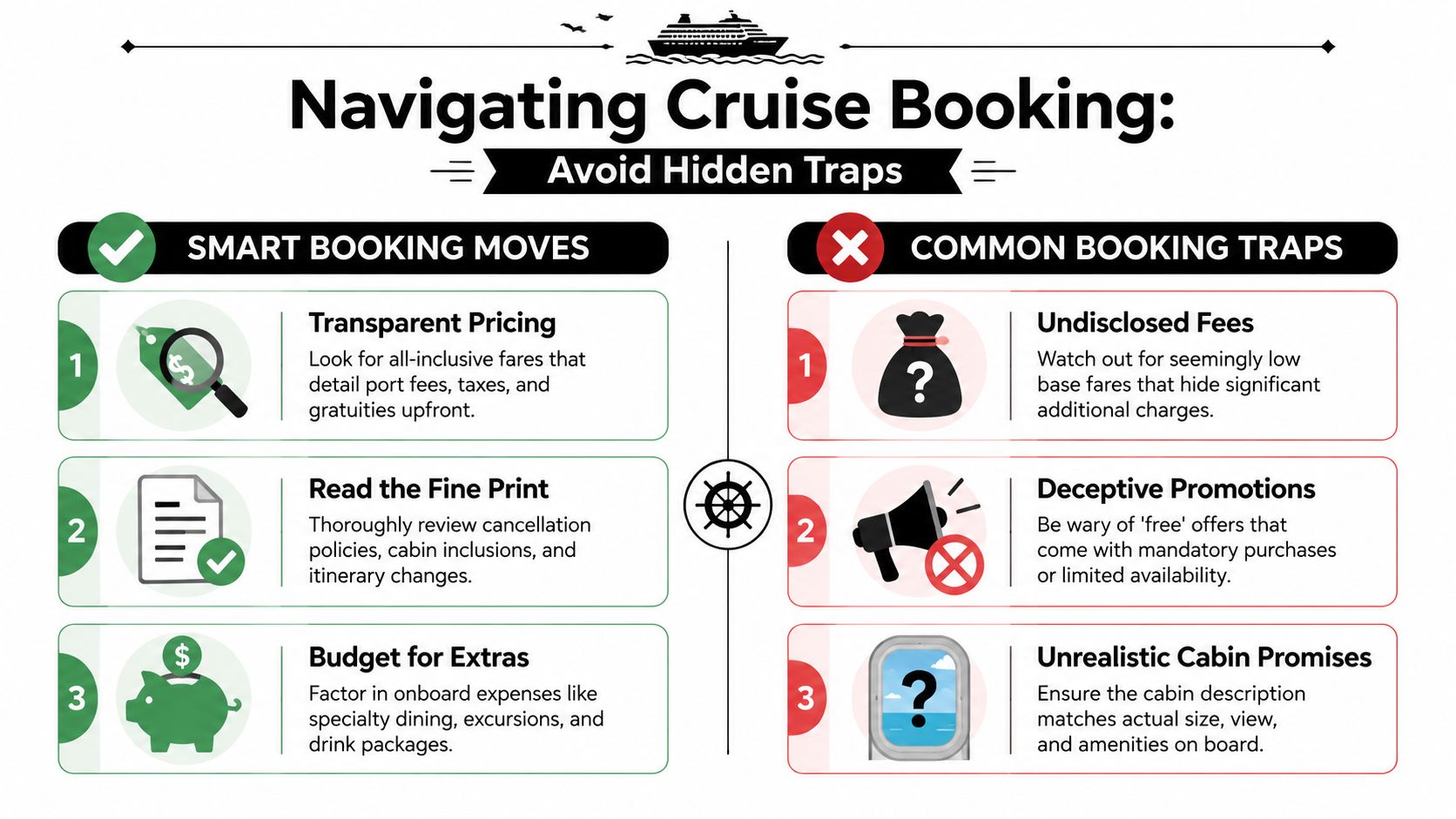
The traps that hit hardest
Some traps are obvious once you know to look for them.
- Per-person confusion: You see one number and mentally treat it as the trip total.
- Add-on blindness: Drinks, Wi-Fi, transfers, and insurance stack up.
- Flight denial: A cheap sailing out of a faraway port may stop being cheap once transportation enters the fight.
- One-way routing problems: Repositioning deals can look lean on paper while creating awkward air costs.
Your pre-book inspection
Use this quick field table before you commit:
| Check | What you're looking for |
|---|---|
| Fare display | Per-person or total trip pricing |
| Added charges | Taxes, port fees, gratuities |
| Port access | Drive cost, parking, or flights |
| Onboard extras | Drinks, Wi-Fi, specialty dining |
| Route logistics | Roundtrip simplicity or one-way complications |
Cheap fare, expensive trip. That's one of the oldest tricks in travel.
What disciplined travelers do differently
They don't ask, “How low is the fare?”
They ask, “What will I spend from my front door to my return home?” That includes getting to the port, dealing with lodging if needed, and deciding in advance how much onboard spending they'll tolerate.
Many budget cruise deals either survive inspection or fall apart at this stage. The survivors are the ones worth booking.
If the total still makes sense after all that, salute the deal and move. If it doesn't, walk away without regret. There's always another sailing. There is not always another refund.
Mission Debrief and Your Next Move
Listen up, troop. You are no longer the traveler who gets lured in by a flashy fare and drilled by fees afterward.
You now know how to hunt like a pro. You wait for the right window instead of booking on impulse. You compare cruises by total trip value, not by the first number on the screen. You pick cabins and itineraries that serve the mission instead of feeding your ego.
That is how budget cruise deals get won.
Keep your orders simple. Set one realistic budget ceiling. Pick one or two date windows. Choose the routes you can reach without turning cheap airfare into an expensive mess. Then monitor those options with discipline and strike when the full math works.
The cruise lines count on distraction. Sgt. Travel's boot camp approach beats that every time. You are not scrolling for fantasy anymore. You are building a repeatable system, using the same kind of classified deal intel and hard-nosed comparison mindset the S.T.D. Army runs on.
As noted earlier, Sgt. Travel Deals Army gives you a practical home base for smarter comparisons and cleaner booking decisions. Use it like your field command post. Search, compare, confirm the exact cost, then move with confidence.
One last order. Do not wait for the “perfect” deal so long that a strong deal dies on the runway. If the sailing fits your budget, your schedule, and your total-trip math, book it and advance.
Mission ready. Go get your cruise.