
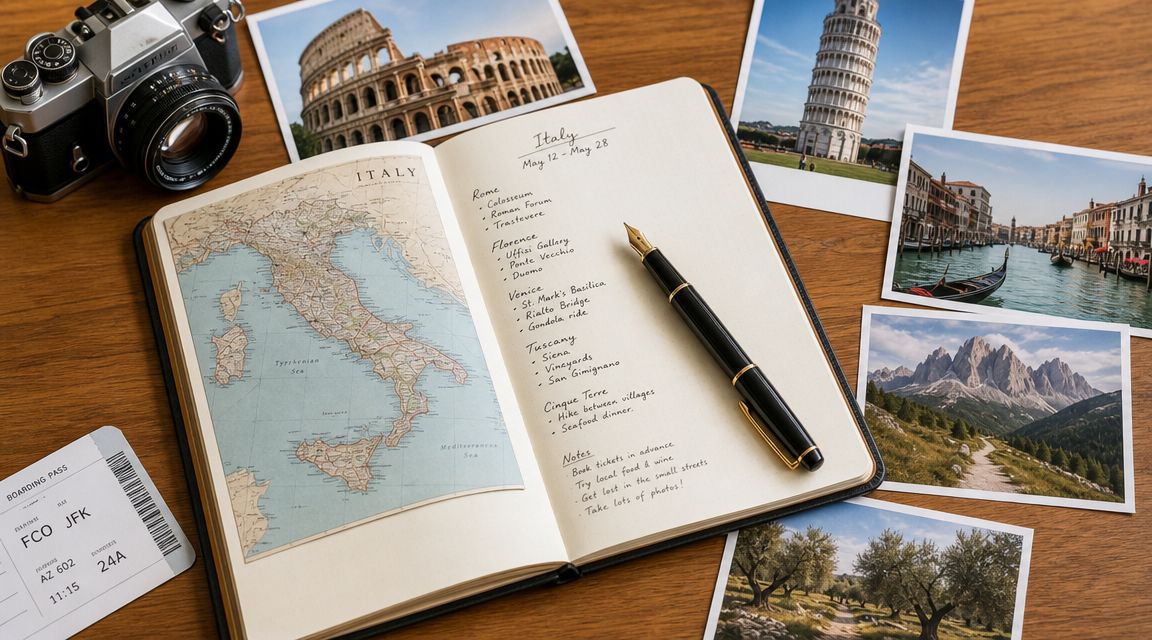
Your mission, should you choose to accept it, is simple. Stop daydreaming about pasta, piazzas, and Renaissance masterpieces, and start building a plan that works. Italy rewards travelers who show up prepared. It punishes the ones who stroll in assuming they can wing the Colosseum at noon, drift into the Vatican without a reservation, and magically find a quiet canal in Venice after breakfast.
Italy earns the hype. It has the highest number of UNESCO World Heritage Sites in the world, with 61 total, including 55 cultural and 6 natural sites, and it recorded 133.6 million tourists in 2023, with 67.9 million arriving from abroad, according to tourism data summarized here. That means you are not the only one with this brilliant idea.
So act like a pro. Pick your targets, book smart, move early, and leave space for the stuff that makes Italy unforgettable. That means a Roman sunrise, a late ferry along a cliff coast, a museum visit that doesn't dissolve into line-induced misery, and a mountain view that reminds you why your inbox can wait.
This guide gives you the 10 attractions in Italy that deserve your time, plus the practical marching orders to do them right. You'll get value-first advice, crowd-dodging tactics, and a few reminders to use Sgt. Travel Deals Army and STD Army Deals when it's time to lock in flights, hotels, cars, and activities. You want a good trip. I want you to have a great one. That takes discipline.
Move out.
1. The Colosseum
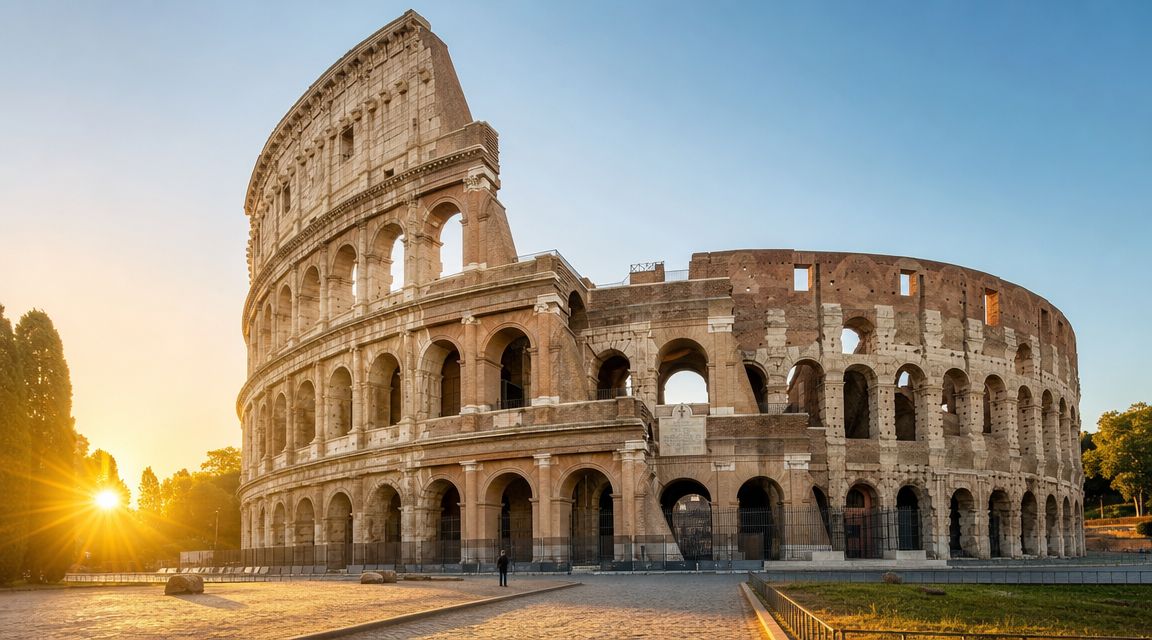
If you only have one ancient-Rome headline act on your list, this is it. The Colosseum still delivers. You walk up, see that battered oval of stone rising out of modern traffic, and your brain immediately understands why people cross oceans for it.
Rome also dominates Italy's attraction scene, with 6 of the 10 most-reviewed attractions in the country located there, and the Colosseum leads that group with 40.7k reviews in this cultural tourism snapshot. Translation: demand is heavy, attention is concentrated, and lazy planning gets punished.
Book your Rome arrival with intent. If you're still sorting flights, start with cheap flights to Rome and build the rest of the mission around an early-entry day.
How to attack it smart
Don't treat the Colosseum as a stand-alone stop. Pair it with the Roman Forum and Palatine Hill so the story makes sense. The arena is the headline, but the surrounding archaeological zone is the substance.
- Book ahead: Reserve online well before your trip if visiting the Colosseum is essential.
- Go early or late: First entry or late afternoon gives you a better shot at lighter crowds and softer light.
- Wear real shoes: Ancient stone, uneven paths, and slick surfaces will humble flimsy sandals fast.
- Use a guide or audio support: The ruins mean more when someone explains what you're looking at.
Practical rule: The worst Colosseum visit is the one where you spend more time standing in line and squinting at signs than actually understanding ancient Rome.
A strong visit lasts long enough for the place to sink in, but not so long that you burn your legs before lunch. Pace yourself. Save some fuel for the Forum.
Need a preview before wheels up? Watch this walkthrough first.
2. Vatican City
You don't stroll into Vatican City casually. You deploy. This place holds St. Peter's Basilica, the Vatican Museums, and the Sistine Chapel, which means spiritual gravity, artistic overload, and crowd pressure all in one compact zone.
People often lose half a day due to underestimated logistics. Don't be that traveler. If you want awe instead of agitation, treat Vatican City like a timed operation.
What to prioritize
If this is your first visit, focus on three things. St. Peter's Basilica for scale. The Vatican Museums for the long sweep of art and collected power. The Sistine Chapel for the finish.
A full day works best if you care about both art and architecture. If your schedule is tight, an early museum entry and a separate basilica visit can still give you a strong win.
- Book the earliest slot you can get: Morning entry gives you the cleanest shot at moving before the site fills up.
- Dress appropriately: This is not the place to test dress-code boundaries.
- Use a certified guide or strong audio app: Without context, the museums can turn into one long hallway of “pretty ceiling, what's next?”
- Pack patience: Security and crowd flow are part of the experience.
The rookie mistake is trying to “just pop in” after a slow breakfast. That's fantasy. Get there early, move with purpose, and don't cram another major attraction right afterward unless you enjoy making bad decisions on tired feet.
Go early, keep your bag light, and save your energy for looking up. Vatican ceilings do not reward people who are already exhausted.
If you're traveling with family, snack timing matters. Hungry kids and museum bottlenecks are a terrible combo. Feed the troops first.
3. Amalfi Coast
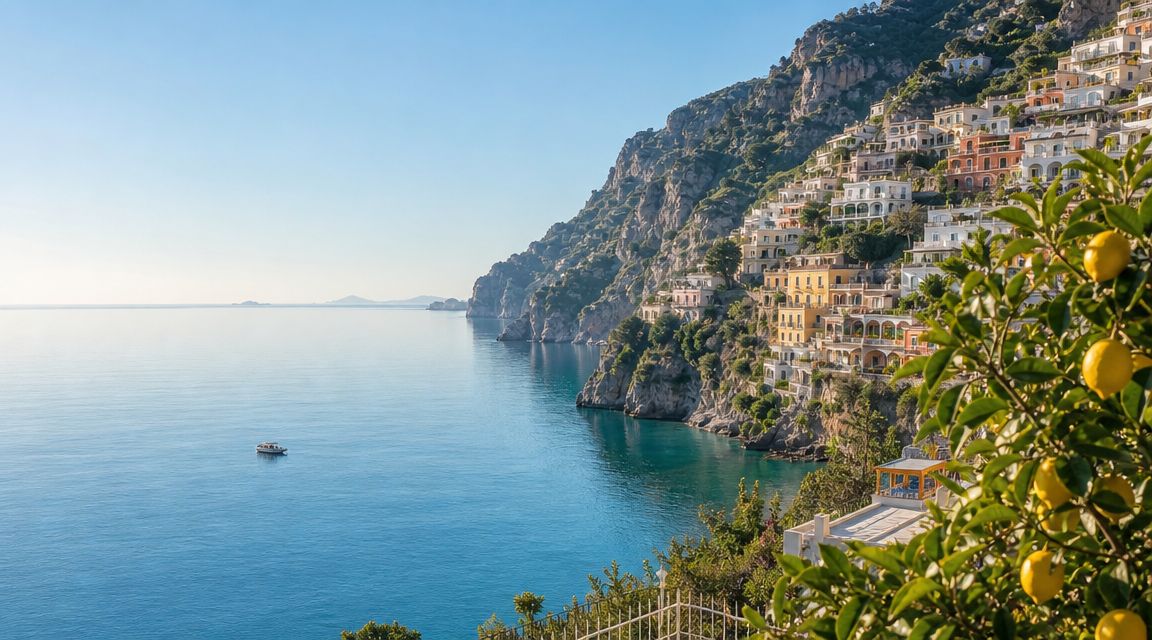
The Amalfi Coast is one of the most photogenic attractions in Italy, but let's get something straight. It's not a single sight. It's a moving target made up of cliff roads, pastel towns, sea views, steps, docks, lemon groves, and timing decisions that can either make your day glorious or ridiculous.
That's why so many people leave saying, “Beautiful, but stressful.” You can skip the stress part.
Best way to move
If you're staying overnight, Amalfi town makes a practical base because it sits well for hopping between villages. Positano is gorgeous, yes, but showing up early is the move. Midday crowds turn charm into congestion fast.
In warmer months, ferry connections can save your sanity. On the road, buses and cars have to deal with narrow lanes and heavy traffic. On the water, you get views and breathing room.
Try this approach:
- Pick two or three stops, not six: Amalfi, Positano, and Ravello make a strong trio.
- Use ferries when available: They cut down on road fatigue.
- Start early: Popular villages feel better before the day swells.
- Leave room for one scenic walk: The coast rewards travelers who stop trying to “cover” everything.
The coast also fits the broader shift toward slower, more experience-driven travel in Italy. Recent destination coverage has highlighted dispersion to places beyond the standard Rome, Florence, and Venice loop, including areas that help travelers avoid the heaviest crowding, as noted in this piece on off-the-beaten-path Italy. That's your cue to stop overpacking your itinerary.
Base smart. Move early. Stay flexible. The Amalfi Coast doesn't need you to conquer every village. It needs you to enjoy the right ones.
4. Cinque Terre
Cinque Terre is for travelers who want beauty with movement. You're not just looking at the attraction. You're walking through it, training between it, climbing it, and earning it village by village.
That's why it works so well. The five towns feel connected but distinct, and the journey between them is part of the attraction, not wasted transit.
Don't rush the villages
If you blast through all five in one day, you'll spend more time checking train boards than enjoying Liguria. Slow down. Two days is better, and an overnight stay gives the place a completely different mood once the day crowds thin out.
Monterosso works well as a base if you want convenience and more lodging options. Corniglia is a strong pick if you want a quieter feel and don't mind a bit more effort.
- Buy the right pass: If you plan to hike and ride trains, get the local card that matches your usage.
- Start trails early: Heat and crowds both hit harder later.
- Use trains strategically: Save your legs for the best stretches instead of trying to prove something.
- Stay for evening light: The villages calm down, and the waterfronts get better.
A good Cinque Terre day has one proper hike, one long meal, one scenic train, and one village where you linger without checking the time every ten minutes. Anything more starts feeling like homework.
If you're deciding between Amalfi Coast and Cinque Terre, here's the blunt answer. Amalfi is more dramatic and glamorous. Cinque Terre is more compact and easier to tackle without burning half your energy on logistics. Budget travelers often find the second option easier to control.
5. Leaning Tower of Pisa
Yes, it's touristy. Yes, people still do the silly forced-perspective photo. Yes, you should still go if it fits your route. The Leaning Tower of Pisa is famous for a reason, and in person the tilt is more striking than photos usually suggest.
The key is not to treat Pisa like a one-photo pit stop. The tower sits in a cathedral complex that deserves more respect than travelers usually give it.
Do Pisa the right way
Book the tower climb ahead of time if you want the full experience. Entry is controlled, and that's good news because it keeps the visit organized. Climbing it is quick, memorable, and a little weird in the best way because the internal angle plays tricks on your balance.
Do not show up, snap one joke photo, and leave. Walk the square. Step into the cathedral if your ticket includes it. Give the Baptistry and Camposanto some attention too.
- Make it a focused half day: That's enough time to enjoy the complex without dragging.
- Go early or later in the day: The square feels less chaotic then.
- Use Pisa as a Florence side mission: Rail connections make that easy for many travelers.
- Pack light: This is not the day for hauling a giant backpack up a medieval tower.
The tower is the hook. The square is the experience.
Pisa works best for travelers who accept what it is. It's iconic, efficient, and easy to combine with other Tuscan plans. Don't ask it to be an all-day epic. Ask it to be sharp, memorable, and worth the train ride. It can absolutely do that.
6. Lake Como
Lake Como is one of those attractions in Italy that can get written off as “too fancy” by budget travelers. Wrong mindset. The lake has glamorous corners, sure, but you can still enjoy it without pretending you're arriving for a celebrity villa party.
The mission here is simple. Sleep in the right place, use ferries smartly, and stop paying waterfront premiums every time you get hungry.
Build your day around the water
If you base in Como or Menaggio instead of chasing the most famous names, you often get a more practical launch point. Ferries do the heavy lifting. They give you scenery, flexibility, and a straightforward way to connect towns without road hassle.
You also don't need to pay for every big view. Brunate and other overlook areas give you excellent panoramas with a lot less pressure on your wallet than constant lakeside splurges.
Try this:
- Use one town as your anchor: Don't change hotels just to chase postcard labels.
- Buy a ferry pass if it suits your route: Multiple rides add up fast otherwise.
- Eat one block back from the water: Prices often improve as soon as you step off the promenade.
- Mix villages with one viewpoint hike or funicular ride: Variety makes the day feel richer.
Lake Como is a good answer for travelers who want scenic Italy without museum scheduling. You show up, ride, walk, sit, look around, and breathe. That's not laziness. That's effective vacationing.
If you're coming from Milan, it also works well as a day trip. Just be disciplined about your return timing so you don't end the day in a packed station muttering at your phone.
7. Florence Historic Center
You roll into Florence with one full day, a loose checklist, and the dangerous belief that a compact city will be easy to conquer. That is how travelers waste half the morning in lines and spend the afternoon power-walking past world-class art. Tighten it up.
Florence rewards disciplined planning more than casual wandering. Yes, the historic center is walkable. No, that does not mean you can drift through the Duomo, Uffizi, and Accademia on pure optimism.
Build the day around reservations
Your anchors are simple. Book the Uffizi, the Accademia, and any Duomo climb or cathedral complex entry first. Then shape the rest of the day around geography, meal breaks, and your energy level instead of zigzagging across town like a confused rookie.
If you're trying to keep costs under control, start with cheap vacation packages for Italy or compare travel bundles through best cruise booking sites for wider Italy deal scouting. Then lock your Florence museum times early, before the good slots disappear.
Use this plan:
- Book the big three in advance: Uffizi, Accademia, and any dome or tower climb.
- Pair sights by neighborhood: Uffizi with Piazza della Signoria works cleanly. Accademia and the Duomo area also fit well together.
- Cross into Oltrarno on purpose: You get artisan shops, better breathing room, and a break from the heaviest tourist traffic.
- Do one major climb early: Your legs, patience, and camera shots all benefit.
Do not turn Florence into an endurance test.
A smart day here has rhythm. Hit a gallery while your brain is fresh. Grab espresso. Step into a church. Eat a real lunch. Walk across the Arno. Then go back for one more major sight instead of forcing five mediocre stops just so you can say you “covered” the city.
Florence is one of Italy's best mission targets for travelers who want maximum payoff in a compact area. Handle tickets early, move on foot, and keep your route tight. You'll get more art, less hassle, and a much better day.
8. Gondola Rides and Venice's Canals
You land in Venice with one day, one wallet, and about zero margin for rookie mistakes. Good. Treat this place like a precision mission, not a lazy wander, and it will absolutely deliver.
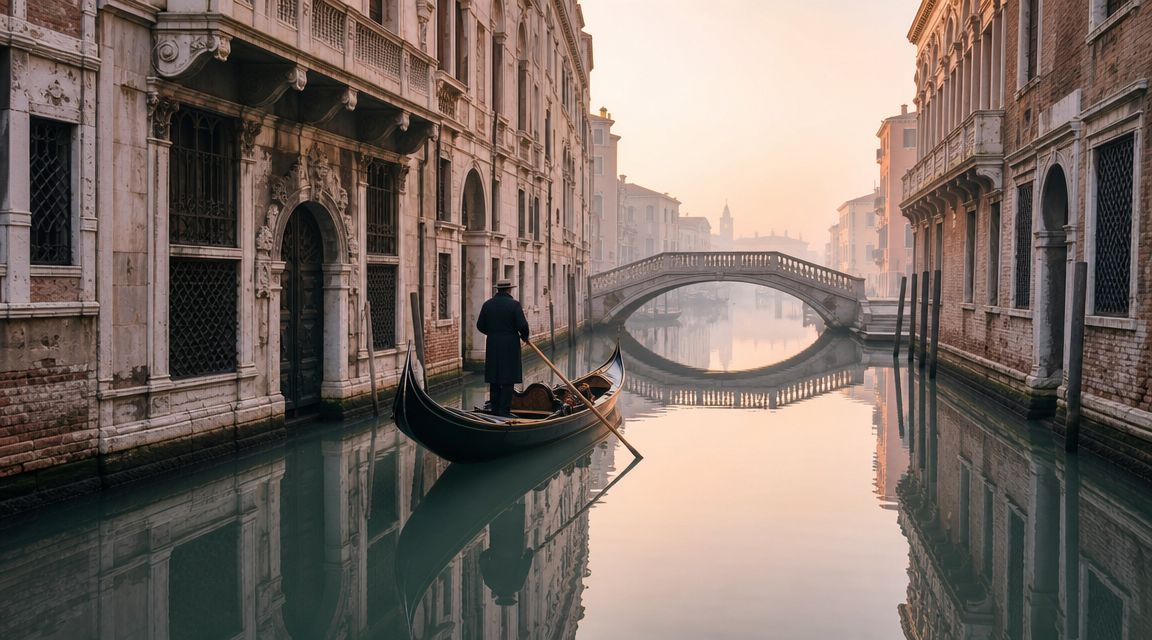
Venice can drain your budget fast. It can also be one of the smartest wins in Italy if you use the canals correctly. A gondola gives you the postcard moment. A vaporetto gives you the city. Do both once, do them on purpose, and stop paying premium prices for random, forgettable detours.
Skip the rookie mistakes
Start with your base. If a hotel in central Venice wrecks the budget, stay in Mestre and train in. That move alone can free up money for better meals, paid sights, and one canal experience you'll remember.
Then fix your timing. Early morning is your advantage. The light is better, the alleys feel calmer, and the city still has some breathing room before the crowds stack up around every bridge and piazza.
Your smart play:
- Use vaporetti as real transport: They are scenic, useful, and far better value than treating every water transfer like a special event.
- Book one gondola ride at the right time: Sunset and early evening usually feel more worth the splurge than midday.
- Add an outer island if your schedule allows: Murano, Burano, or Torcello gives you a cleaner pace and a different side of Venice.
- Walk without over-planning your route: Some of Venice's best moments happen in the quiet stretches between the headline sights.
Crowd control matters here. Venice has pushed harder on managed tourism, including expanded day-tripper access rules, which is a clear signal that winging it is getting more expensive and less fun. Go in with a plan, reserve what needs reserving, and quit assuming spontaneity is always the cheaper option.
One note from Sgt. Travel Deals Army. We're excluding cruise talk for Venice because this city deserves your boots on the ground and your feet on local water transit. If you are considering a cruise for other parts of your Italy trip, use this guide to best cruise booking sites for wider trip planning. For Venice itself, stick to local transit and a tight, smart itinerary.
9. Pompeii
Pompeii hits differently from other ancient sites because it feels less like a monument and more like an interrupted day. Streets, homes, bath complexes, frescoes, public spaces. You're not looking at one ruin. You're moving through a city that stopped mid-motion.
That can also make it overwhelming. The site is big, exposed, and easy to underestimate. If you don't arrive with a little structure, you'll wander until the heat and dust start winning.
How to keep Pompeii from becoming a slog
Start early. Seriously. Ancient stone under open sky gets old fast when the day warms up and your water bottle is empty. Good shoes are not optional here, and neither is sun protection.
An audio guide or guided tour pays off because Pompeii is full of details that aren't obvious at a glance. Without context, many structures blur together. With context, each block starts telling a different story.
Your smart play:
- Reserve entry in advance: It keeps the day cleaner.
- Bring water and a hat: This site gives you very little mercy.
- Choose a route before you enter: Don't improvise the whole thing.
- Pair it with Naples, not too much else: Pompeii deserves your energy.
Pompeii is not a casual stroll. Treat it like a field operation with heat, distance, and limited shade.
If you're deciding between Pompeii and Herculaneum and can only do one, Pompeii usually wins for scale and name recognition. If you can do both, great. If not, make Pompeii count by studying the map before you set foot inside.
10. Dolomites Mountains
You want a different side of Italy? Good. The Dolomites are your answer. No marble corridors. No ticket barriers at every turn. Just jagged peaks, alpine villages, high meadows, huts, switchbacks, and views that slap the city noise right out of your system.
This is one of the best attractions in Italy for travelers who want motion, fresh air, and a trip that feels like more than urban sightseeing. It also gives you breathing room after the major heritage cities.
Make the mountains work for you
Pick a base with enough services to keep logistics easy. Cortina and Ortisei are popular for a reason. They make it simpler to combine trail access, transport, meals, and backup options if the weather shifts.
You don't have to be some heroic mountaineer to enjoy the Dolomites. Cable cars and easier walks open up excellent scenery to regular humans with decent shoes and common sense.
Use this approach:
- Base in one village: Constant hotel-hopping wastes mountain time.
- Mix easy and moderate outings: Save your legs so every day stays fun.
- Use cable cars strategically: They expand your options fast.
- Stay in guesthouses if you want better value: Simple, practical, and often more personal.
The Dolomites also fit the growing interest in slower and outdoor-oriented Italian travel. If Rome, Florence, and Venice feel too packed on paper, this is your balancing move. Add mountain air, a rifugio lunch, and one sunrise hike, and suddenly your Italy trip feels broader and smarter.
If your perfect vacation includes standing still for ten minutes because the scenery shut you up, put the Dolomites on the list and don't overthink it.
Comparison of Italys Top 10 Attractions
| Attraction | 🔄 Implementation Complexity | ⚡ Resource Requirements | 📊 Expected Outcomes | 💡 Ideal Use Cases | ⭐ Key Advantages |
|---|---|---|---|---|---|
| The Colosseum (Rome) | Moderate, advance booking recommended; some steep stairs and crowds | Moderate time & cost, ~1.5–2 hrs; ticket or guided tour needed | High historical insight and iconic photography opportunities | First-time Rome visitors; history/architecture focus; short cultural stop | Iconic ancient landmark with extensive preservation; combo tickets reduce cost |
| Vatican City (Rome) | High, security, strict dress code, long museum routing | High time investment, 4–6 hrs; tickets or early access recommended | Exceptional art and religious significance; deep museum experience | Art/history enthusiasts; religious pilgrims; full-day museum visits | World-class collections (Sistine Chapel, St. Peter's); major artistic highlights |
| Amalfi Coast (Campania) | Moderate, scenic driving or ferry logistics; limited parking | Higher logistics & budget for multi-day stay, 3–5 days preferred | Scenic coastal vistas, relaxed seaside experiences, culinary highlights | Leisure travelers, romantic getaways, beach and scenic driving | Dramatic cliffside villages, varied accommodations, Mediterranean cuisine |
| Cinque Terre (Liguria) | Moderate, train-oriented access; trail maintenance may affect plans | Moderate, 2–3 days; Cinque Terre Card recommended for trails/trains | Strong hiking, coastal village charm, photogenic views | Active travelers who want hiking + coastal culture; short multi-day trips | Efficient train network, compact villages, excellent hiking trails |
| Leaning Tower of Pisa (Tuscany) | Low, short visit but tower climb requires advance reservation | Low cost & time, ~30–45 minutes for climb; plaza viewing free | Quick iconic photo opportunity and light architectural history | Day-trippers from Florence; brief cultural stop | World-famous landmark; affordable combo passes for nearby monuments |
| Lake Como (Lombardy) | Moderate, ferry planning between towns; spread-out attractions | Moderate, 2–3 days typical; ferry passes and villa fees possible | Relaxing lake vistas, villa gardens, mixed luxury and budget options | Relaxation, scenic retreats, villa and garden visits | Elegant villas, ferry connectivity, varied accommodation tiers |
| Florence Historic Center (Tuscany) | High, museum reservations and timed entries advised | High time & cost, 3–4 days to cover major museums; Firenze Card useful | Deep Renaissance art immersion and dense historic fabric | Art/history scholars and culture-focused travelers | Concentration of masterpieces (Uffizi, Accademia, Duomo); walkable center |
| Gondola Rides & Venice's Canals (Veneto) | Moderate, navigation via vaporetti or gondola bookings; busy walkways | Moderate, 2–3 days; gondolas expensive but vaporettos affordable with passes | Unique canal-based cityscape, romantic ambience, high photo value | Romantic trips, unique urban exploration, short city breaks | Unparalleled waterways, rich architecture, efficient public boat system |
| Pompeii (Campania) | Moderate, extensive walking on uneven terrain; large site navigation | Moderate time, 2–5 hrs; tickets, audio guides or guided tours recommended | Exceptional archaeological insight and preserved urban fabric | Archaeology/history enthusiasts; day trips from Naples | Remarkably preserved ruins and plaster casts offering vivid historical context |
| Dolomites Mountains (Trentino-Alto Adige) | High, varied season-dependent logistics (hiking/skiing); remote areas | Moderate–High, multi-day itineraries; passes or gear may be needed | Dramatic alpine scenery, outdoor recreation (hiking, skiing) | Outdoor/adventure travelers seeking hiking or winter sports | World-class trails and ski areas; striking geological formations and villages |
Mission Debrief You're Ready for Italy
You've got the plan now. Not the fantasy version where you “see Italy” by bouncing around in a blur, eating standing up, and wasting prime hours in lines. This version. The one where you choose the right attractions in Italy, book the important stuff early, and leave enough room to enjoy the country instead of merely surviving it.
That's how good trips happen. The Colosseum works when you hit it with a ticket and a time slot. Vatican City works when you stop pretending you can freestyle one of the busiest cultural complexes on earth. Florence pays off when you lock in museum entries and don't stack your day like a maniac. Venice improves when you get up early and stop overpaying for every decision. The Amalfi Coast, Cinque Terre, Lake Como, Pompeii, Pisa, and the Dolomites all reward the same habit. Move with purpose.
You also need to stop thinking “budget travel” means low standards. It means better decisions. Stay where transport works. Bundle what makes sense. Pay for the experience that matters and skip the filler. Choose one strong guided visit if it opens up a place for you. Use ferries when they save stress. Use trains when they save money. Use your feet when that's the best tool in the kit.
Italy is crowded because people know it's worth it. That doesn't mean you have to travel like the crowd. You've already got the edge if you plan around timing, transport, and value instead of chasing every shiny headline in one exhausted sweep. A smarter itinerary beats a longer one almost every time.
Now handle the booking phase like a grown-up. Head to STD Army Deals to compare prices on hotels, rental cars, and travel extras before you lock anything in. If you want a veteran-owned platform with a fun voice and a serious focus on side-by-side value, that's where the mission starts getting real. Then enlist free at Sgt. Travel Deals Army so you can keep tabs on travel deals, giveaways, and future trip ammo.
One more order before dismissal. Don't overload your calendar just because Italy offers a thousand temptations. Pick your must-sees. Leave room for one long lunch, one aimless walk, one scenic train ride, one café stop you didn't plan, and one sunset that reminds you why this trip mattered in the first place.
You're ready. Book smart. Pack light. Show up early. Italy's waiting, and this time you're not arriving like an amateur.
Enlist with Sgt. Travel Deals Army and give yourself a smarter way to book. It's a veteran-owned travel platform built for travelers who want real value on hotels, flights, car rentals, activities, resorts, and more without wasting time bouncing between the usual giant booking apps. Join free, compare your options, and back a brand that makes trip planning simpler, cheaper, and a lot more fun.