

The drive from Las Vegas to San Diego is about 330 miles and usually takes 5 to 6 hours, while the straight-line flight distance is around 258 miles. If you're staring at your phone right now trying to decide whether to gas up, book a flight, or call an audible, this route is short enough to do in a day and busy enough that your choice can save real time and money.
You've got a classic Southwest travel problem. Vegas is behind you, San Diego is ahead, and you want the smartest move, not the fanciest one. For budget travelers, military families, and anyone who hates wasting cash on sloppy planning, the distance from Las Vegas to San Diego matters less than what that distance means in practice.
Your Mission Briefing Las Vegas to San Diego
You need a clean go or no-go call before you spend a dollar. Las Vegas to San Diego is close enough to knock out in one day, but that does not mean every option is smart.
The baseline is simple. The flight path is shorter than the drive, and the road trip adds enough time and expense that you should decide based on total cost, gear, group size, and schedule control. If you are traveling on a tight budget, moving with kids, carrying extra bags, or working around military leave timing, that difference matters fast.
What the distance actually means for your trip
This route works best as a practical mission, not a romantic road trip. You are choosing between flexibility and airport speed, between paying for one vehicle or paying for seats, bags, parking, and ground transport on both ends.
Driving usually wins for small groups, travelers with more gear, and anyone who wants full control over departure time. Flying can win for solo travelers who book early, pack light, and do not get hit with extra fees. Miss that window, and the cheap flight stops being cheap.
If you need a vehicle, compare rates before you commit. Start with this guide to cheap car rental companies for budget travelers.
Field note: Short routes punish lazy math. A ticket price alone means nothing until you add bags, rideshare costs, parking, and lost time.
Who needs to pay closest attention
A lot of travelers can shrug and pick whatever feels easiest. You should not.
- Solo budget travelers: Choose the option with the lowest total trip cost, not the lowest headline price.
- Military and veteran travelers: Prioritize flexibility, cancellation terms, and stops or hotels that respect military discounts.
- Families and friend groups: Once you split fuel and parking across several people, driving often gets stronger.
- Last-minute travelers: Waiting too long can wreck the value of both flights and rentals.
San Diego is a military-heavy city, and that changes the equation in your favor if you plan well. Veteran-friendly lodging, base access considerations, and military discounts can turn a decent trip into a much cheaper one.
Make the decision like a quartermaster. Count every cost, protect your time, and pick the option that gets you to San Diego without burning money for no reason.
Driving the Distance Your Route Options
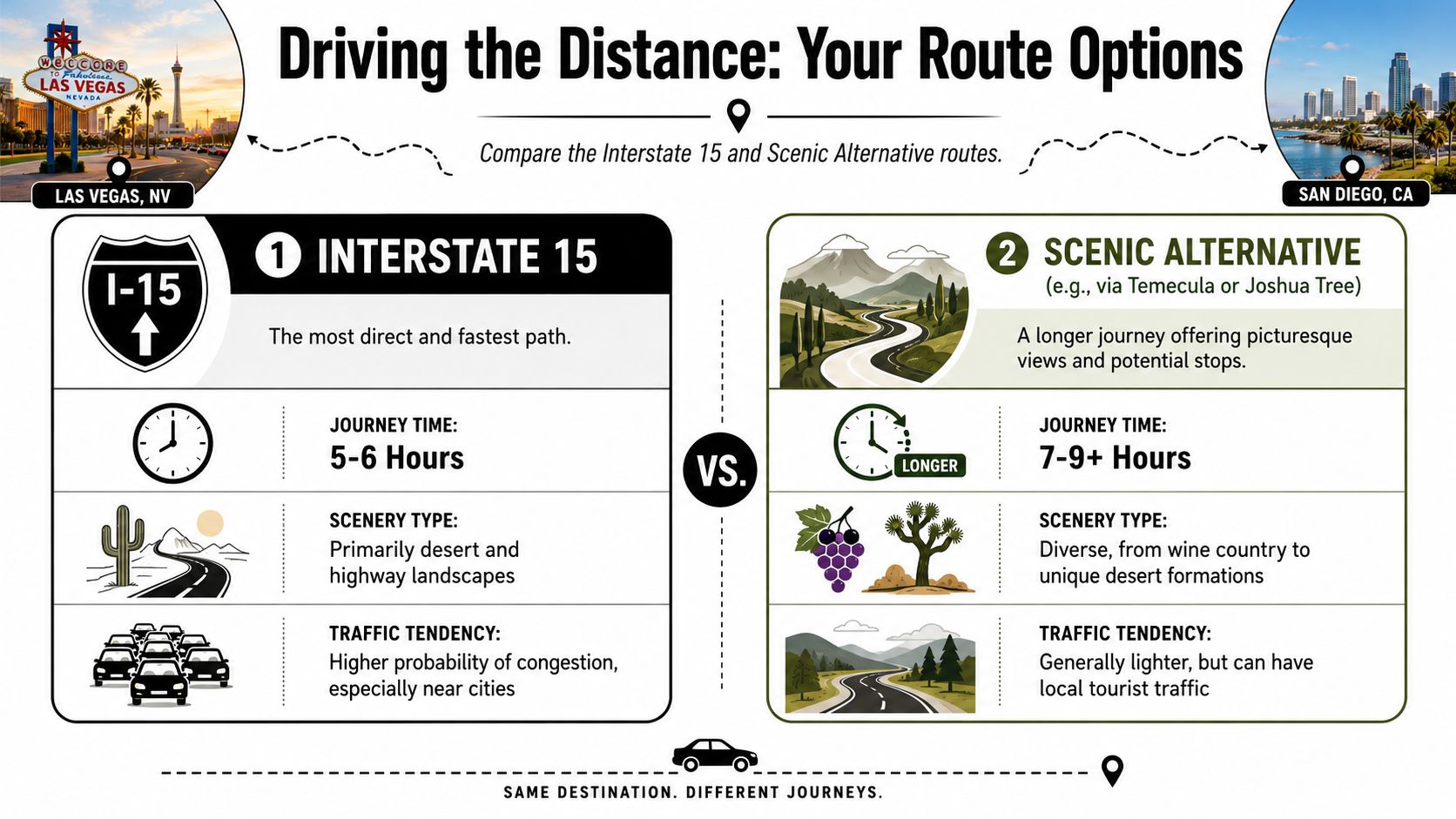
The standard issue route is Interstate 15. If your mission is simple, get from Las Vegas to San Diego with the fewest complications, that's your road.
The standard issue route
The most common drive follows Interstate 15 for about 330 to 350 miles, and it's generally fastest in the early morning or late evening if you want to dodge heavier congestion near San Bernardino and Escondido, based on The Open Road Travel's Las Vegas to San Diego road trip guide.
That's the route I'd generally recommend. It's direct, familiar, and easy to manage. You're not dealing with complicated turns or weird transitions. You stay mission-focused and keep moving.
Here's the breakdown:
- Best for speed: The I-15 route is your fastest practical option.
- Best for simplicity: Fewer decisions means fewer screwups.
- Best for service stops: You'll have regular chances to fuel up, grab food, and reset.
If you need a rental before rolling out, compare options through this guide to the cheapest car rental companies. Don't just accept the first counter quote like a rookie.
What the road feels like
The trip is a mix of desert highway, long straight stretches, and metro pressure as you approach Southern California. That means your stress level depends a lot on when you depart.
Leave too late and you can run into the grind near the inland choke points. Leave smart, and this drive feels clean and efficient.
Rolling out early usually beats trying to “make up time” later. Traffic near the city edges can erase any advantage from a lazy departure.
If you want to preview the route before you commit, this drive-through video is useful:
The optional recon route
If you're not in a hurry, a scenic alternative can make the distance from Las Vegas to San Diego feel like part of the trip instead of dead travel time. Think of it as a morale-boosting detour, not a shortcut.
A scenic run through areas like Temecula or a broader desert loop can give you better views and a less mechanical feel. But let's keep it honest. Scenic means longer. It also means more opportunities to stop, wander, and spend money.
Use the scenic option if:
- You've got extra time: Don't force a scenic day into a speed mission.
- You want better scenery: Vineyards, hills, and more varied terrain beat endless highway.
- You're turning transit into vacation: That changes the rules.
Use I-15 if the job is to arrive.
Beyond the Wheel Flights and Other Transport
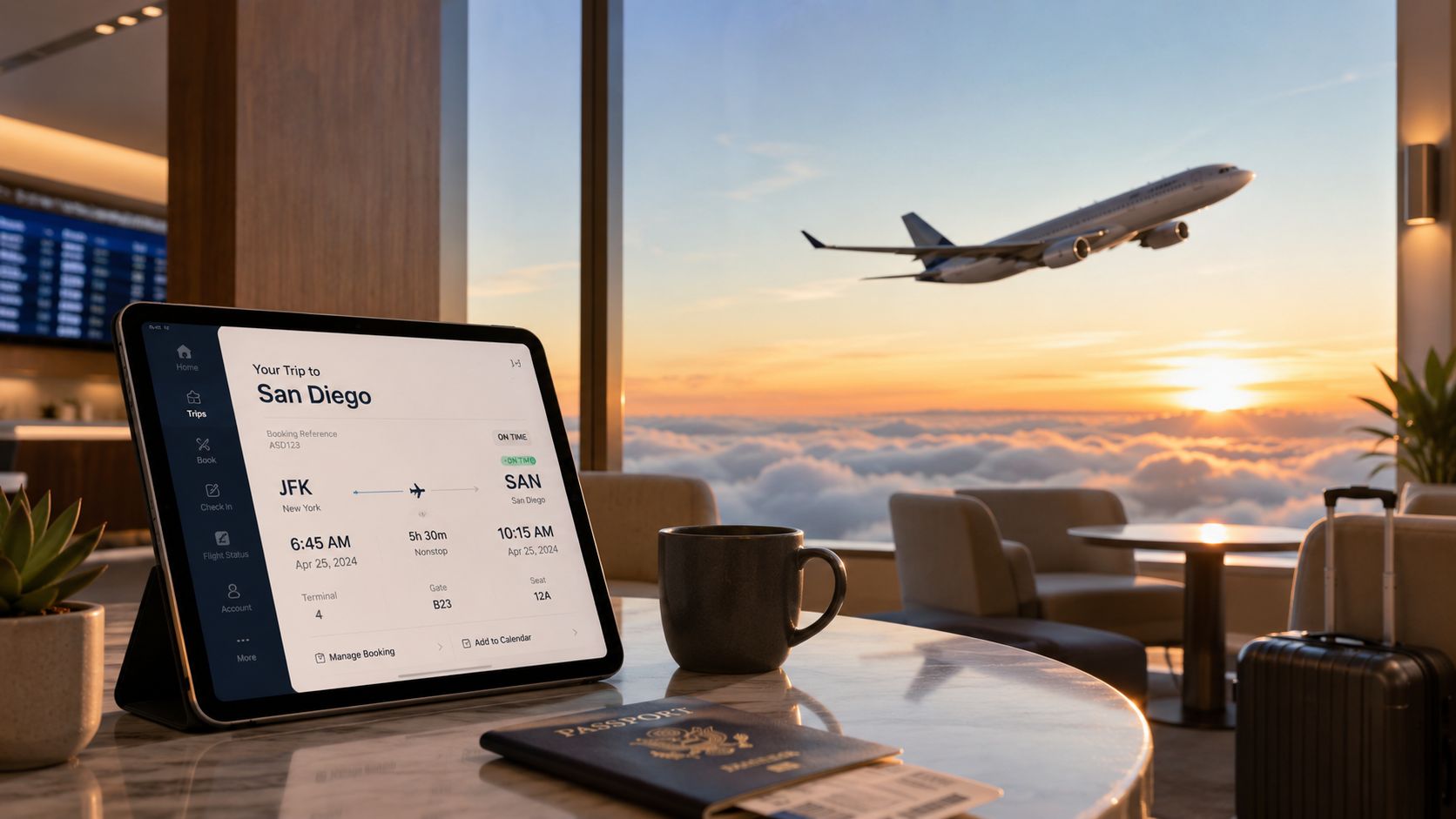
Sometimes you don't want to drive. Fair enough. If your priorities are speed, avoiding road fatigue, or getting in and out on a tighter personal schedule, flying deserves a hard look.
When flying wins
Verified travel background on this corridor notes that many sites place flight time at roughly 1.5 to 2 hours, and that short-haul service on this route has increased in frequency. That doesn't mean flying always wins. It means flying stays in the fight.
For a solo traveler with light baggage, flying can be the cleaner move. You cut down road time, skip fuel stops, and avoid the wear of a long desert drive. That's especially useful if your arrival time matters more than your total flexibility.
The smart move is to compare flight timing with your total airport routine, not just airborne time. Door to door is what counts.
If you're trying to sharpen your booking timing, use this guide on the best time to book flights. Last-minute panic is how people overpay.
Bus and other ground options
Bus service can work for travelers who want a low-hassle ride and don't need a car on arrival. It won't beat flying for speed or driving for independence, but it can still make sense for solo travelers trying to keep spending under control.
What to expect from bus travel:
- Longer total travel time: You're trading speed for lower friction and less personal effort.
- Less flexibility: You move on the carrier's schedule, not yours.
- No driving fatigue: That's a real advantage if you're already worn out.
There isn't a direct train option that makes this route the obvious rail play, so don't waste time trying to force it. For this corridor, the primary decision is usually flight versus car, with bus as the backup option when convenience and budget line up.
The right call by traveler type
A simple rule works well here:
| Traveler type | Usually the best fit | Why |
|---|---|---|
| Solo traveler | Flight or bus | Less value from splitting car costs |
| Couple | Depends | Price and luggage decide it |
| Family or group | Drive | Shared costs and easier logistics |
That's the broad tactical picture. The budget section is where the true knife fight starts.
Counting the Costs Your Mission Budget
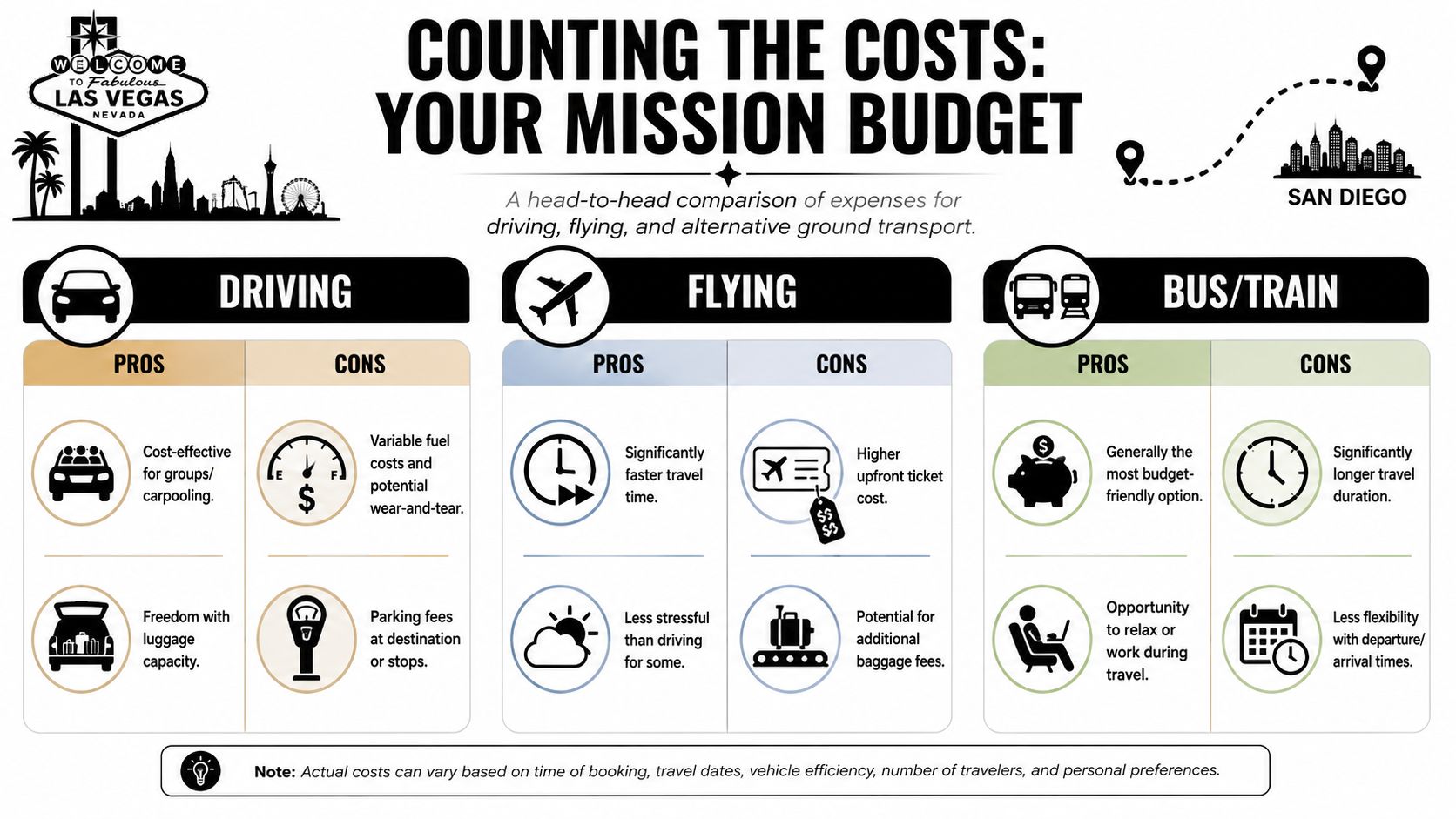
You can blow the budget on this route without realizing it until the trip is over. The winning move is simple. Price the whole mission, not the headline ticket or the gas pump receipt.
The core budget rule
For Las Vegas to San Diego, the cheapest option on paper often loses once real-world costs hit. A low airfare can turn ugly after baggage fees, rides to and from the airport, and local transportation in San Diego. A drive can also get sloppy fast if you forget fuel, parking, rental charges, toll-free but snack-heavy stops, and the value of your time.
Here is the plain rule. Solo travelers should compare flights first. Pairs need to run both sets of numbers. Families, friend groups, and military crews moving together usually come out ahead in one vehicle.
That is the money decision.
Driving versus flying by squad size
The math changes with every extra passenger.
- One traveler: Flying often wins if you can pack light and avoid expensive airport transfers.
- Two travelers: This is the swing zone. One fare sale or one parking bill can decide the whole trip.
- Three or four travelers: Driving usually takes the lead because you are spreading fuel and parking across the whole group.
- Travelers with a lot of gear: Driving gets stronger because baggage fees stack up fast.
Budget rule: The more seats you fill in one car, the tougher it is for separate plane tickets to beat it.
What military and budget travelers should watch
Military travelers do not always get the luxury of perfect timing. Orders change. Leave windows tighten up. Family visits get booked on short notice. That makes hidden costs more dangerous than the base fare.
Check these items before you commit:
- Run the full flight cost. Count baggage, seat fees, airport rides, and what you will spend getting around after landing.
- Run the full driving cost. Count fuel, parking, rental fees if needed, and one real meal stop instead of pretending you will spend nothing on the road.
- Use your status. Many airlines, hotels, and rental car companies offer military or veteran discounts, but you usually need to ask and verify them before checkout.
- Check parking on both ends. Free parking at your departure point and expensive parking in San Diego can flip the decision.
- Plan arrival mobility. If you want beaches, base visits, or a full slate of things to do in San Diego, a car may save more than it costs.
One more hard truth. Cheap flights are best for light, flexible travelers. Driving is usually the stronger budget play for groups, families, and anyone carrying extra gear who wants control over schedule and spending.
Disciplined travelers save money on this route. Undisciplined travelers pay for the same trip three times in fees, snacks, and last-minute fixes.
Recommended Stops and Timing Tips
If you're driving, don't treat the whole run like a punishment march. A smart stop can save your energy, your mood, and your focus.
Best R&R points on the route
Barstow is a practical stop if you need a reset that's more substantial than a gas-station snack sprint. It's the kind of place where a proper meal and a quick stretch can turn the second half of the trip from annoying to manageable.
Temecula works differently. It's better when you've got breathing room and want the drive to feel more like a trip than a transfer. If your squad wants a more relaxed pace, that detour can pay off in scenery and morale.
Then there's the Zzyzx Road sign. It's quirky, fast, and worth a quick photo if you like offbeat roadside trophies. Not every stop needs to be deep. Some are just good for breaking up the road and keeping the crew awake.
Timing that keeps the mission clean
The earlier route guidance matters here. If you want the smoothest day, depart early or later in the day rather than drifting into the heavier congestion windows near the inland Southern California choke points.
A smart rhythm looks like this:
- First pause: Quick leg stretch, bathroom, water. Keep it tight.
- Second pause: Real food if needed. Sit down, reset, move on.
- Final push: Avoid turning the last leg into a slog with too many unnecessary stops.
If you're traveling with kids or tired adults, build in one stop you actually expect. Planned breaks feel efficient. Unplanned meltdowns don't.
What to do once you arrive
San Diego is easy to overbook. Don't make your arrival day too ambitious if you've just done the full drive. Give yourself a lighter first evening, then hit the city properly the next day.
If you need ideas for what's worth your time after arrival, this guide to activities in San Diego is a solid planning shortcut.
The distance from Las Vegas to San Diego isn't hard. Managing your energy is the main game.
Your Final Briefing and Booking Your Trip
You're at the decision point. Friday leave is approved, your budget matters, and the goal is simple. Get from Las Vegas to San Diego without wasting money, burning time, or showing up smoked.

Here's the call. Drive if you're splitting costs, carrying extra gear, or traveling with family, friends, or a military buddy. Fly if you're solo, on a tight schedule, and can keep your airport costs and bag fees under control.
That rule works because the sticker price rarely tells the full story. A cheap flight can turn expensive after rideshares, parking, checked bags, and airport food. A drive can be the better deal fast when two or more people share fuel and one vehicle covers the whole mission.
The strongest recommendation
For budget travelers and service members trying to protect both leave time and cash, the car is the better default for pairs and groups. You control departure time, rest stops, luggage, and arrival without dealing with rental counters or airline surprises.
Solo travelers should be tougher about the math. If the flight schedule saves enough time to matter and the total trip cost stays close to driving, book the plane. If not, drive and keep your money.
San Diego rewards travelers who arrive with energy and a plan.
Booking orders
Compare every option before you commit. One airline, one app, or one hotel brand should not run your whole operation.
Check the full trip cost, not just the headline fare or nightly rate. Count transportation on both ends, baggage, parking, and the price of convenience. If you're military, veteran, or traveling on a strict budget, look hard at flexible booking terms, cancellation windows, and properties that treat service members well. Those details save more money than flashy promo language.
Make the clean choice, book it, and move. Good trip planning is discipline. San Diego is the reward.