
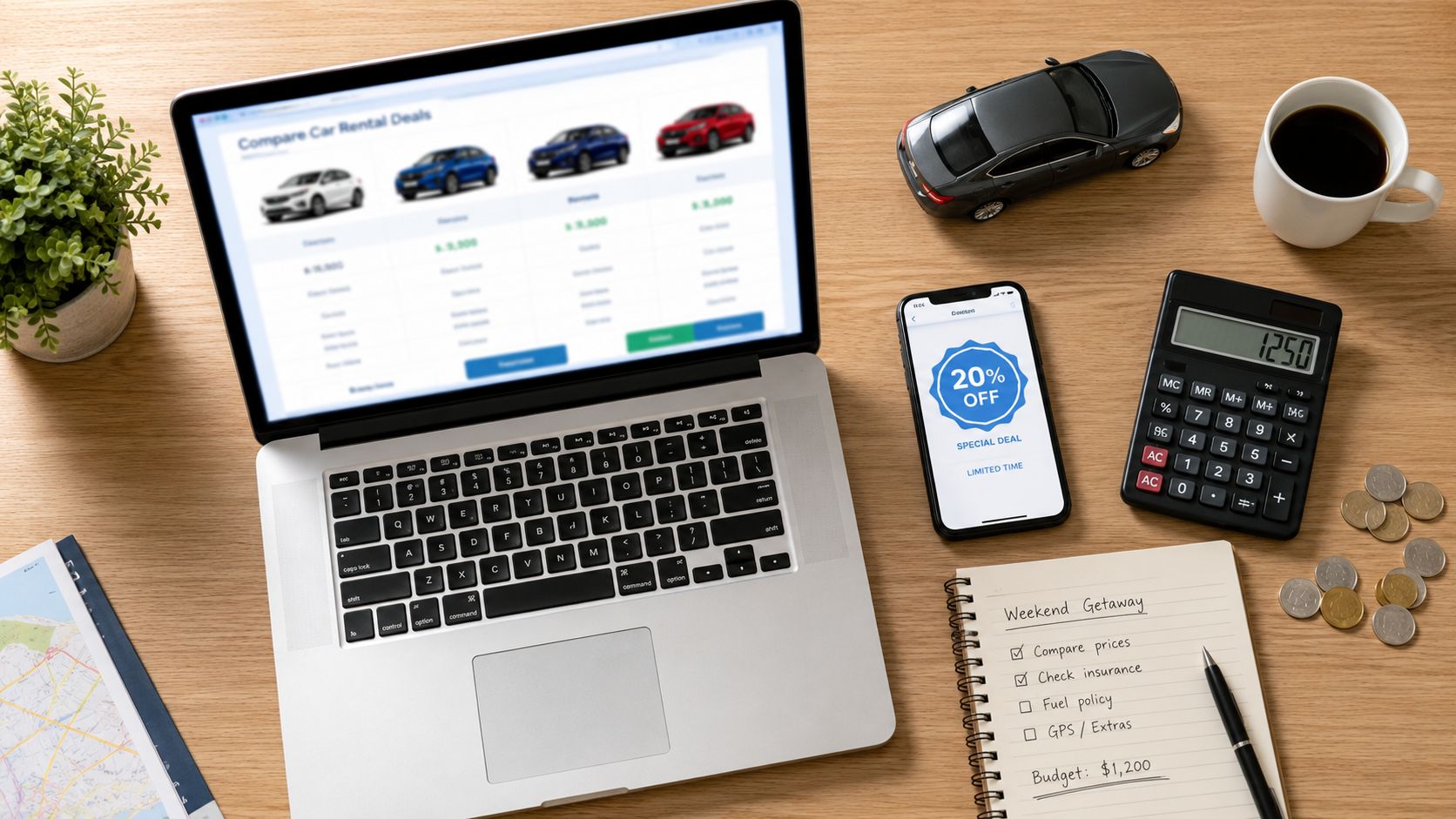
Rental car prices can wreck a trip budget fast. You lock in your flight, feel good about the hotel, then the car quote shows up looking like a financial ambush. That's the moment most travelers either overpay or panic-book the first thing they see.
Don't do that.
I'm Sgt. Travel, and I want you treating this like a mission, not a shrug-and-swipe purchase. If you want to learn how to save on car rentals, you need more than one coupon code and wishful thinking. You need a battle plan that hits the biggest pressure points first: pickup location, booking structure, discount stacking, vehicle choice, and fee control.
The rental companies count on convenience, confusion, and fatigue. You beat them by staying organized and refusing to buy anything you haven't checked.
Your Mission to Conquer Rental Costs
A familiar scene. You land tired, hungry, and ready to move. The airport rental counter is right there, so you figure, “Fine. I'll just grab the car here and keep it simple.” Then the receipt starts growing. Base rate, taxes, fees, add-ons, coverage, fuel option. Suddenly “simple” turned expensive.
That's how many renters lose this fight.
Sgt. Travel's rule is straightforward. Never assume the first rental quote is the true cost or the smart cost. A cheap-looking reservation can get torched by pickup location, bad timing, or junk add-ons at the desk. A slightly different booking setup can save real money without changing your trip in any meaningful way.
Mission rule: Convenience is usually the most expensive button on the page.
The good news is that this game is beatable. You don't need secret industry access. You need discipline and a repeatable process.
The mindset that saves money
Think like a quartermaster, not a vacation shopper. Your job isn't to book the prettiest car or the most familiar brand first. Your job is to secure the right vehicle, from the right location, under the right terms, while preserving flexibility.
That means you should:
- Compare before you commit so you can spot inflated locations and weak rates
- Book flexible when possible so a later price drop works in your favor
- Ignore emotional upgrades unless the trip requires them
- Read the fee section before you ever step to the counter
A lot of travelers spend all their energy hunting for a promo code. Fine. Promo codes help. But the bigger wins usually come from changing the structure of the rental itself.
What a winning rental looks like
A smart booking usually has a few traits in common:
| Move | Why it matters |
|---|---|
| Off-airport pickup | Cuts out airport-heavy pricing and fees |
| Flexible reservation | Lets you rebook if rates drop |
| Small or mystery vehicle | Lowers base rate and often fuel cost |
| Discount stack | Uses memberships or card perks without adding complexity |
That's the playbook. Stick to it, and you stop renting like a tourist getting cornered at a counter. You start renting like someone who knows exactly where the traps are.
Timing and Location Are Everything
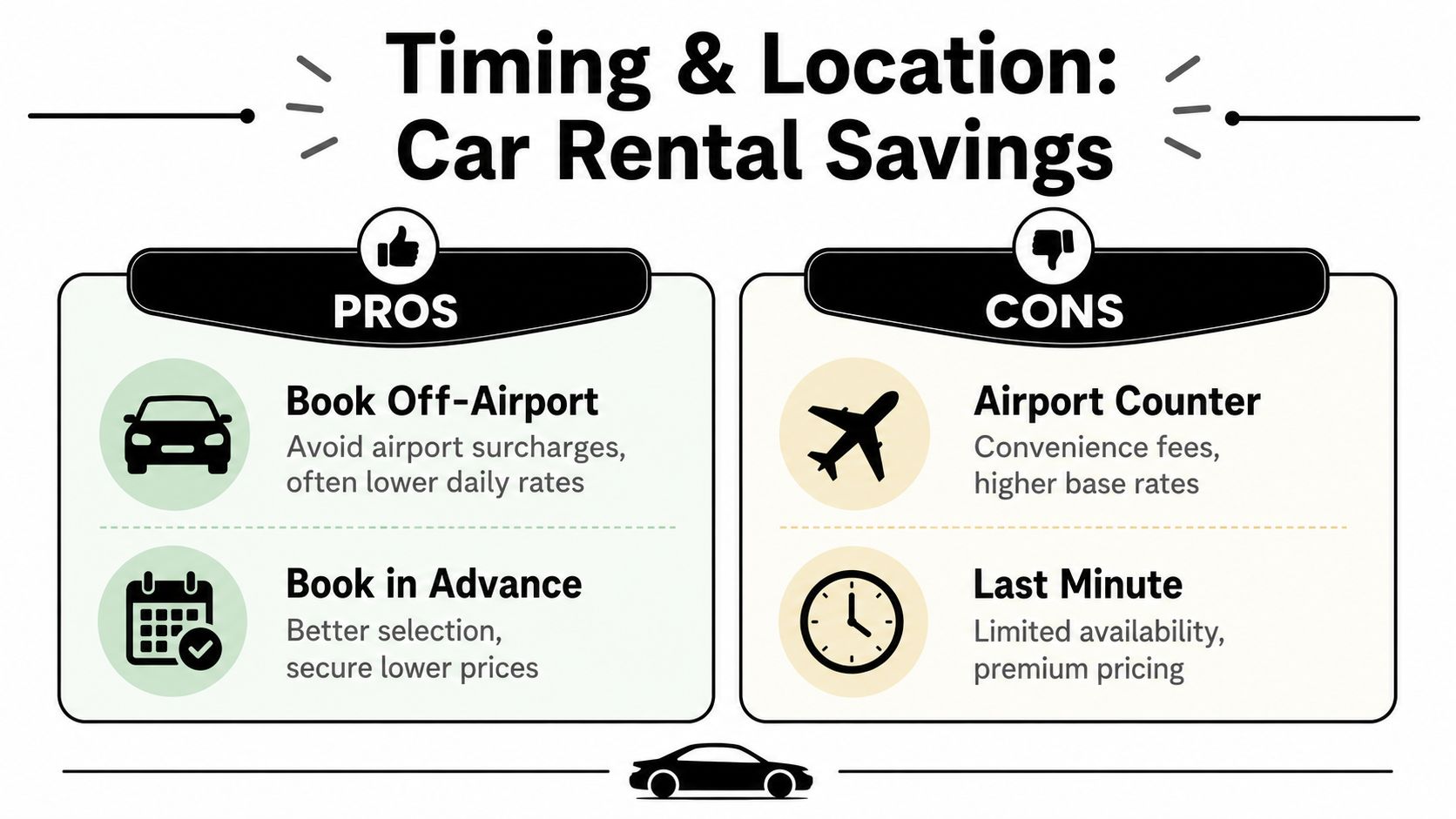
The two biggest levers in this whole fight are where you pick up and when you stop checking prices. A common approach is to focus on brand names first. Wrong target. The pickup location and timing usually matter more.
Consumer Reports, citing NerdWallet data, notes that seven-night rentals from downtown locations were, on average, $86 cheaper than airport locations, and rental car prices are up about 35% compared with before the pandemic. Read that and act accordingly in Consumer Reports' rental savings breakdown.
Stop worshipping the airport counter
Airport rentals sell convenience, and they charge for it. If a short rideshare gets you to a nearby neighborhood or downtown branch, you may come out ahead even after paying to get there. Run the math every time. Don't guess.
This is one of the cleanest answers to how to save on car rentals because it attacks the total cost early, before the add-ons start piling up.
A rental desk inside the terminal isn't doing you a favor. It's selling urgency at a premium.
A good routine is to compare these three options side by side:
- Airport pickup for speed and simplicity
- Downtown pickup for lower pricing potential
- Off-airport neighborhood branch if your arrival time gives you flexibility
If you want to get sharper on timing, the guide on the best time to rent a car is worth reviewing before you book.
Use a booking window, not a one-and-done booking
Another mistake: booking once and never looking again. That's lazy, and lazy gets expensive.
Recent guidance highlighted by AAA frames 1 to 4 weeks before pickup as a common booking window, while also warning that exact timing, pickup hour, and cancellation flexibility can change the final price materially. That doesn't mean you wait until the last minute. It means you stay alert and compare within a sensible range.
Here's the practical move:
- Book something acceptable early enough that you're not shopping under pressure.
- Prefer reservations you can cancel without getting trapped.
- Check again as your trip gets closer because rates move.
- Rebook when the total drops, not just the headline rate.
What to prioritize first
If you only have ten minutes, do this in order:
- Compare airport vs. downtown first
- Check a pickup time shift
- Look at five-, six-, and seven-day structures
- Keep a flexible reservation if possible
That order matters. Travelers waste time comparing brands while ignoring a more expensive location. Fix the structure first. Then compare the companies.
Deploying Your Discount Arsenal
Discounts are where sloppy travelers leave money on the table. They either forget the memberships they already have, or they use one code and call it a day. Weak move. You want every lawful advantage stacked before you check out.

AAA points to one of the smartest habits in this whole process: stack discounts from memberships like AAA, Costco, and AARP with credit-card perks, then monitor your reservation and rebook if rates drop when cancellation rules allow it. That guidance appears in AAA's advice on saving on rental cars.
Build your personal discount checklist
Before you book, check every bucket that could apply to you:
- Memberships: AAA, AARP, Costco, alumni groups, and employer programs
- Military and veteran eligibility: look for military pricing and partner offers you've earned
- Credit card benefits: some cards include rental protections or booking perks
- Prepaid offers: useful when the deal is strong and your schedule is locked
Not every discount stacks cleanly. Some codes replace others. That's why comparison matters more than loyalty.
Use a tool, not ten browser tabs
Travelers often make the car rental search harder than it needs to be. Comparing one site, then another, then a direct brand site, then trying a membership code by hand is a mess. Use a process.
One option is discount car rentals through Sgt. Travel Deals Army, which lets travelers compare rates side by side in one booking flow. You should also compare direct rental company sites after using any aggregator or comparison platform, because sometimes the final total changes once discounts are applied.
Use this four-step system:
- Search broad first to see the pricing overview.
- Apply memberships one at a time and watch which one lowers the total.
- Check the rental company directly with the same dates and vehicle class.
- Keep the winner that has sane cancellation terms.
Here's a quick walkthrough that pairs well with your booking process:
A special note for military and veteran travelers
If you're military, veteran, or traveling within that community, don't skip your eligibility checks. Many people remember hotel or airfare discounts and completely forget car rentals. That's a mistake. Search military pricing, partner programs, and member-only booking channels before you settle on a public rate.
Field note: The discount that wins isn't always the flashiest code. It's the one that lowers the final total after fees and keeps your booking flexible enough to reprice.
The point isn't to collect discount badges. The point is to get the lowest practical total without boxing yourself into a bad reservation.
Choosing Your Vehicle and Insurance Wisely
Most travelers overspend because they book with their ego. They want more car than the trip requires, then they get hit twice: once at checkout and again at the gas pump. That's not smart travel. That's self-inflicted damage.
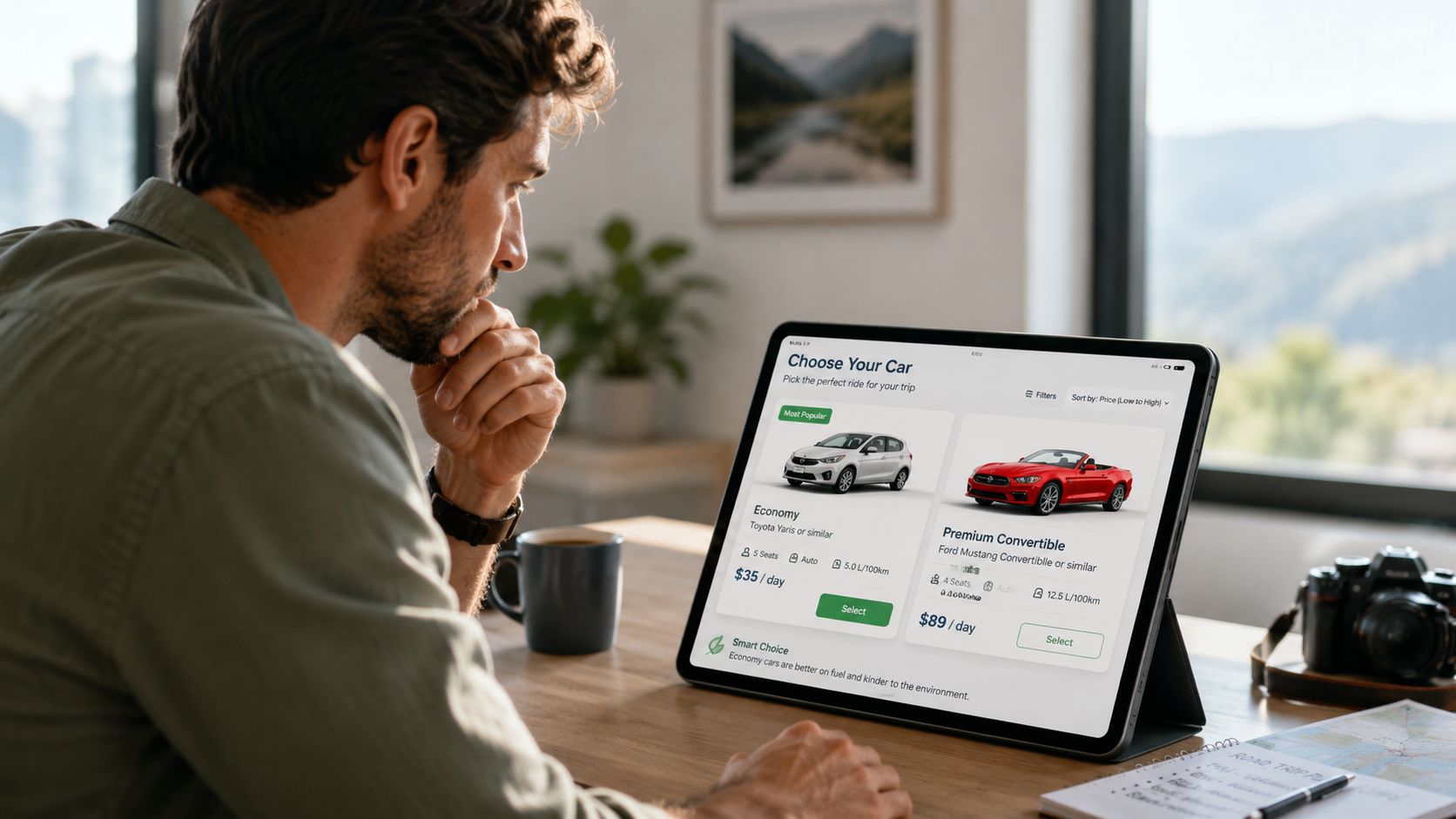
Book the smallest car that comfortably fits the mission. If it's two adults and two bags, you probably don't need a large SUV. If it's city driving and parking, a compact car is your friend.
Economy first, upgrade only for a reason
Choose based on use, not fantasy. Ask three questions:
| Question | What to decide |
|---|---|
| How many people and bags? | Size the car to fit reality |
| What kind of driving? | City trips favor smaller vehicles |
| Do you need special capability? | Don't pay extra without a real need |
An economy car often wins because it keeps the rate lower and usually burns less fuel. If the rental company upgrades you for free at pickup, fine. But don't prepay for a vanity class unless the trip demands it.
If you want to compare categories and current pricing structures, check car rental rate options here.
The mystery car move
Now for a tactic a lot of travelers ignore. The mystery car option can be a strong play if your plans are firm and you don't care about the exact model.
Consumer Reports found that selecting a mystery-car option saved nearly $300 on a weeklong Hertz rental in Los Angeles, and that same testing supports the broader idea that this can save up to $300 on a weeklong rental in a major market, though it usually requires prepayment and gives you less flexibility. Use it when your priority is price and you can tolerate uncertainty.
That's the upside. The tradeoff is simple: less control, fewer changes, and more reliance on the booking terms.
If you need to extend, change vehicle type, or stay flexible, mystery inventory can become a hassle fast.
Don't buy insurance blindly at the counter
Counter agents are trained to make you nervous. They'll ask fast questions when you're tired and holding a line behind you. Don't answer with panic.
Before your trip, check:
- Your personal auto policy to see what carries over to rentals
- Your credit card benefits guide to see what rental coverage applies
- Your destination and trip type because some situations call for extra caution
Sometimes buying the rental company's coverage makes sense. Sometimes it doesn't. What matters is that you decide before arrival, not under fluorescent lights with a rushed sales pitch in your face.
If you haven't checked your own coverage, you are not ready to decline or accept anything confidently. Do the homework first.
Winning the War on Fees and Fuel
A low base rate doesn't mean you won. It means you reached the middle of the battlefield. The ambush usually comes from fees, accessories, and bad return habits.
The classic traps are extra drivers, toll programs, navigation add-ons, prepaid fuel, and youth surcharges. None of these are harmless little line items. They can crush the value of an otherwise decent booking.
The underage fee trap
If you're between 20 and 24, the underage driver fee can add $15 to $25 per day. One of the strongest ways around that is a AAA membership fee waiver for Hertz rentals, which can save over $150 on a weeklong trip for eligible drivers.
That's not a minor perk. That's a major cost swing for younger travelers.
So if you're in that age band, don't just compare base rates. Check whether the underage fee is included, waived, or waiting to blindside you.
Skip the rental company extras unless you need them
Most desk add-ons fall into the “nice try” category.
- GPS units: Your phone probably handles this job already.
- Satellite radio: Pleasant, not necessary.
- Toll devices: Useful in some areas, but read the terms before agreeing.
- Extra driver fees: Worth checking in advance if a spouse or friend may need to drive.
A lot of these extras survive because travelers decide while rushed. Make those choices before pickup.
Prepaid fuel is usually the lazy option
The prepaid fuel offer sounds easy because it removes one stop on your final day. But easy isn't the same as cheap. If you return the car without using a full tank, you paid for fuel you didn't use.
Better move: pick a nearby gas station before return day, fill up yourself, keep the receipt, and roll in prepared.
Return the car fueled correctly, cleaned out, and documented. That one habit prevents a pile of annoying charges.
One more thing. If your trip is five or six days, don't assume a daily structure is the cheapest. Weekly pricing can sometimes beat it, and that's a structural savings move, not a coupon trick.
Your Pre-Return Checkout Checklist
The return is where lazy people donate money. Don't be one of them. Finish strong and protect your receipt.
NerdWallet notes that weekly rates can sometimes be cheaper even for five- or six-day trips, and that most reservations have no cancellation fee, which gives you room to rebook if pricing improves. That advice appears in NerdWallet's guide to finding cheap car rentals.
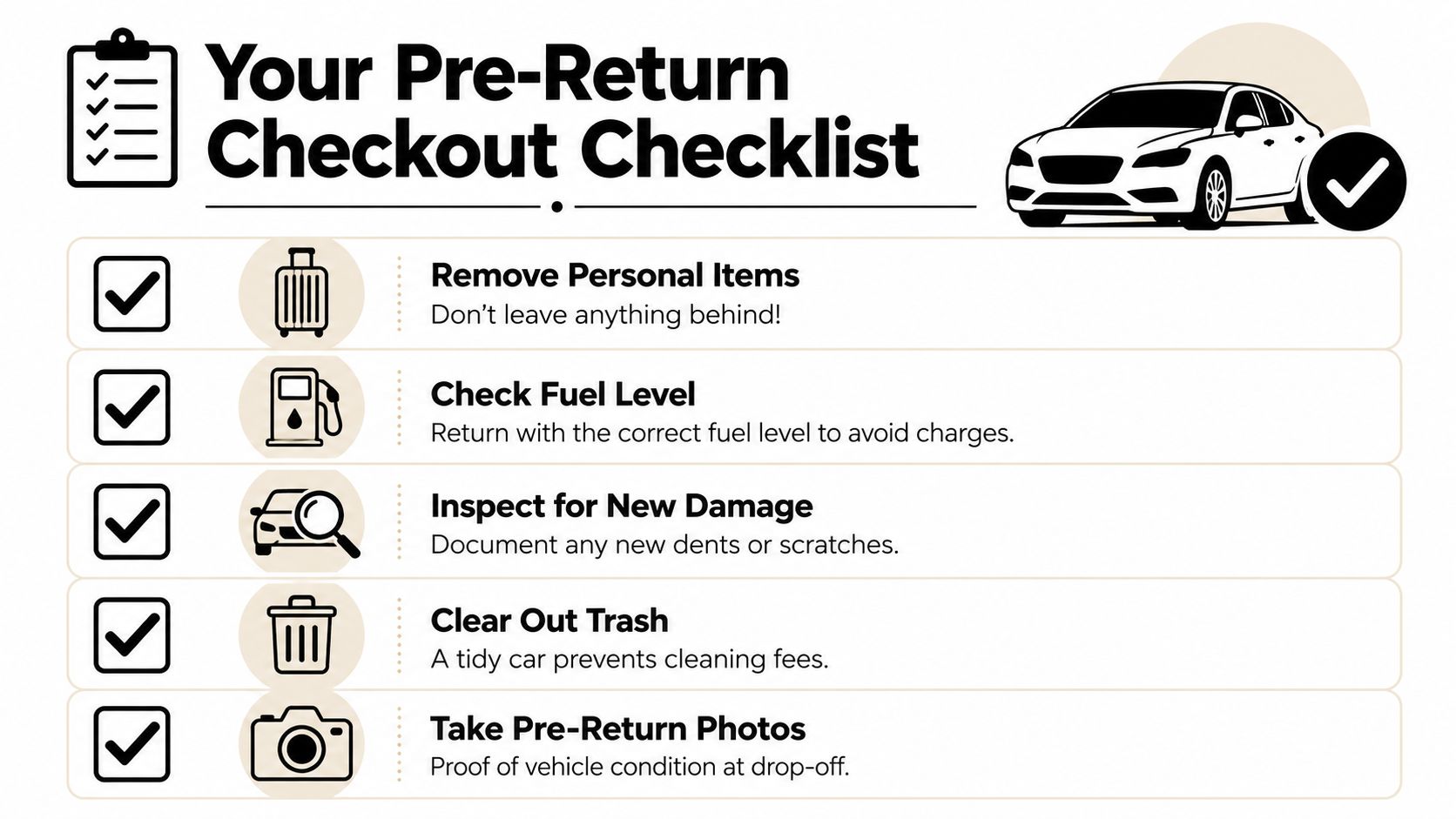
Use this checklist every time:
- Remove your stuff: Check seats, door pockets, trunk, and charging ports.
- Refuel correctly: Match the agreed fuel level and keep your gas receipt.
- Inspect the car: Look for new dings, scrapes, windshield chips, or wheel damage.
- Clear the trash: Don't hand them a reason to add a cleaning charge.
- Take photos and video: Get the exterior, interior, fuel gauge, odometer, and parking spot.
- Get the final receipt: Don't leave without a closed-out record if one is available.
A clean drop-off protects the savings you fought for. Keep the documentation until the final card charge settles.
If you want more practical travel intel, member-focused savings, and a veteran-owned platform that helps you compare trip costs in one place, enlist with Sgt. Travel Deals Army. It's free to join, and it's built for travelers who'd rather book smart than overpay.
1 thought on “How to Save on Car Rentals: Your 2026 Savings Guide”