

You're probably doing what most smart travelers do before they book. One tab has a beach resort. Another has a “limited-time” package. A third tab looks cheaper until you notice it doesn't include transfers, better drinks, or the room you want. That's how people burn money.
All inclusive resort deals can be excellent. They can also be bait. The headline price gets your attention, then the extras march in and raid your wallet.
Your job is simple. Stop shopping for the cheapest sticker price and start shopping for the true total stay cost. That's the mission. Everything else is noise.
Your Mission Briefing for Dream Vacations
You're not crazy for wanting one clean price, one resort, and one easy booking. Travelers are leaning hard into that exact idea. Since 2019, all-inclusive demand on Expedia and Hotels.com grew by 70%, and bookings into 5-star all-inclusive properties increased by 125%, according to Travel and Tour World coverage of Expedia Group findings.
That matters for one reason. More demand creates more competition. More competition means more package variety, more price comparison opportunities, and more chances to spot value if you know what to look for.
Why travelers keep choosing all-inclusive
Many travelers don't want to spend vacation doing math. They want meals handled, drinks handled, and a rough idea of what the week will cost before they leave home. That's why all-inclusive resort deals moved from a niche vacation style into a major booking category.
If you need a fast primer on what you're buying, review how all inclusive resorts work. Do that before you click “book now.” Too many travelers think “all inclusive” means everything at the property is included. It often doesn't.
Your mission starts when you stop asking, “What's the nightly rate?” and start asking, “What will I actually pay by the end of this trip?”
The right mindset for a deal hunter
Don't chase shiny resort photos. Audit the package like a supply officer.
Ask these questions first:
- What's included: Meals, snacks, standard drinks, activities, airport transfers, and taxes all need confirmation.
- What costs extra: Premium restaurants, premium alcohol, spa access, excursions, and upgraded room categories often sit outside the base deal.
- Who this works for: Families, couples, and long-stay travelers usually get the most value when they will use the included food, drinks, and activities.
This isn't about being cheap. It's about being disciplined. A good all inclusive resort deal buys convenience, predictability, and less stress. A bad one hides costs behind soft language and pretty photos.
That's why your booking process should feel less like wishful browsing and more like recon with a checklist.
Reconnaissance Phase Timing Your Booking for Maximum Savings
Timing matters because all-inclusive trips are mainstream now, not some overlooked side category. In 2025, 45% of all summer bookings were for all-inclusive trips, up from 40% the year before, according to Advantage Travel Partnership's 2025 travel update. When more travelers pile into the same booking windows, you need better timing discipline.

Use shoulder season like a pro
Shoulder season is your friend. That's the stretch between peak demand and low season. You'll usually find a better balance of price, weather, and crowd levels there than in the obvious holiday windows.
Here's the practical move. Don't begin with a destination. Begin with a date range you can flex. If your schedule can shift even a little, your odds of finding stronger all inclusive resort deals improve fast.
Check all inclusive resort discounts early in your search, not at the end. That keeps you from getting emotionally attached to a property before you've compared alternatives.
Pick your booking style
Some travelers do better booking early. Others should wait for late openings. The right move depends on your mission profile.
A simple field guide:
| Booking style | Best for | Watch out for |
|---|---|---|
| Book early | Families, specific resort targets, strict school calendars | You may lock in before comparing total-value options |
| Book later | Flexible couples, deal hunters with backup plans | Inventory shrinks and room categories get picked over |
| Stay date flexible | Anyone serious about savings | You need patience and fast decision-making |
If you've got kids, exact travel dates, or need adjoining rooms, book earlier and compare hard. If you're flexible on where you go and when you leave, you can afford to wait and strike when pricing lines up.
For a quick visual on timing and package thinking, use this field training clip:
Flex the destination, not just the dates
Too many travelers decide they must go to one exact place, then wonder why every package is pricey. That's backwards.
Build a short list of acceptable destinations with similar resort styles. If one market is overpriced, move to the next. Your mission is not to win loyalty points with a single beach. Your mission is to get the best overall stay for your money.
Practical rule: Lock your non-negotiables first. Then stay ruthless about everything else.
If military or veteran pricing applies to your household, check for it early and verify the terms before checkout. Don't assume it will auto-apply later.
Intel Analysis How to Compare All Inclusive Deals Like a Pro
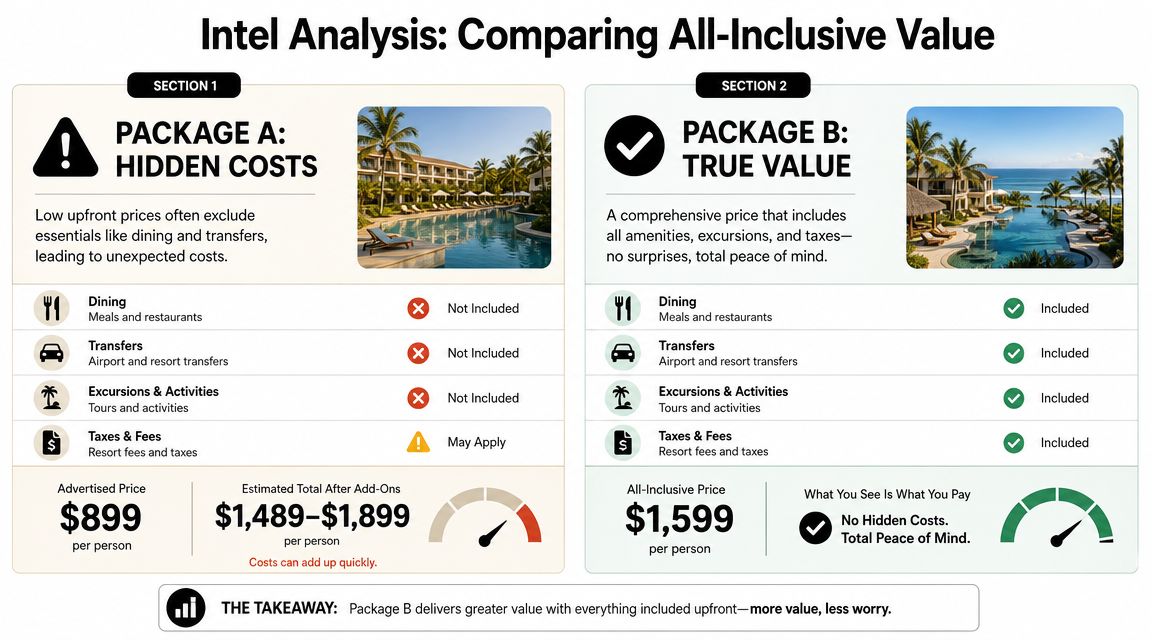
A low headline price means nothing if the package strips out the stuff you will buy. Most travelers get ambushed right here.
The practical way to compare all inclusive resort deals is to run a total-price audit. Industry commentary on all-inclusive resort economics points to the same reality: travelers need to compare the base package rate, taxes and fees, transfers, and the value of included meals, drinks, and activities against a comparable à la carte stay, as discussed in Tourism Analytics' analysis of the mainstream appeal of all-inclusive resorts.
Audit the package, not the ad
Start with the base room. Then inspect every cost that can sneak in after you get attached to the deal.
Use this checklist:
- Room category: Standard room, partial view, swim-up, suite. These differences can change value fast.
- Food and drink scope: Buffet-only is not the same as buffet plus specialty dining. House drinks are not the same as premium pours.
- Transfers: Included airport transportation can save hassle and money. If it isn't included, price it separately.
- Mandatory fees and taxes: If they're excluded from the headline, your “deal” isn't a real all-in number.
- Activities: Water sports, kids clubs, and on-site entertainment carry more weight for families and longer stays.
- Upgrade bait: Resort credits can sound generous, but they're only useful if they apply to things you'd buy.
The true-cost question that matters
The biggest mistake is assuming the advertised rate is the final cost. A resort's headline price can understate the total trip cost by hundreds of dollars once you add airport transfers, premium food and drinks, mandatory fees, and tipping, as noted by The Points Guy's roundup of affordable all-inclusive resorts.
If Package A is cheaper up front but you'll pay extra for transfers, better drinks, and one decent dinner, Package A may already be losing.
A cleaner comparison method
Don't compare ten resorts at once. Compare two at a time using the same traveler profile.
Example comparison logic:
| Compare this | Resort A | Resort B |
|---|---|---|
| Room you'd actually book | Entry room | Entry room |
| Dining fit | Buffet-focused | Buffet plus specialty access |
| Drink fit | Standard only | Better included range |
| Transfers | Extra | Included |
| Family activity value | Limited | Strong |
| Likely total spend | Less clear | Easier to forecast |
Notice what's missing. No obsession over the nightly rate by itself. That number is useful, but it's not command authority.
If you want a wider list of properties before you run the audit, scan best all inclusive resorts and then narrow to the packages that match how you travel.
My blunt recommendation
If you're a family or you'll spend most of your time on property, pay more attention to inclusions than to the lowest sticker price. If you're the type who leaves the resort all day, every day, don't overpay for a package packed with features you won't use.
That's the whole game. Utilization decides value.
Engaging the Target Using Deal Aggregators to Pinpoint Offers
Browsing stops and targeting starts here. Deal aggregators are useful because they let you compare inventory, package structures, and room options without hopping through a dozen tabs like a caffeinated raccoon.
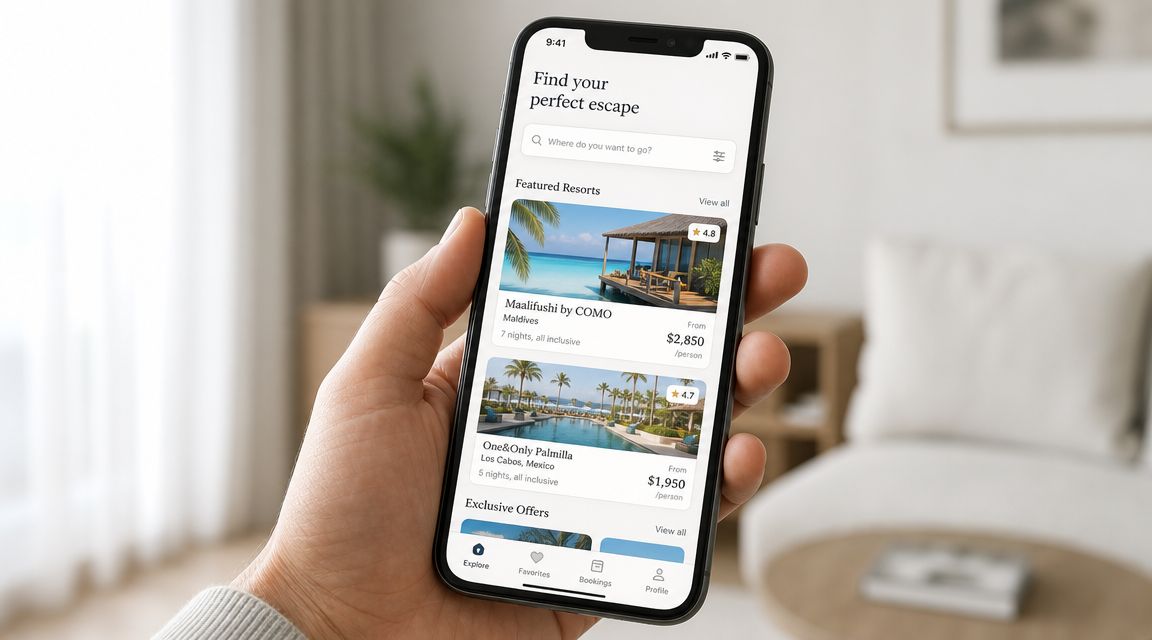
Run a focused search
Use a sample mission. Say you need a beach resort for two adults and two children, want a family-friendly property, and care about pools, included meals, and easy logistics.
Search in this order:
- Set traveler count correctly. Do this first. Not later.
- Choose your board style carefully. Confirm the property is all-inclusive, not just offering a meal plan.
- Filter by must-have amenities. Family-friendly, adults-only, airport transfer options, pool access, kids activities, or dining style.
- Check room type before price. The cheap room is often the one nobody wants.
- Open competing tabs only after you've matched the same room and inclusions. Otherwise you're comparing apples to camouflage paint.
One option in this category is Sgt. Travel Deals Army's booking platform, which presents travel inventory in a responsive booking interface and encourages side-by-side price comparison. That's useful when you want to check whether a package is competitive against larger booking apps without changing your trip details.
Don't trust filters blindly
Aggregators save time, but you still need discipline. A filter can say “all inclusive,” yet the package may treat premium dining, upgraded beverages, or transfers as extras.
Use a quick verification drill:
- Read the room details: Don't stop at the property headline.
- Inspect the rate rules: Cancellation terms and payment timing matter.
- Look for transfer language: Included, discounted, or not mentioned at all are very different outcomes.
- Check family occupancy rules: Child pricing and bedding setup can shift the total fast.
The right search tool speeds up comparison. It does not replace your judgment.
Use YouTube for visual recon
Before you book, watch a recent walk-through of the exact resort or at least the room category and pool layout. That helps you catch things listing pages gloss over, like dated rooms, weak beach access, or noisy building placement.
Search YouTube using combinations like:
- [resort name] family suite review
- [resort name] all inclusive food review
- [destination] all inclusive resort comparison
Video recon helps answer practical questions fast. Does the buffet look decent? Are the pools kid-friendly? Does the “ocean view” require binoculars and a prayer? Better to learn that before payment.
Build a short list with purpose
Don't save twenty options. Save three.
One should be your lowest-cost acceptable option. One should be your strongest value option. One should be your stretch option if the total difference is small enough to justify better food, location, or room quality.
That keeps you from spiraling into endless comparison. A soldier needs a target list, not a scrapbook.
The Art of the Deal Finalizing Your Booking
Once you've found a solid package, tighten the screws before you pay. Taking this step transforms a clean booking into a smooth trip instead of a check-in argument.
The most common mistake is simple and expensive. Travelers miscount occupants. All-inclusive pricing is tightly tied to room occupancy, and guidance from The Points Guy's all-inclusive vacation tips says to triple-check the number of adults and children before confirming because errors can trigger price changes or booking mismatches.
Confirm these details before checkout
Do not rush this part. The “book now” button isn't going anywhere for the next few minutes.
Use this final booking inspection:
- Guest count: Every adult and child must be entered correctly.
- Room bedding: One king and two queens are not interchangeable if your family needs specific sleeping arrangements.
- Board type: Confirm the booking is all-inclusive, not breakfast-only or another meal plan.
- Inclusion summary: Meals, drinks, activities, taxes, and transfers need to be clear in writing.
- Special requests: Add them before payment if the system allows it.
Ask for practical perks, not miracles
After booking, call the resort and confirm the reservation details. While you're on the phone, ask politely about room placement preferences, celebration notes, or whether paid upgrades might be available later.
Keep your request grounded. Don't demand a penthouse on a bargain package. Ask for things that staff can realistically help with, such as a quieter building, two beds confirmed, or a note on a special occasion.
A two-minute confirmation call can save you a front-desk battle after a long travel day.
Military and veteran travelers should verify discount handling
If you used a military or veteran rate, confirm what proof is needed and when it must be shown. Don't assume the booking note alone solves it. Verify it before you travel so nobody is scrambling at check-in.
My recommendation is straightforward. Treat checkout like pre-flight. The mission is not complete because the website accepted your card. It's complete when the reservation details match the trip you think you bought.
Mission Complete Your Pre-Travel Booking Checklist
Your booking is on the books. Good. The mission is not over.
This last check is where smart travelers protect the deal they already won. Skip it, and a cheap package can turn into an expensive mess fast.
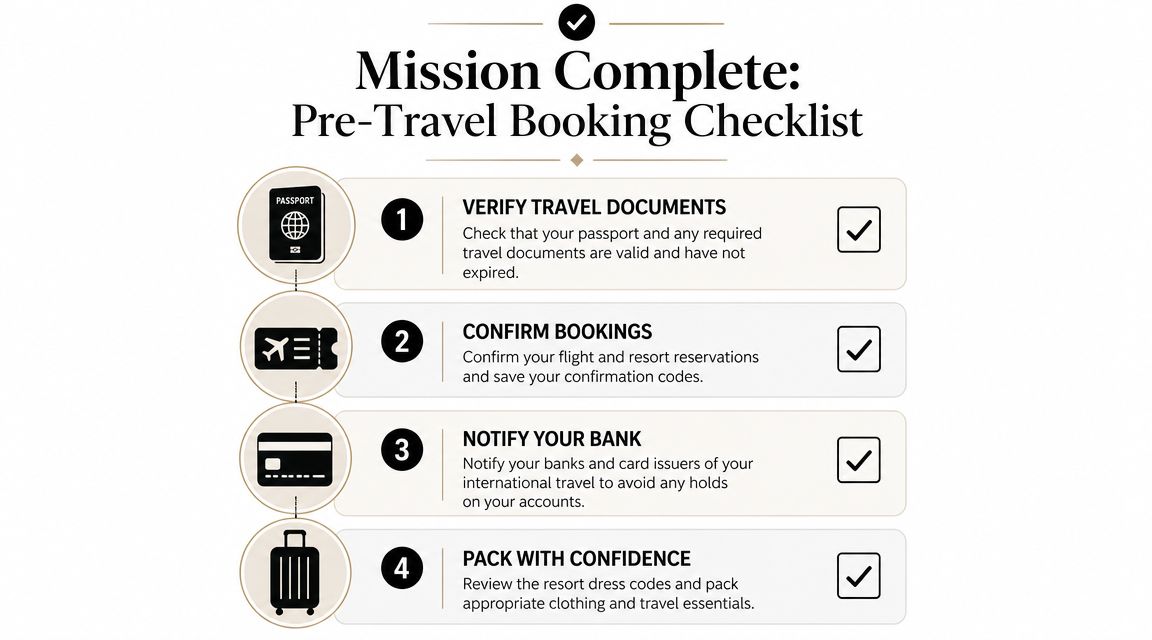
Final inspection list
Run this pre-departure recon before wheels up:
- Verify your documents: Check passport validity, names on reservations, and entry requirements for your destination.
- Group your confirmations: Keep flight, resort, and transfer details in one place you can access without hunting through email.
- Record the true total cost: Write down what is already paid, what is due at arrival, and what you expect to spend on tips, upgrades, excursions, or airport extras.
- Read the resort rules: Dinner dress codes, restaurant booking rules, occupancy terms, and check-in requirements can change how the trip works.
- Confirm transfers: If transportation is included or booked separately, save the contact details and pickup instructions before travel day.
- Pack for the deal you bought: Bring what helps you use the included value. Water shoes, dinner clothes, sunscreen, and a small amount of cash often matter more than extra outfits.
What disciplined travelers get right
They verify the trip in full, including the parts that never show up in the headline rate.
That is the whole point of hunting all inclusive resort deals like a pro. The lowest sticker price wins nothing if baggage fees, transfer costs, reservation hassles, and on-site add-ons blow up the budget. Your job is to show up knowing exactly what the trip will cost and exactly how the resort operates.
Treat this like final gear check. Save the confirmations, screenshot the booking details, note the support numbers, and keep your true-cost math handy. Do that, soldier, and you will step into vacation mode without getting ambushed by surprise charges or front-desk nonsense.