

You're staring at a rental car quote on one tab, a flight on another, and somehow the same compact car costs one thing today and something completely different tomorrow. That's the kind of nonsense that makes travelers think pricing is random. It isn't. Car rental pricing is a battlefield, and if you walk in without a plan, you volunteer to overpay.
I've seen too many travelers use the wrong tactic. They either book absurdly early because they assume “early equals cheap,” or they wait until the last second with no backup plan and end up choosing from whatever sad leftovers are still on the lot. The best time to rent a car usually sits in the middle, with a few exceptions that smart travelers can exploit.
Consider this your mission briefing. You don't need luck. You need timing, discipline, and a little tactical flexibility.
Your Mission Should You Choose to Accept It
A lot of travelers make the same mistake. They book a rental car the minute flights are locked in, then stop checking. Months later, someone on the same trip pays less for the same dates, same city, and same vehicle class. That isn't magic. That's better recon.
The rental car game changes fast because companies adjust rates based on demand forecasts, location, and how many vehicles they think they'll need on the lot. If you treat your first quote like your final quote, you hand over your wallet and salute.
The rookie mistake
The rookie move is simple. Book far ahead, assume the job is done, and never compare again.
That old “book early” advice still floats around because it sounds safe. Safe doesn't always mean cheap. In rental cars, early booking can put you into a higher, more conservative price before the company has sharpened its forecast.
Field note: The first price you see is not your orders from headquarters. It's just the opening bid.
The Sgt. Travel rule
Use a strategy, not a superstition. For most standard rentals in major markets, you should think in terms of a monitoring window, not a one-and-done reservation. Search, compare, and keep checking if your booking allows cancellation.
That matters even more if you're military, a veteran, a frequent business traveler, or a parent trying to keep the whole trip on budget. You've already got enough moving parts. The rental car shouldn't be the ambush that wrecks the mission.
Here's the plain-English version of the best time to rent a car:
- Standard trip, regular car, flexible traveler: usually check hardest in the final few weeks.
- Peak holiday or must-have schedule: secure something earlier, then keep watching.
- Airport pickup only: compare that against an off-site location before you commit.
- Strict budget mission: don't just ask when to book. Ask where, for how long, and whether a different pickup day changes the total.
Travel savings aren't about being clever on social media. They're about acting like your money matters. That's the mindset that wins.
Your Booking Window Mission Briefing
You're planning a Thursday pickup for a family trip. You check rates a month out, then check again ten days later. Same car class. Lower price. That's how this mission usually works.
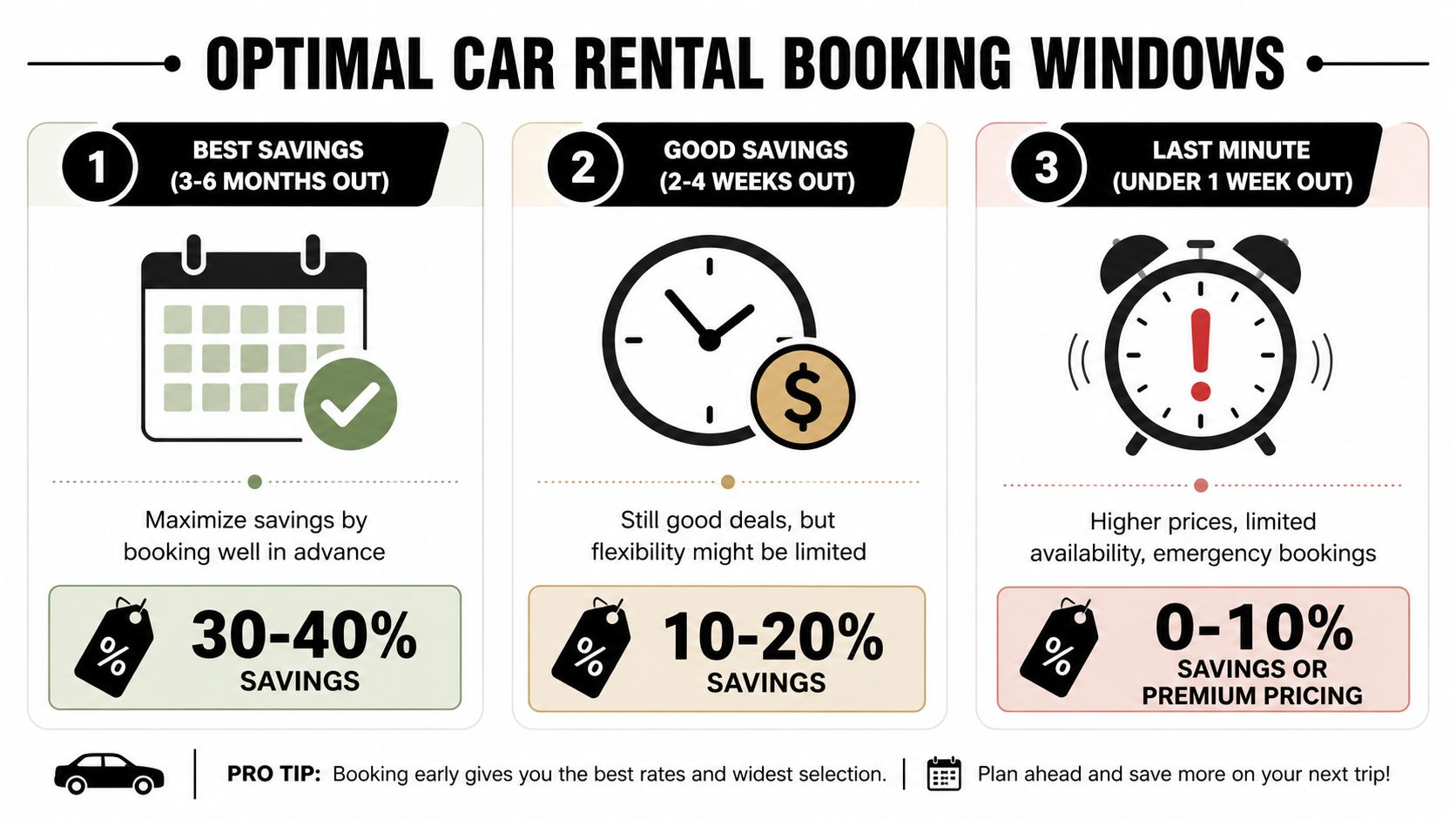
My standing order is simple. For many standard rentals, start your serious rate checks about 2 to 4 weeks before pickup. That window gives you the best shot at a strong price without waiting so long that inventory gets picked over.
A NerdWallet rental car price analysis found that a weekly rental booked 7 days in advance averaged $481, while the same rental booked 91 days ahead averaged $555. That's $74 less, or 13.4% cheaper, when booked closer in. The same analysis said that pattern held across every company it studied, with especially large gaps at Thrifty at 28.02% cheaper and Hertz at 23.60% cheaper when booked one week out instead of three months out.
Pick the right booking play
Use the booking window that fits the mission.
| Tactic | Best for | Sgt. Travel take |
|---|---|---|
| Final-week check | Off-peak trips, flexible travelers | Good hunting ground for standard cars if cancellation is allowed |
| 2 to 4 week booking window | Regular vacations, work trips, weekend getaways | Best overall mix of price and choice |
| Early protective booking | Holiday travel, fixed schedules, specialty vehicles | Reserve early, then keep checking for a better rate |
The 2 to 4 week window wins most of the time because rental companies are still adjusting prices as demand comes into focus. Book six months out and you may catch a cautious, padded rate. Book in the target window and you often get a sharper number.
That matters even more if you're traveling with military leave dates, a VA appointment, a PCS-related schedule, or a veteran family trip where timing is fixed. In those cases, lock in a cancelable reservation, then keep checking prices like a hawk. That's the smarter play.
Why the first quote is rarely your best quote
Rental companies price cars the same way smart quartermasters manage supply. They react to demand, local events, fleet levels, and pickup patterns. Early prices are often built to protect the company, not your wallet.
So don't salute the first rate and march off.
Use car rental rate tips from Sgt. Travel Deals Army to compare options, then run your search on www.stdarmydeals.com and recheck before pickup. That's the veteran-minded approach. Get a workable rate on the board, keep your reservation cancelable, and improve it if the market softens.
For visual learners, this quick video is worth a look:
My booking orders
Follow this drill.
- Start checking around 30 days out
- Book in the 2 to 4 week window if the price is solid
- Recheck at about 14 days
- Run one more check inside the final week if your reservation is cancelable
- For holidays or must-have vehicles, reserve earlier and keep monitoring
- For military members and veterans, always check whether your booking includes a service-related discount or flexible cancellation terms
That's the mission. Don't guess. Compare, monitor, and strike when the rate is right.
Master the Calendar for Peak Savings
A Friday airport pickup in July can drain your budget before the mission even starts. Shift that same trip to a quieter month or tweak the pickup pattern, and the quote often drops fast.
Timing on the calendar matters just as much as timing on the booking window. Month, weekday, holiday traffic, and local events all affect what you pay.
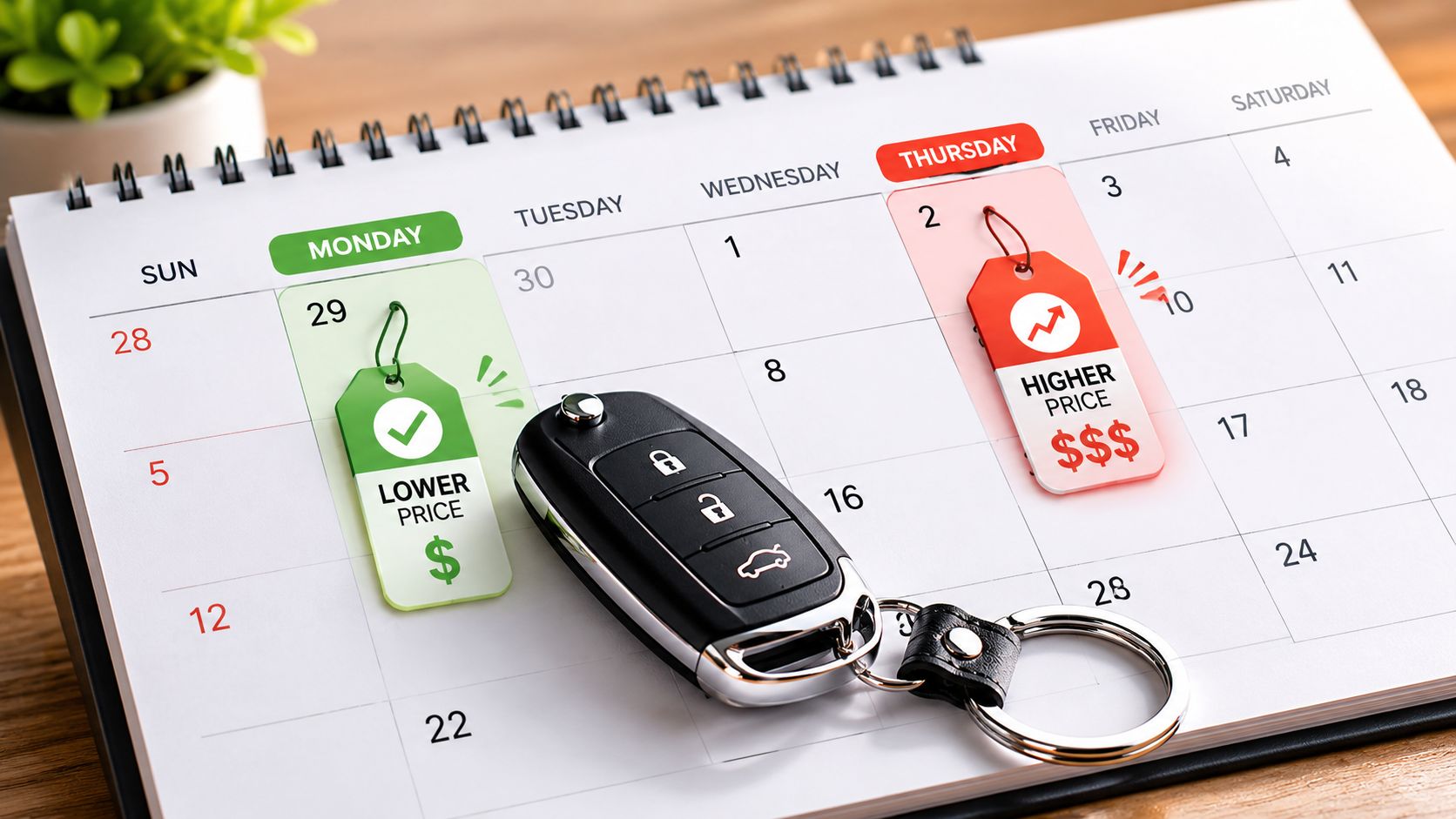
Here's the field-tested rule. Target off-peak travel first. January is often one of the cheapest months to rent. May and September usually give you a strong balance of decent weather and less pricing pressure than peak summer. If your dates are flexible, those are the first months I'd inspect on www.stdarmydeals.com.
Pick your month like a tactician
Peak season punishes lazy planning. Summer vacation weeks, spring break, Thanksgiving, Christmas, New Year's, and big local events can send rates higher and shrink your vehicle choices.
Shoulder season is your friend.
Use this calendar drill:
- Check off-peak months first. January often gives bargain hunters the best shot.
- Use May and September as smart compromise months. You can still get good travel conditions without the full summer premium.
- Treat holiday weeks like a different operation. Prices climb, inventory tightens, and waiting gets riskier.
- Scan the local event calendar. A concert weekend, college graduation, or major sports event can wreck an otherwise cheap rental market.
Military families and veterans should be even more deliberate here. PCS moves, reunions, and leave periods often overlap with busy travel dates. Get ahead of those calendar choke points and compare early on Sgt. Travel Deals Army's booking tools.
Watch your pickup and return rhythm
A low daily rate means nothing if your schedule is sloppy.
Rental companies often price by 24-hour blocks. Return the car later than planned and you may trigger extra charges or a pricier rate structure. That's why disciplined timing beats casual guessing.
Use these field rules:
- Match pickup and return times as closely as possible. Keep the clock tight.
- Test weekday shifts. Tuesday or Wednesday pickups can beat Thursday or Friday starts in many markets.
- Check the full trip cost, not just the daily rate. Fees, taxes, and extra hours can wreck a so-called deal.
- Review the payment terms before you book. A low headline price can still come with a hefty hold. Read this guide to car rental deposit rules and credit card holds so your budget does not take friendly fire.
Calendar rule: Compare multiple date combinations before you commit.
A little recon can save real money. This video gives a practical walkthrough for thinking about rental timing and trip planning:
Holiday travel gets its own rulebook
Holiday rentals are a separate mission.
For a quiet weekend, you can often monitor rates and strike when the quote softens. For Thanksgiving week or Christmas, availability becomes part of the fight. Good vehicles disappear, airport lots get picked over, and the cheapest rates vanish early.
So use a stricter playbook. Reserve a cancelable option early. Keep checking for a better rate. If you're traveling on military leave or coordinating family logistics, do not gamble on last-minute inventory.
That's the calendar advantage. You save money by choosing lower-pressure dates, tightening your pickup schedule, and avoiding peak-demand traps before they ambush your wallet.
The Airport vs Off-Site Location Intel
A traveler asks when to book. Smart question. A smarter question is where to pick up.
Many budgets are frequently hit hard. Airport counters are convenient, fast, and easy to find after a flight. They also often carry extra taxes, fees, and pricing pressure that can crush the “deal” you thought you found.
Convenience versus cost
The basic tradeoff is brutally simple.
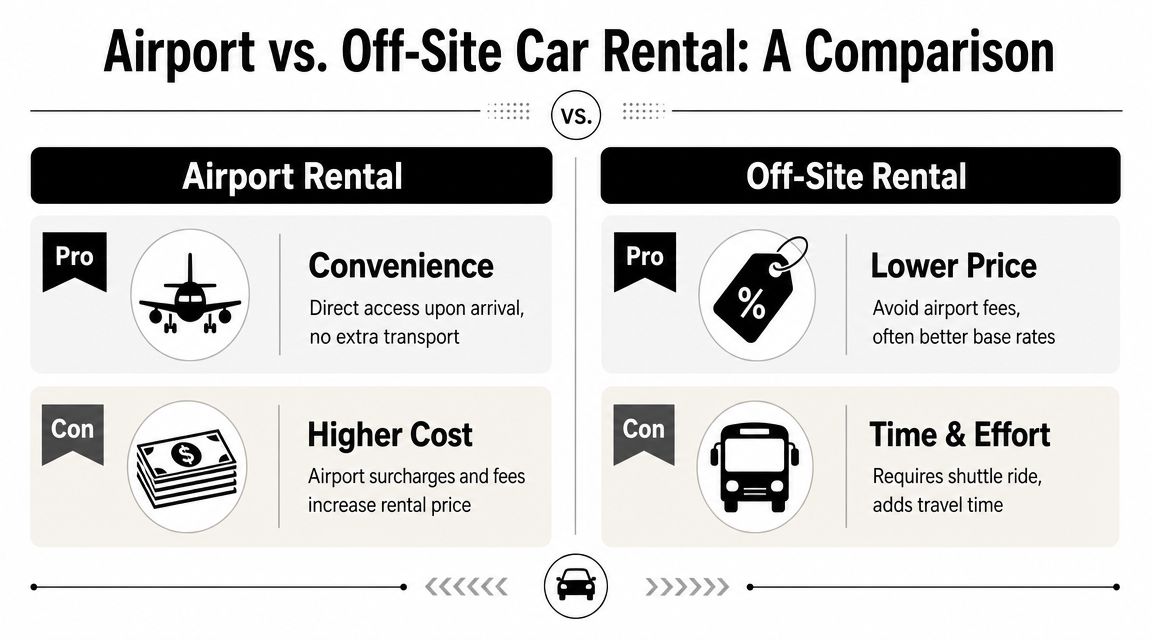
| Pickup location | Strength | Weakness |
|---|---|---|
| Airport | Fast and easy after landing | Often pricier due to location-based fees and demand |
| Off-site or downtown | Can offer better total cost | Requires extra transport and more planning |
This isn't a small detail. Skyscanner's car rental guidance notes that the price gap between airport and non-airport rental locations can be large enough to completely outweigh timing advantages. In plain terms, a later downtown booking can beat an earlier airport booking.
That means your “best time” strategy can fail if you ignore pickup location.
When airport pickup makes sense
Sometimes convenience wins. That's fine. Just make it a deliberate choice.
Airport pickup is worth paying for when:
- You're landing late and don't want to chase a shuttle
- You're traveling with kids, lots of bags, or mobility concerns
- Your work schedule is tight and time matters more than squeezing every dollar
- The off-site savings disappear once you add rideshare or transfer hassle
When off-site wins the mission
Downtown or neighborhood locations deserve a hard look when you've got a little flexibility. If the hotel offers a shuttle, if public transit gets you close, or if a short rideshare saves a lot on the rental itself, off-site can be the smarter move.
A few checks help:
- Compare the total, not the headline rate
- Look at pickup hours
- Confirm how you'll get there
- Check return logistics before your flight home
If you're reviewing extra charges, this explainer on car rental deposit questions can help you avoid ugly surprises.
Airport convenience feels good in the moment. Lower total cost feels better when the trip is over.
If you remember one thing from this section, remember this. Don't separate timing from location. They work together.
Special Ops Discounts and Rental Length Hacks
You've handled the booking window. You've checked location. Good. Now finish the mission by squeezing the quote from two sides at once: discounts and rental length.
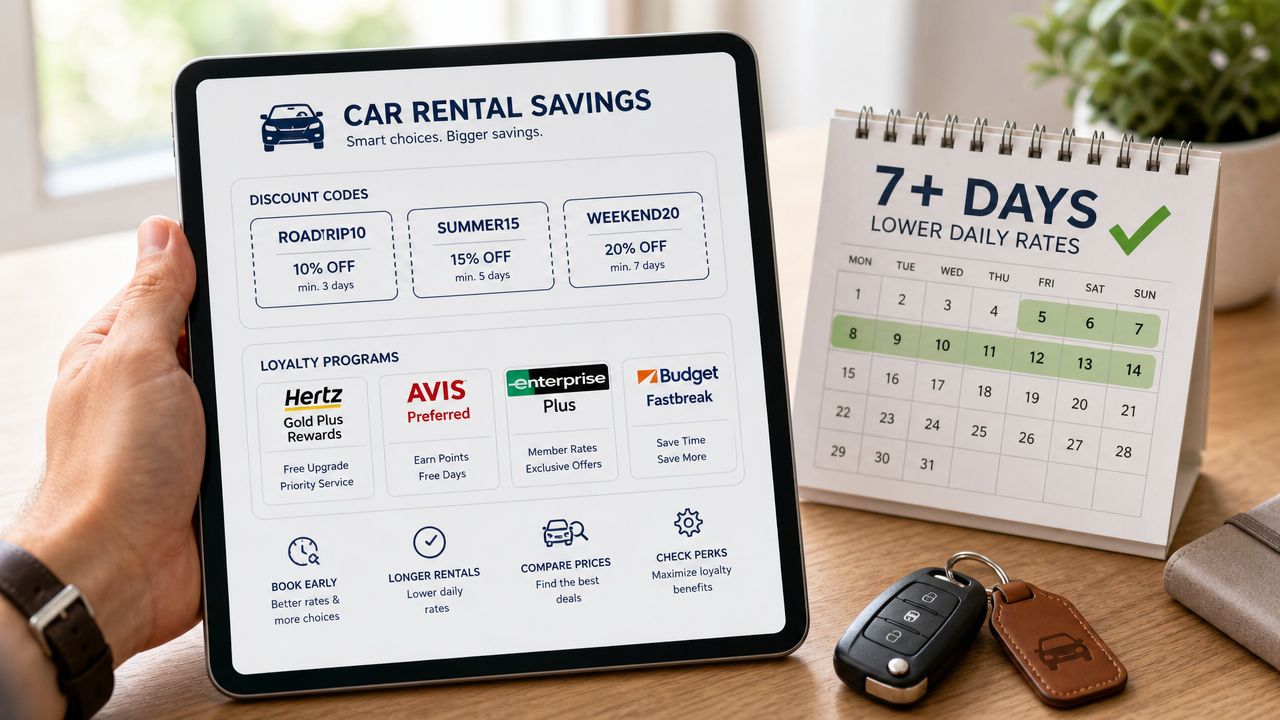
Rental companies don't price cars like a neighborhood gas station. Rates shift to move inventory, protect higher-margin days, and steer you toward certain trip lengths and vehicle classes. That's why a five-day rental can cost more than seven days, or why a midsize suddenly undercuts an economy car.
Test the rate, not your assumptions.
The weekly rate drill
If you need the car for five or six days, run a full-week search anyway. Rental pricing often favors weekly buckets, and that can beat the shorter booking even when you keep the car longer.
Put these options side by side:
- Your exact trip length
- A 7-day version
- The same trip shifted by one day
- A different vehicle class on the same dates
That quick recon catches weird pricing fast. A one-day shift or a class change can save more than hours of bargain hunting.
Discounts are part of the plan
Public rates are only the starting line. Military members, veterans, government travelers, and loyalty members should always check their discount paths before booking. Sgt. Travel Deals Army was built for exactly this kind of mission, and our discount car rental options for military and veteran travelers give you a solid place to start.
Here's the order I recommend:
- Search the trip with no codes first
- Apply military, veteran, government, club, or loyalty discounts
- Compare the final total, not just the daily rate
- Retest with a weekly rental
- Read cancellation, mileage, and fuel rules before you lock it in
Simple. Disciplined. Effective.
One more piece of field intel. A “discounted” rate is not automatically your best rate. Sometimes the public price wins. Sometimes the member rate costs a little more but includes better cancellation terms or fewer fees. That matters. If your plans might shift, flexibility has real value.
Combat tip: Run the clean search first, then stack your memberships one at a time. That's how you spot the rate that actually saves money.
For military families and veterans, this part should be automatic. Use your status. Use your memberships. Use www.stdarmydeals.com as your command post, compare options cleanly, and book with a plan instead of hope.
Timing helps. Location helps. Discounts and rental-length testing are where smart travelers finish the job.
Your Final Debrief and Action Plan
You don't need a hundred hacks. You need a repeatable system.
The best time to rent a car is usually not “as early as possible.” For most standard trips, your strongest position is to start checking about a month out, watch prices inside the final few weeks, and stay flexible on location and vehicle class.
Your no-nonsense checklist
Use this before every rental search:
- Start at the one-month mark. That's a strong first recon point for standard trips.
- Recheck inside the final two weeks. That's often where the market gets more honest.
- Compare airport against off-site pickup. Don't assume convenience is worth the premium.
- Test different rental lengths. A weekly rate can sometimes beat a shorter booking.
- Use your memberships. Military, veteran, and loyalty discounts belong in the search.
- Watch the calendar. January, May, and September deserve a hard look if your dates are flexible.
- Keep the reservation cancelable when possible. Flexibility gives you room to improve the deal.
My blunt recommendation
If your trip is a normal rental in a normal market, don't book six months ahead and call yourself prepared. That's not preparedness. That's surrendering too early.
Book smart. Monitor often. Compare location. Read the terms. Then strike when the rate and logistics line up.
That's how disciplined travelers save money without turning trip planning into a second job.
Final marching orders
The biggest win is consistency. Once you stop treating rental cars like a mystery and start treating them like a pricing system, you make better calls every time.
Keep the framework simple:
| Mission factor | Best move |
|---|---|
| Booking window | Check hardest around 2 to 4 weeks out |
| Month | Favor lower-cost periods when possible |
| Location | Compare airport with downtown or neighborhood lots |
| Length | Test full-week pricing against shorter rentals |
| Discounts | Always run military, veteran, and loyalty options |
That's your playbook. Use it on every trip. No guessing. No panic booking. No handing over extra cash because a rental counter happened to be on your path from baggage claim.
If you want a veteran-owned place to stay mission-ready for your next trip, join Sgt. Travel Deals Army. You can also compare travel options through STD Army Deals and keep an eye on more practical travel intel, member perks, and deal-finding tools built for travelers who'd rather outsmart the system than overpay it.