
You're probably in one of two camps right now. You've either got a moving date circled on the calendar and need to get from California to Texas without turning yourself into roadkill, or you've got that itch for a long open-road run and want to do it right the first time.
Either way, a California to Texas drive isn't a cute little weekend zip. It's a serious cross-Southwest haul with desert miles, weather swings, big truck traffic, and enough bad planning opportunities to wreck your budget before you hit New Mexico. The good news is that it's absolutely doable, and if you prep like a pro, it can be one of the best drives in the country.
Your Epic Road Trip Awaits
A friend of mine once started this drive with a phone at 18 percent, a gas tank just under half, and the bold confidence of a man who had “done long drives before.” By the second night, he was rage-searching for overpriced roadside rooms and eating stale convenience-store peanuts like they were a tactical ration pack.
Don't be that guy.
A California to Texas drive rewards travelers who respect the scale of the mission. One published Los Angeles-to-Austin route covers 1,657 miles and treats the trip as a 2-week road adventure with 6 stops, using corridors like I-10, I-17, and I-40 across the Southwest, according to Sixt's California to Texas road trip guide. That tells you everything you need to know. This isn't a casual hop. It's a multi-state operation.
The mindset that wins
You don't need to overcomplicate this trip. You need a plan, a sane pace, and enough discipline to avoid rookie mistakes.
Your job is simple:
- Pick the right route: not the prettiest one on social media, the one that fits your season and destination.
- Protect your energy: fatigue is the enemy, not boredom.
- Control costs early: the cheapest room is usually the one you booked before everyone else panicked.
- Use solid tools: start with practical trip-planning help like these best free travel planning apps.
Practical rule: Treat this drive like a mission, not a mood.
That doesn't make it less fun. It makes it more fun, because you're not spending the whole trip scrambling. You're enjoying the changing scenery, the giant skies, the weird roadside stops, and the victory lap when the Texas sign shows up.
Mission Briefing Choosing Your Route
You're at the map with coffee in one hand, your destination pinned in Texas, and one question that decides whether this trip feels sharp or sloppy. Which corridor gets you there with the fewest headaches and the best value?
That choice matters more than travelers admit. Your route sets your weather risk, your fuel rhythm, your overnight cities, and how much money you burn on last-minute hotel panic. Pick well, and the whole mission runs cleaner.
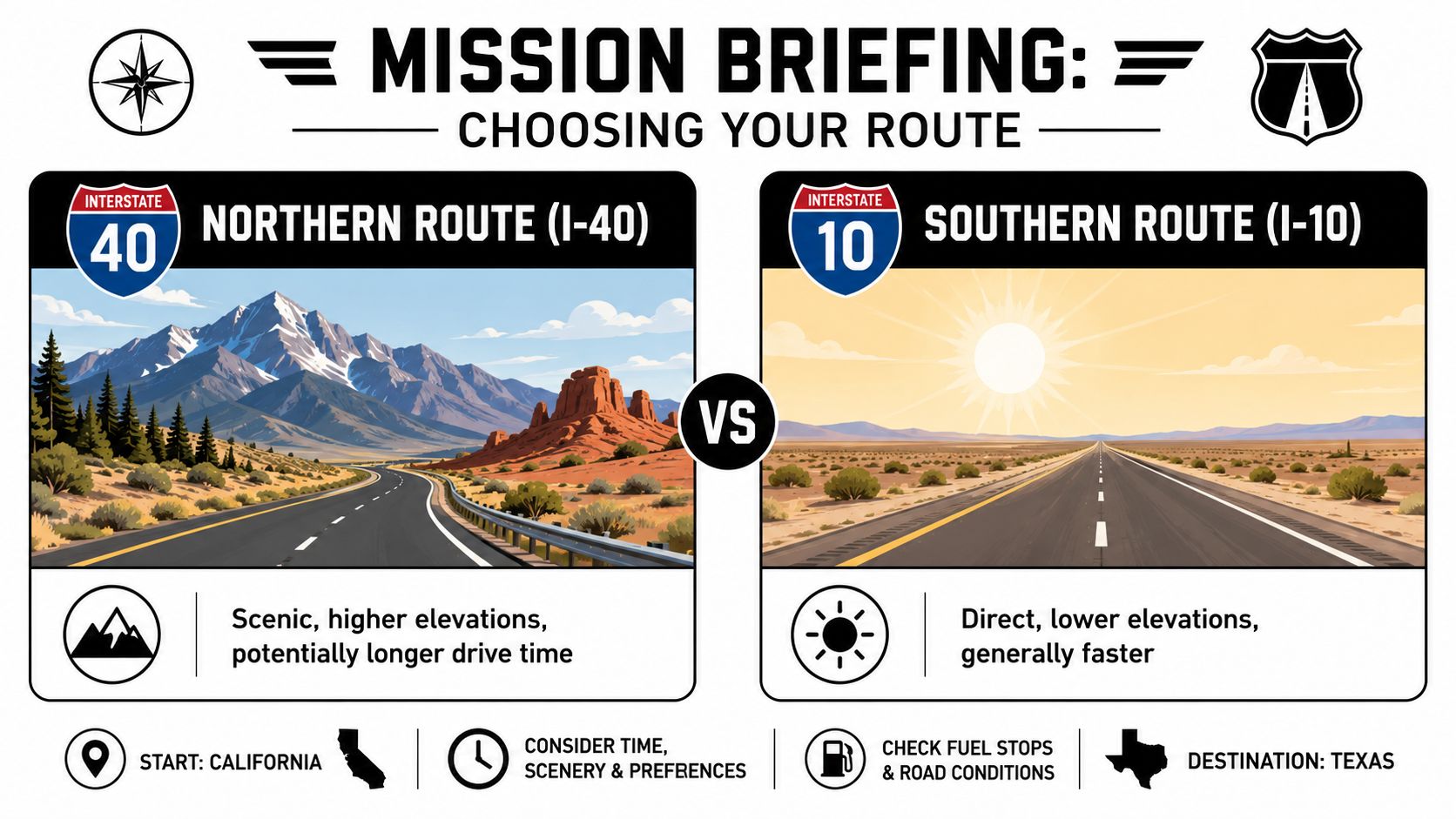
The two main battle routes
| Route | Best for | Tradeoff |
|---|---|---|
| I-40 high route | Classic Southwest views, Route 66 flavor, more visual variety | Higher elevations can turn annoying fast in colder weather |
| I-10 low route | Simpler winter drive, lower elevations, cleaner run into South Texas | Desert heat can wear you down in warmer months |
The route is not just a sightseeing choice. It's an efficiency choice. It decides whether you roll into your stop calm and on budget, or cooked, cranky, and overpaying for the last room in town.
Pick your route by mission objective
Objective fastest, simplest push
Choose I-10 if your destination is farther south or you want the least complicated run. It usually makes more sense for San Antonio, Houston, and much of South Texas.
This is the smart first-timer route. Fewer variables. Fewer surprises. Better odds of keeping your schedule tight.
It also gives you more chances to plan lodging around bigger overnight hubs. If San Antonio is part of your route or finish line, lock in one of these cheap hotels in San Antonio, TX before rates jump.
Objective better road-trip character
Choose I-40 if you want the drive to feel like a proper cross-country run instead of a straight transport job. The higher route gives you more old-school highway character, more varied visual rhythm, and more of that classic American road energy that keeps the miles from turning into a blur.
If you care about stories as much as arrival time, this is the stronger pick.
Objective fewer weather problems
Choose I-10 in colder months. Simple.
Lower elevation usually means fewer ugly surprises. You're trying to arrive in Texas, not test your nerve on a bad-weather stretch because the view looked cooler on someone else's Instagram.
The right route matches your season, your Texas destination, and your budget plan for overnight stops.
My blunt recommendation
For a first California to Texas drive, take the route with the least weather stress and the cleanest lodging strategy. That usually means I-10.
Use I-40 when conditions are good and you want more personality from the road. Use I-10 when the mission is efficiency, lower risk, and tighter cost control. That's the call a road warrior makes.
Daily Battle Rhythm Itinerary And Stops
The biggest mistake on this trip isn't packing too much. It's trying to “power through” like you're some highway superhero. That nonsense ends with bad food, bad decisions, and dangerous fatigue.
Build a daily rhythm. Drive with focus, stop before your brain turns to oatmeal, and give yourself a real overnight reset.
The three-day blitz
This is for disciplined drivers only. Not reckless. Disciplined.
Day 1
Leave early and make your first overnight stop in Phoenix if you're on the southern path, or Albuquerque if you're taking the higher route. Pick one city and commit. Don't start adding side quests at sunset.
Day 2
Push hard but smart. Southern route travelers can aim for El Paso. Northern route travelers often do well with Amarillo.
Day 3
Final push into your Texas destination.
This schedule works when the mission is simple: get there with minimal wandering. Keep meal stops short, fuel before you need it, and don't pretend caffeine replaces sleep.
For a preview of the kind of roadside Americana many travelers like on the northern path, watch a quick Cadillac Ranch video tour on YouTube.
The four-day balanced run
This is my favorite general setup. You stay alert, you don't hate your life, and you still make steady progress.
Night one in Phoenix or Flagstaff
Southern route if you want warmth and easier flow. Northern route if you want that classic desert-to-high-country feel.Night two in Albuquerque
Strong overnight city. Good reset point. Plenty of food and fuel options.Night three in Amarillo or El Paso
This depends on your route and your final Texas destination.Arrival day
Shorter final leg. Better mood. Better driving.
If San Antonio is your target or even a later stop on the trip, save this guide to cheap hotels in San Antonio TX for your lodging search.
Stop while you still feel good. Don't wait until you're cooked.
The five-day easygoing version
This is the smart pick for families, pet travelers, or anyone who wants the trip to feel like a road trip instead of a delivery contract.
Sample stop sequence
- Joshua Tree area
- Sedona
- Santa Fe
- Amarillo
- Austin or onward in Texas
That stop pattern lines up nicely with the kind of multi-stop Southwest trip many travelers picture when they dream about this drive.
What to do at the stop
Not every overnight needs a grand attraction. Sometimes the right move is a decent meal, a clean room, a short walk, and lights out. Still, if you want a little flavor:
- Sedona: take a scenic loop drive and stretch your legs.
- Santa Fe: grab local food and walk the historic core.
- Amarillo: go see the big roadside oddities and get a laugh out of it.
For visual planning, YouTube is your friend. Before committing to a detour, check a walking tour or dashcam route video. A quick look often tells you whether a stop is worth the extra effort or just better in photos.
Gear Up Vehicle Prep And Packing List
Your car is your teammate on this run. Treat it like one. If your cooling system is sketchy, your tires are tired, or your fluids are an afterthought, the desert will expose you fast.
When driving through desert corridors, flash-flood danger during July to August can rise by 3.2x, and vehicle cooling performance matters, according to this California-to-Texas road trip guide. That's the kind of detail smart drivers respect. Heat and sudden weather swings don't care how excited you are about your playlist.
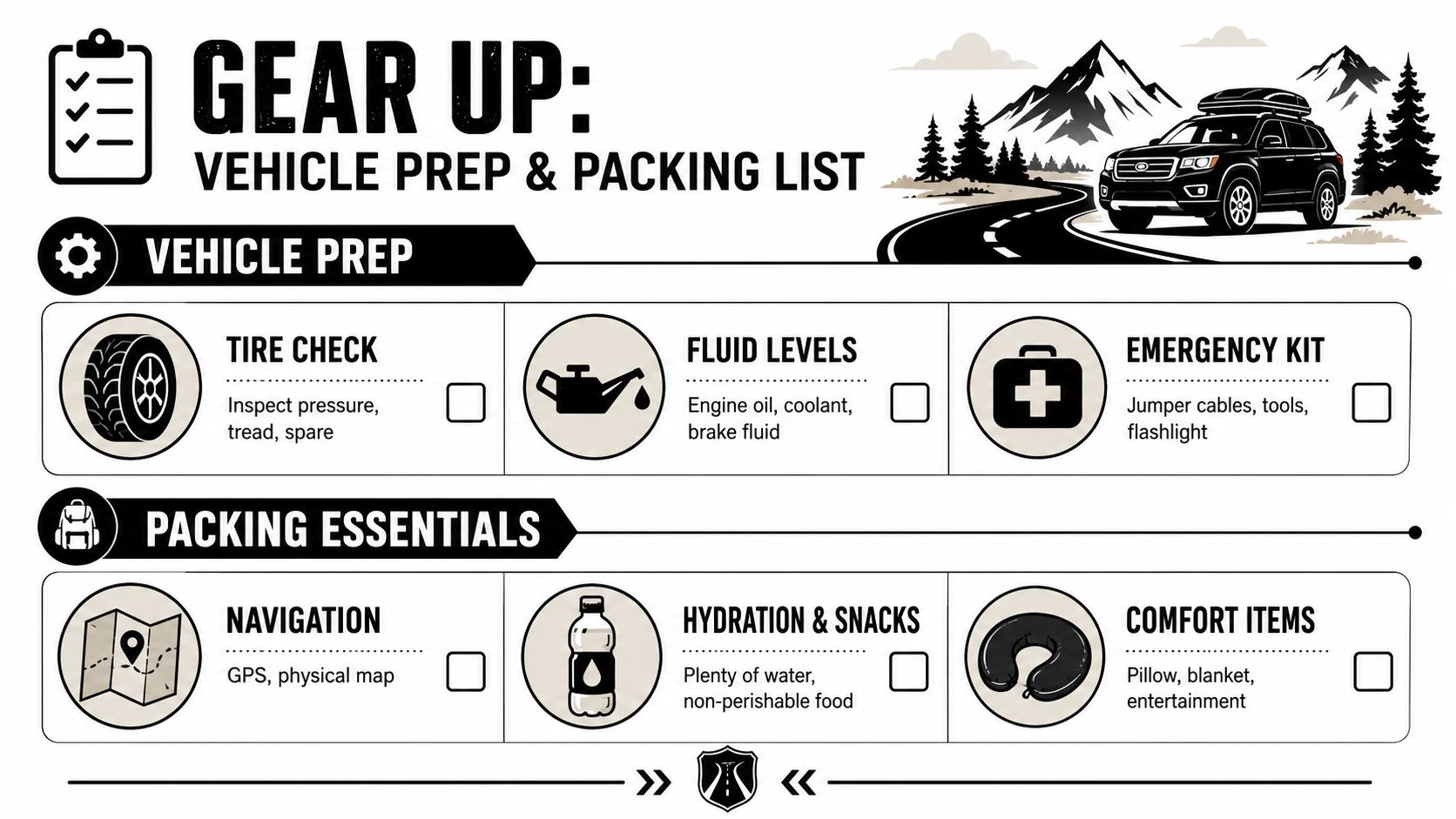
Pre-mission vehicle inspection
Do these before departure, not at a gas station after something starts smelling weird.
- Tires: check pressure, inspect tread, and confirm your spare is usable.
- Fluids: top off oil, coolant, and windshield fluid.
- Brakes: if they've been making noise, handle it before the trip.
- Battery: if it's weak, replace it. Desert heat is not the time for gambling.
- Cooling system: this is critically important for long hot stretches.
If you're renting for all or part of the trip, this guide on how to save on car rentals is worth reading before you lock anything in.
A quick visual refresher never hurts. This road-trip prep video is a solid watch before departure.
Packing list that actually matters
Forget the fantasy packing list with twenty-seven “must-haves.” Bring what keeps you moving, fed, charged, and comfortable.
Essentials
- Water and snacks: keep a cooler stocked.
- Phone charger and power bank: dead phone, bad day.
- Paper backup map: old school, still useful.
- Basic first-aid kit: because little problems happen.
- Flashlight: one of those items you never need until you really need it.
Comfort gear
- Travel pillow or lumbar support
- Sunglasses
- Light layer for temperature swings
- Wet wipes and napkins
- Trash bag in the cabin
Check the car when you're rested and patient. Tired people miss obvious problems.
The Budget Battle Fuel Food And Lodging
Here's the straight answer. If you're driving solo and only comparing base transportation costs, flying can beat driving on price, as discussed in this TripAdvisor discussion on flying versus driving California to Texas. The drive still wins if you want control over your schedule, your bags, your stops, and your spending choices.
That last part is the mission.
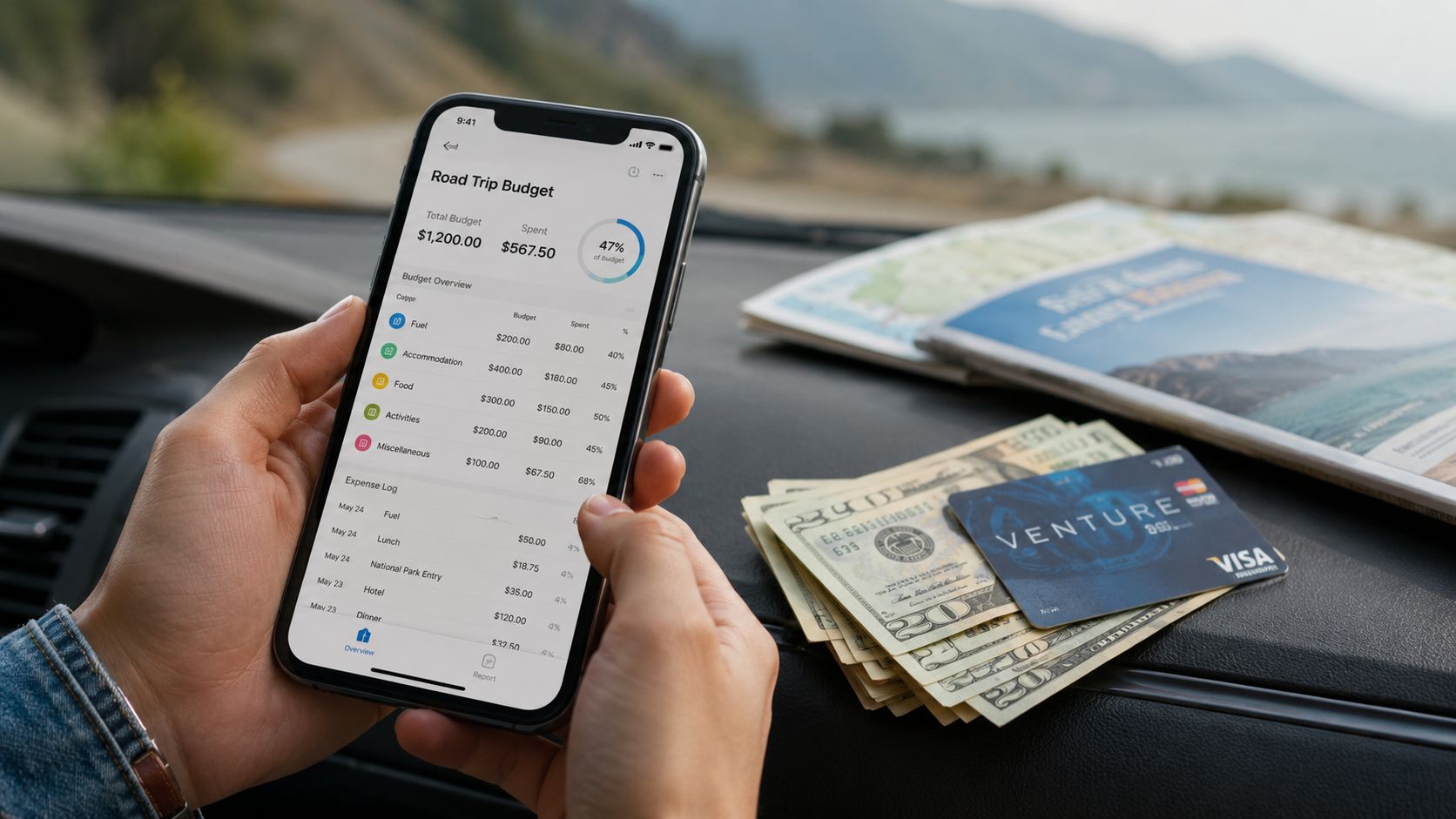
A California to Texas drive gets expensive when you treat fuel, food, and hotels like emergencies instead of planned moves. Run it like a campaign. You'll spend less and arrive in better shape.
Win the fuel fight
Fuel is one of your biggest variable costs, so stop winging it.
Use GasBuddy or any fuel-price app before you exit. Fill up in larger towns or busy interstate corridors where prices are usually more competitive, then bundle the stop. Fuel, bathroom, stretch, back on the road. One disciplined stop beats three sloppy ones.
Also, don't push the tank too low in desert stretches. Saving two dollars means nothing if you end up forced to buy gas at the only station for miles.
Stop overpaying for food
Driving hungry leads to overpriced junk food, gas-station meals, and random fast-food detours that drain both your budget and your energy.
Bring a cooler and treat it like standard equipment. Pack water, sports drinks, fruit, sandwiches, yogurt, protein bars, and one or two morale items that keep the crew from getting cranky. Then buy one solid local meal a day if you want something memorable. That gives you the road-trip fun without the daily wallet beating.
Coffee deserves its own rule. Buy it once in the morning. Don't turn every fuel stop into a coffee-and-snacks ambush.
Lodging is where budgets get smoked
Your budget will fall apart if you wait until you're exhausted, roll into town late, and start hunting for a room with your guard down. That's how you end up overpaying for a mediocre place with bad parking and a slow morning exit.
Use this lodging drill instead:
- Pick your overnight city before you leave each morning
- Book your room by late afternoon
- Stay close to your route, not across town
- Choose easy parking, solid reviews, and a fast next-day departure
This is also where smart deal hunting pays off. If you want to keep the California-to-Texas mission affordable, check hotel discounts before you book and compare them against the big travel apps. Platforms like S.T.D. Army Deals can help cut lodging costs without sending you miles off course to save a few bucks.
Cheap and inconvenient is not a win. A room that lets you park easily, sleep decently, and launch fast the next morning is the better value.
The big savings are boring. Good. Boring wins. Fewer impulse stops, fewer convenience-store meals, and fewer panic-booked hotels. That's how you keep this run efficient and affordable.
Final Deployment Booking Smart And Staying Safe
By this point, the mission is simple. Pick the right route, drive on a schedule that respects your limits, keep the car in fighting shape, and lock in your overnight stops before stress starts making decisions for you.
Booking smart
The best hotel strategy for a California to Texas drive is boring. Good. Boring wins.
Book the cities you know you'll hit. Leave some flexibility if your schedule is loose, but don't leave everything to chance. The sweet spot is planned structure with a little wiggle room. Enough control to avoid chaos, enough freedom to enjoy the run.
What to look for in an overnight hotel
- Easy interstate access
- Well-lit parking
- Late check-in
- Solid guest reviews for cleanliness
- Coffee available early
- Fast morning departure
You're not staging a luxury retreat. You're building tomorrow's launchpad.
Staying safe on the road
A long drive punishes overconfidence. Stay ahead of fatigue.
- Rotate drivers when possible
- Take real stretch breaks
- Don't push late just because the map says you're close
- Keep your phone charged
- Watch weather and road conditions before each departure
If a rest stop or parking lot feels off, leave. You don't need a committee meeting. Trust your instincts and move on.
The safest road-trippers aren't the toughest. They're the ones who notice they're fading and stop early.
Enjoy the changing landscape
One of the best things about this drive is how the country transforms mile by mile. California slides into desert. Desert gives way to mesas, plains, and Texas sprawl. You can feel the geography changing around you.
That's the reward for doing the trip by road. You don't teleport. You witness the transition.
So keep the mission sharp, but don't forget to enjoy it. Pull over for the weird roadside art. Take the sunset photo. Try the local diner if it looks honest. A good California to Texas drive isn't sloppy and it isn't rushed. It's controlled, alert, and just adventurous enough to be memorable.
If you want a veteran-owned travel platform in your corner, check out Sgt. Travel Deals Army. It's free to join, built for deal-hunting travelers, and paired with the booking engine at STD Army Deals where you can compare options on hotels, flights, car rentals, activities, and more. If you like traveling smart, saving where it counts, and backing a personable community with a drill-sergeant wink, that's your next stop.